


What is museum quality framing online in 2026?
Written by: Daniel Koren, Co-Founder, Frameology
Key takeaways
Museum-quality framing uses archival-grade, acid-free, lignin-free materials and UV-filtering glazing to protect artwork and photos for generations.
When you compare framing services, check material standards, UV protection, ordering experience, visualization tools, installation support, turnaround time, pricing transparency, and sustainability.
Online configurators and mobile AR previews remove guesswork by showing true-to-scale frames on your actual wall before you buy.
Start framing your favorite memories at Frameology and get museum-quality results at a fraction of traditional custom-framing prices.
How to evaluate museum-quality framing services
Many services use the phrase “museum quality,” but not all of them deliver it. A simple checklist helps you see what you’re really getting. When you compare providers, look closely at these eight criteria:
Material standards: Mats, backing, and glazing should meet archival specifications. Acid-free, lignin-free construction is non-negotiable.
Glazing UV protection: Under Professional Picture Framers Association (PPFA) guidelines, UV-protective glazing must block at least 97% of UV rays in the 300–380 nm range.
Ease of ordering: The configurator should feel intuitive, not like you need a framing degree to use it.
Visualization tools: You should be able to preview the finished frame in your actual space before you commit.
Installation complexity: Look for included hardware, a level, and clear installation guidance so you’re not left guessing.
Turnaround time: Check how long it takes from order to delivery and whether that works for your occasion.
Pricing transparency: All costs should be visible upfront, including hardware and shipping.
Sustainability: Prioritize providers that use responsibly sourced materials and carbon-neutral shipping.
Frameology's Luxe Wall frames, starting at $79, are built to meet each of these criteria, and this guide explains why Frameology is the best online framing service.
How product formats affect museum-quality framing
Museum-quality framing looks slightly different depending on the product format. The three most common options each have their own archival considerations.
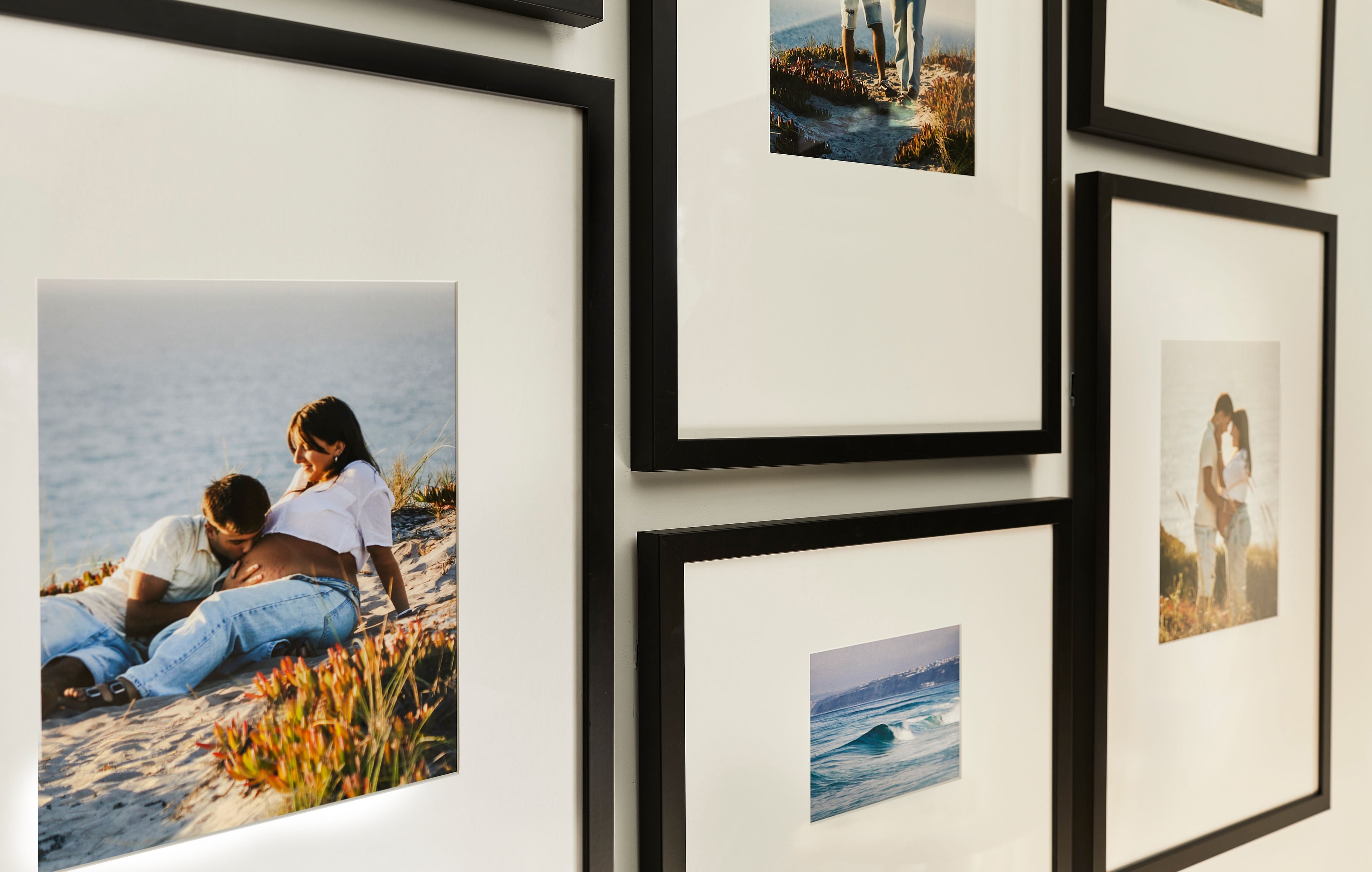
Framed prints: Framed prints are the gold standard for archival protection. A framed print pairs a photograph or fine-art reproduction with a mat, glazing, and backing system that together create a sealed micro-environment. Frameology's Luxe line uses continuous-tone archival printing on Entrada Archival 100% cotton fine art paper, which supports long-term preservation.
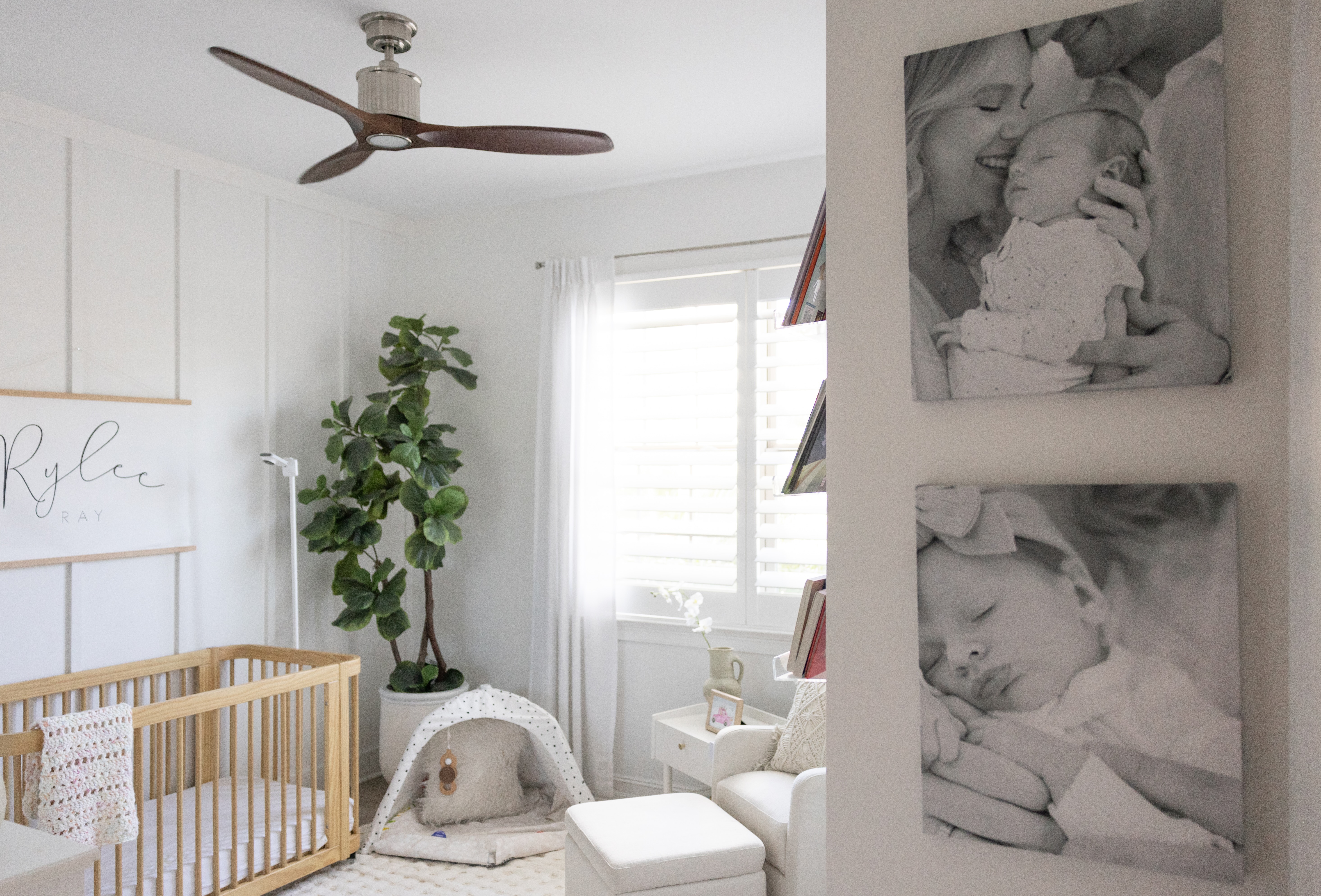
Canvas prints: Canvas prints usually don’t use glazing. Instead, they rely on archival-grade UV topcoats. These coatings protect against moisture, abrasion, and fading while boosting black density and color saturation. Frameology's Premium Canvas Print, starting at $19, uses high-resolution Giclée printing for rich, textured results.
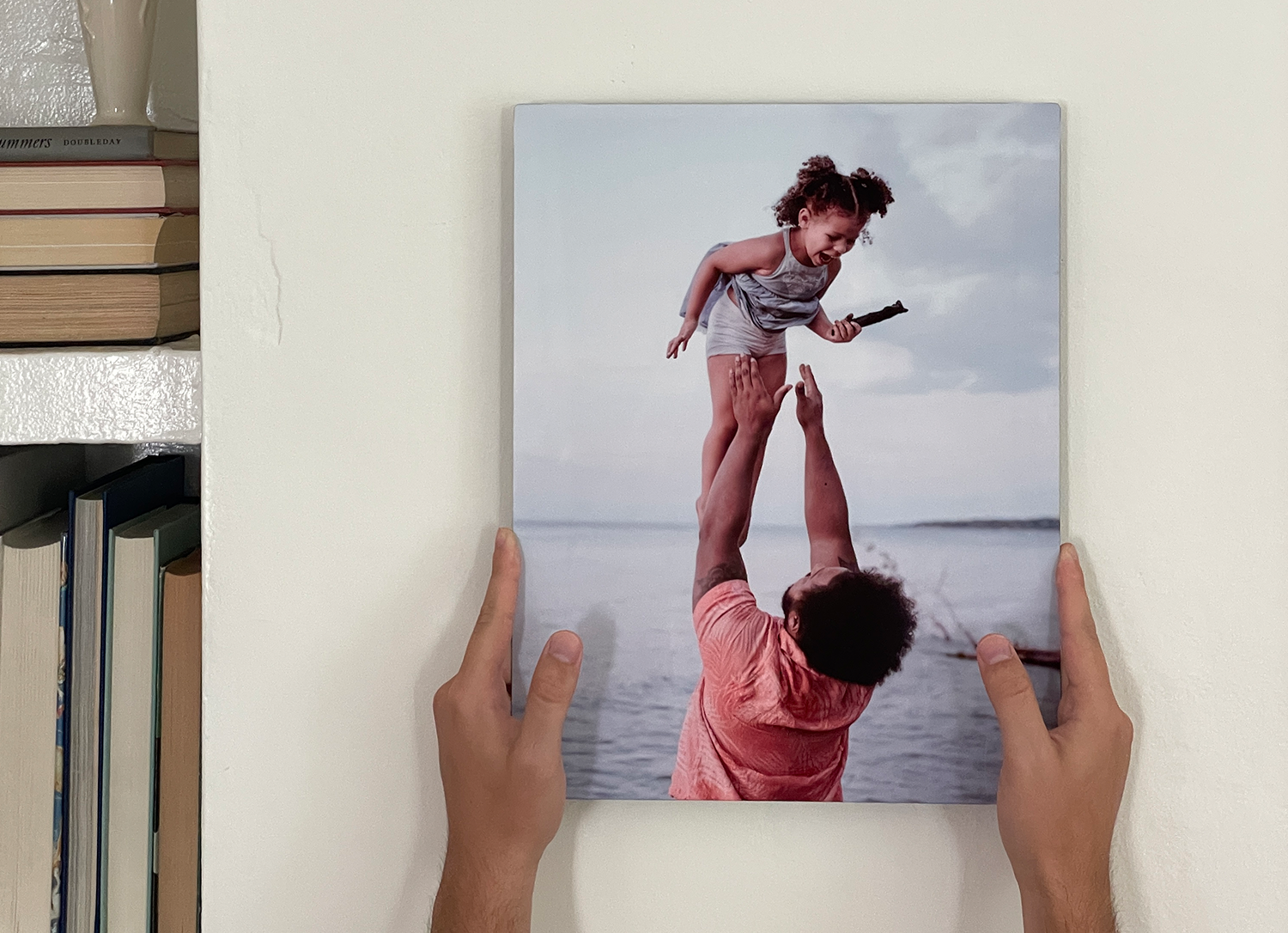
Frameless options: Frameless formats such as glass, metal, acrylic, and wood prints focus on visual impact more than archival longevity. They work well for decorative display but don’t create the sealed, acid-free environment of a fully framed piece. Frameology's Glass Print, starting at $39, and HD Metal Print, starting at $65, are strong choices for modern, high-impact display.
Frame, glazing, mat, and backing materials
The materials inside the frame matter more than the frame profile itself. These layers determine how well your piece will age.
Frame molding: Wood and metal moldings provide dimensional stability, which is especially important for large-format works. Among oak, beech, and cherry, these woods perform well in environments with moderate temperature changes. Frameology's Luxe line uses premium wood molding and metal moldings, all hand-framed in the USA.
Glazing: Museum-quality glazing must block high levels of harmful UV light. High-grade options also use anti-reflective coatings that cut reflections to less than 1%. Frameology's Luxe frames use museum-grade acrylic, which is lighter than glass and safer for larger pieces.
Mat board: Archival mats need at least 4-ply thickness, with 8-ply sometimes preferred for heavier or oversized works. Frameology's Luxe line uses acid-free 4-ply rag mats, which meet museum-grade standards. Archival mat boards should be pH-neutral or slightly alkaline, with 100% cotton rag or alpha-cellulose cores to prevent mat burn and acidic migration that occur with wood-pulp alternatives.
Backing: The backing board behind the artwork must be acid-free and lignin-free. Poor-quality boards that contain lignin release acidic gases that stain, discolor, and weaken paper over time. Frameology's Luxe frames use a sealed permanent kraft-paper backing that protects the framed photo for the long term. Because the backing is sealed, you can't swap photos in Luxe frames, which is the trade-off for archival-grade protection.
Explore Frameology's archival-grade materials at frameology.com.
Online configurators and AR previews
Visualization has always been one of the hardest parts of online framing. You’re investing in a piece you haven’t seen on your wall yet, which can create hesitation. Many online frame retailers now use augmented reality (AR) so you can see frames in your actual space before you buy, which reduces uncertainty and returns. Frameology's AR preview goes further than most: it’s a mobile-only tool that projects a true-to-scale preview of your exact frame directly onto your wall using your phone’s camera, with no app download required. You see the actual size, finish, and mat color in your room before you place your order.
Beyond AR, Frameology's configurator focuses on simplicity. You pick a style, upload a photo, customize everything on a single clear page, and check out. There’s no maze of tabs or a grid of hundreds of confusing options, just a focused set of choices that feel easy to navigate.
Key decision factors and trade-offs
Every framing choice involves trade-offs. When you understand them upfront, you can match the product to your goals.
Price vs. longevity: Entry-level framing options keep prices low by using standard materials that don’t meet archival specifications. Museum-quality framing costs more because materials such as 4-ply rag mats, UV-protective acrylic, and sealed acid-free backing are more expensive to source and assemble. That’s why traditional custom frame shops often charge $400–$800+ per piece. Frameology's Luxe Wall frames, starting at $79, deliver archival performance at a much lower price point through efficient online operations.
Speed vs. customization: Frameology's Classic frames ship quickly and typically arrive within a week, which works well for tight timelines. Luxe frames take 7–10 business days because of their artisan craftsmanship and USA production. That’s still faster than most traditional custom framers, and you receive a sealed, museum-grade piece that’s ready to hang.
Swappable vs. permanent: Classic frames have a removable backing, so you can swap photos whenever you like. Luxe frames use a sealed permanent kraft-paper backing, so photos can’t be swapped, but the archival protection stays intact. For a wedding photo, milestone portrait, or any image you want to last for generations, the sealed Luxe backing is usually the better choice.
The global wall art market is growing quickly, with projections of $63.67 billion in 2026 at a compound annual growth rate (CAGR) of 7.0%. North America is the largest regional market, driven by demand for personalized home decor and the growth of online art platforms. Frameology sits at the center of these trends.
Planning, sizing, and installation guidance
Framing your piece correctly is only part of the job. You also need to hang it well so it looks intentional on your wall.
Single pieces: Every Luxe Wall frame includes a premium no-wire hanging system with two side hangers for easy leveling, plus all the hanging hardware you need, including nails and a mini-level. You won’t have to hunt for extra supplies. Classic Wall frames use a single center hanger and ship quickly, though you’ll need to provide your own nails and level.
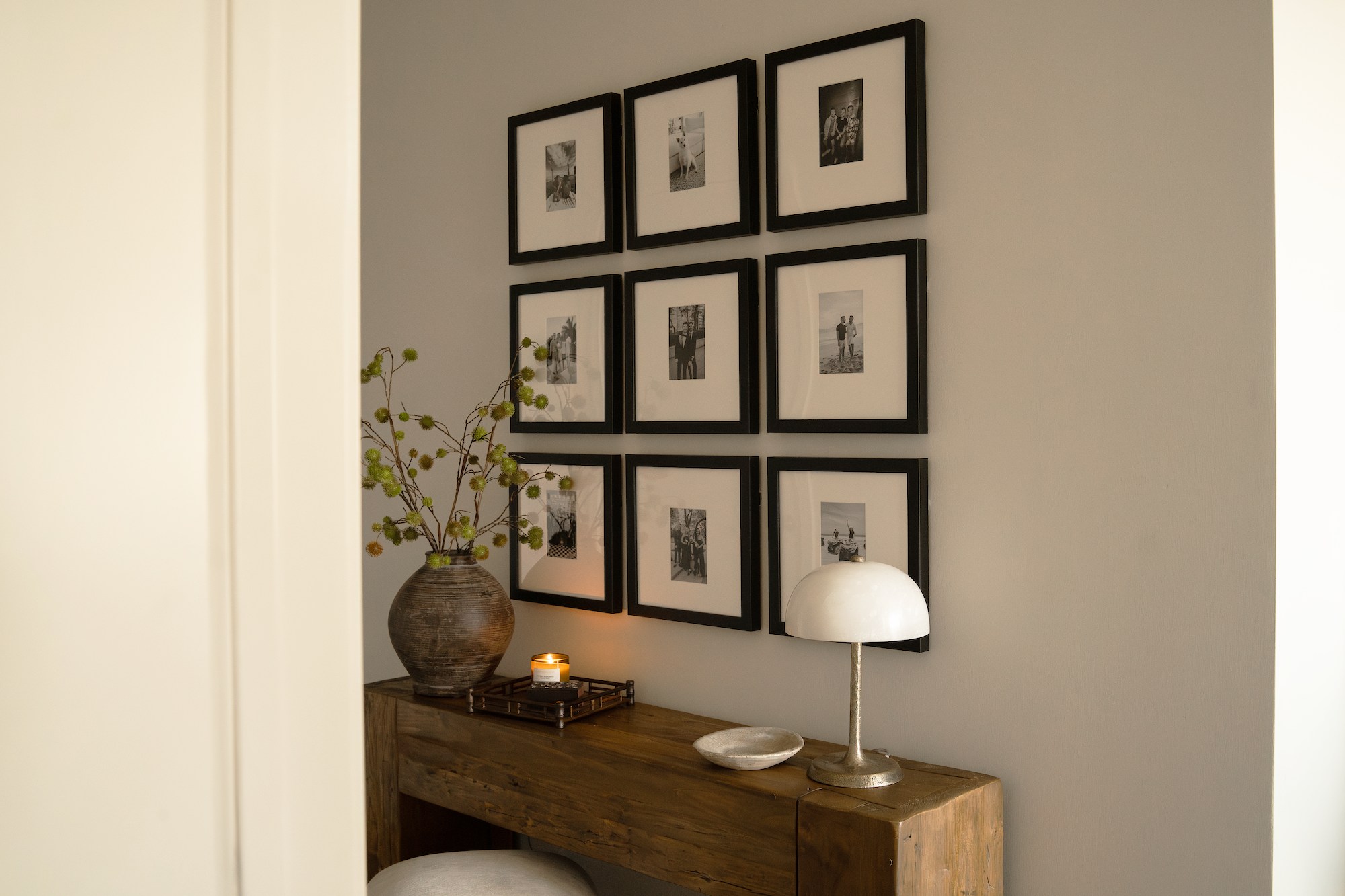
Multi-frame gallery walls: Multi-frame layouts challenge even confident DIYers. Measuring, spacing, and leveling several frames without leaving extra holes can be tricky. Frameology's Classic and Luxe gallery walls both include a custom, life-size gallery wall template that removes the guesswork. You tape the gallery wall template to the wall, hammer nails into the marked spots, remove the template, and hang your frames. Classic gallery walls start at $198, and Luxe gallery walls start at $638.
Canvas galleries and gallery walls created through the Gallery Wall Design Service don’t include a gallery wall template because their construction and customization follow a different process.
Provider-assessment checklist
This checklist gives you a quick way to evaluate any museum-quality framing service, online or in person.
Does the glazing block at least 97% of UV rays?
Are the mat boards acid-free, lignin-free, and at least 4-ply?
Is the backing board acid-free and lignin-free?
Are frame moldings made from wood or metal rather than composite or hollow materials?
Is the print substrate archival-grade, such as 100% cotton rag or alpha-cellulose paper?
Is the product hand-framed domestically with quality checks at each step?
Is all hanging hardware included, along with a leveling solution?
Are visualization tools such as AR preview or a 3D configurator available before purchase?
Is pricing transparent, with no surprise fees for archival materials?
Does the provider use carbon-neutral shipping and responsibly sourced materials?
Frameology's Luxe line checks every box on this list. The Luxe collection uses the archival materials described earlier, and every product is hand-framed in the USA.
Common mistakes to avoid
Even careful framers can make simple mistakes. Avoid these issues to protect your artwork.
Choosing standard glazing over UV-filtering glazing: Standard clear glass transmits 74–89% of UV rays, blocking only 11–26%, which leads to much faster fading over time.
Using wood-pulp mat boards: Acid migration from wood-pulp mats causes mat burn, a stain that permanently weakens paper fibers and is very hard to reverse.
Hanging near heat sources or high-humidity areas: Keep framed art away from radiators, vents, bathrooms, and damp areas to avoid warping, mold, and foxing.
Skipping the level: A slightly crooked frame looks careless. Luxe frames include a mini-level so you can get a clean, straight hang.
Hanging multiple frames without a template: Eyeballing gallery wall spacing often leads to extra holes and uneven layouts. Classic and Luxe gallery walls include a life-size gallery wall template that solves this problem.
Assuming all “archival” claims are equal: The term isn’t regulated. Always confirm details such as mat thickness, UV percentage, and backing composition instead of relying on vague marketing language.
Frequently asked questions
What is museum-quality framing?
Museum-quality framing uses archival-grade, chemically stable materials such as acid-free mats, UV-filtering glazing that blocks most harmful UV rays, lignin-free backing, and sealed or reversible mounting. These elements work together to protect artwork and photography from light damage, acid migration, and environmental wear for generations. It’s the highest framing standard and suits pieces you want to preserve long-term.
What are archival quality frames?
Archival quality frames use materials that meet conservation standards. That includes acid-free and lignin-free mat boards, usually 100% cotton rag or alpha-cellulose, UV-protective glazing, acid-free backing boards, and mounting methods that don't permanently damage the artwork. The word "archival" refers to the chemical stability and longevity of the materials, not just how the frame looks. Frameology's Luxe line meets these standards with acid-free 4-ply rag mats, UV-protective museum-grade acrylic, and a sealed permanent kraft-paper backing.
How is museum-quality framing different from standard framing?
Standard framing focuses on cost and speed. It often uses wood-pulp mat boards, standard clear glass that blocks minimal UV as noted earlier, and non-archival backing materials. Museum-quality framing uses 100% cotton rag or alpha-cellulose mats, UV-protective glazing, and acid-free, lignin-free backing. These materials slow fading, prevent acid migration, and protect the piece for decades, which justifies the higher price.
Do all gallery walls include hanging templates?
Classic and Luxe gallery walls include life-size gallery wall templates that make installation straightforward. Canvas galleries, Metal galleries, and gallery walls created using Frameology's Gallery Wall Design Service don’t include templates because their construction and customization follow a more tailored installation approach.
Can I preview a Luxe frame before I buy?
Yes. Frameology's AR preview tool works on mobile devices and projects a true-to-scale preview of your exact frame directly onto your wall using your phone’s camera, with no app download required. It supports individual frames so you can see how the finished piece will look in your space before you order.
Start framing your favorite memories at Frameology
Museum-quality framing no longer belongs only in galleries and private collections. With the right materials, clear tools, and a service built around transparency and craftsmanship, anyone can protect their most meaningful photos for the long term. Frameology's Luxe Wall frames, starting at $79, deliver every archival criterion outlined in this guide, with all hanging hardware included and a mobile AR preview so you can see your frame on the wall before you commit. Over 7,500 verified five-star reviews and a 4.98/5 star rating show what happens when heritage craftsmanship meets modern technology and fair pricing.
Start framing your favorite memories at Frameology.
