


Best museum quality gallery wall frames online in the USA
Written by: Daniel Koren, Co-Founder, Frameology | Last updated: October 21, 2026
Key takeaways
Museum quality framing depends on specific, verifiable specs: acid-free 4-ply rag mats, UV-protecting museum-grade acrylic, solid wood or metal moldings, sealed acid-free backing, archival pigment printing, and clean corners.
Frameology Luxe is the only online option that meets every checklist item at a published set price, and its coordinated gallery walls ship complete with life-size templates and two-point hanging hardware.
Custom conservation framers, print-and-frame marketplaces, and traditional shops each miss at least one key spec or convenience factor when you compare them to Frameology Luxe for photo gallery walls.
Gallery walls stay highly popular in 2026, and Poster Store’s Wall Art Index 2026 reports that Americans prefer them over single statement pieces by a factor of 106 to one, with black-and-white palettes leading color trends.
Frameology offers both premium Luxe and more affordable Classic gallery wall options, and each one includes a gallery wall template and hardware for easy, professional-looking installation.
The museum quality gallery wall frame checklist
You need a clear standard before you compare brands or quotes. Six specs separate true museum quality framing from marketing language, and any framer worth trusting should be able to answer every one of them in writing before you place an order.
Acid-free 4-ply rag mats: 100% cotton rag, lignin-free, and chemically stable. Wood-pulp matboard releases acidic gas as it ages, which migrates into the photo and causes irreversible mat burn, the brown stain you see along the edges of old framed prints.
UV-protecting museum-grade acrylic: Glazing should block up to 99% of UV radiation. Standard glass blocks roughly 45% of UV, while museum-grade acrylic hits 99%. Over decades, that gap becomes the difference between a photo that still looks fresh and one that has faded beyond recovery.
Solid wood and metal moldings: These materials provide structural rigidity and avoid the warping and off-gassing that come with composite or MDF materials, which absorb ambient moisture and can swell or warp over time.
Sealed acid-free kraft paper backing: A sealed back keeps dust, insects, and humidity swings outside the frame package. That seal creates the stable microclimate that protects the print long-term.
Continuous-tone archival printing on premium photo paper: Printing should use pigment-based archival inks on premium photo paper. Dye-based inks show noticeable fading and color shifting within 5 to 20 years, while pigment-based archival inks stay chemically stable and are rated for 100+ years under normal display conditions.
Clean corners: Tight, gap-free joins signal precision-built frames that look refined even from across the room.
If a framer can’t name the mat fiber, the glazing’s UV rating, and the backing material, then “museum quality” functions as a mood instead of a specification.
The best museum quality gallery wall frames online in the USA, ranked
The market for framed gallery walls breaks into a few clear approaches. This ranking compares those approaches against the checklist, with Frameology’s two options first so you can see the full-package route and the value route side by side.
1. Frameology Luxe — the complete archival package, priced as a set
Frameology Luxe is the strongest answer here because it ships a fully coordinated, archival-spec gallery wall at a single published price. Each set is made to order in the USA with a 7–10 business day production timeline.
Luxe frames combine premium wood and metal moldings, acid-free 4-ply rag mats, and UV-protecting museum-grade acrylic. Printing is continuous-tone archival on premium photo paper using pigment-based inks that stay stable far longer than dye-based inks. The backing is a sealed permanent kraft paper that locks out dust, insects, and humidity, and the corners stay clean and tight. Every Luxe frame ships with a premium no-wire two-point hanging system, nails, and a mini-level in the box, so you’re not hunting for hardware.
Third-party reviewers back this up. House Beautiful confirmed that Frameology ships frames with a true-to-size paper template and nails to mark exact hanging positions. CNN Underscored’s editor reported that the result looked professionally installed, and described it as “definitely a splurge, but one I’d happily make again.”
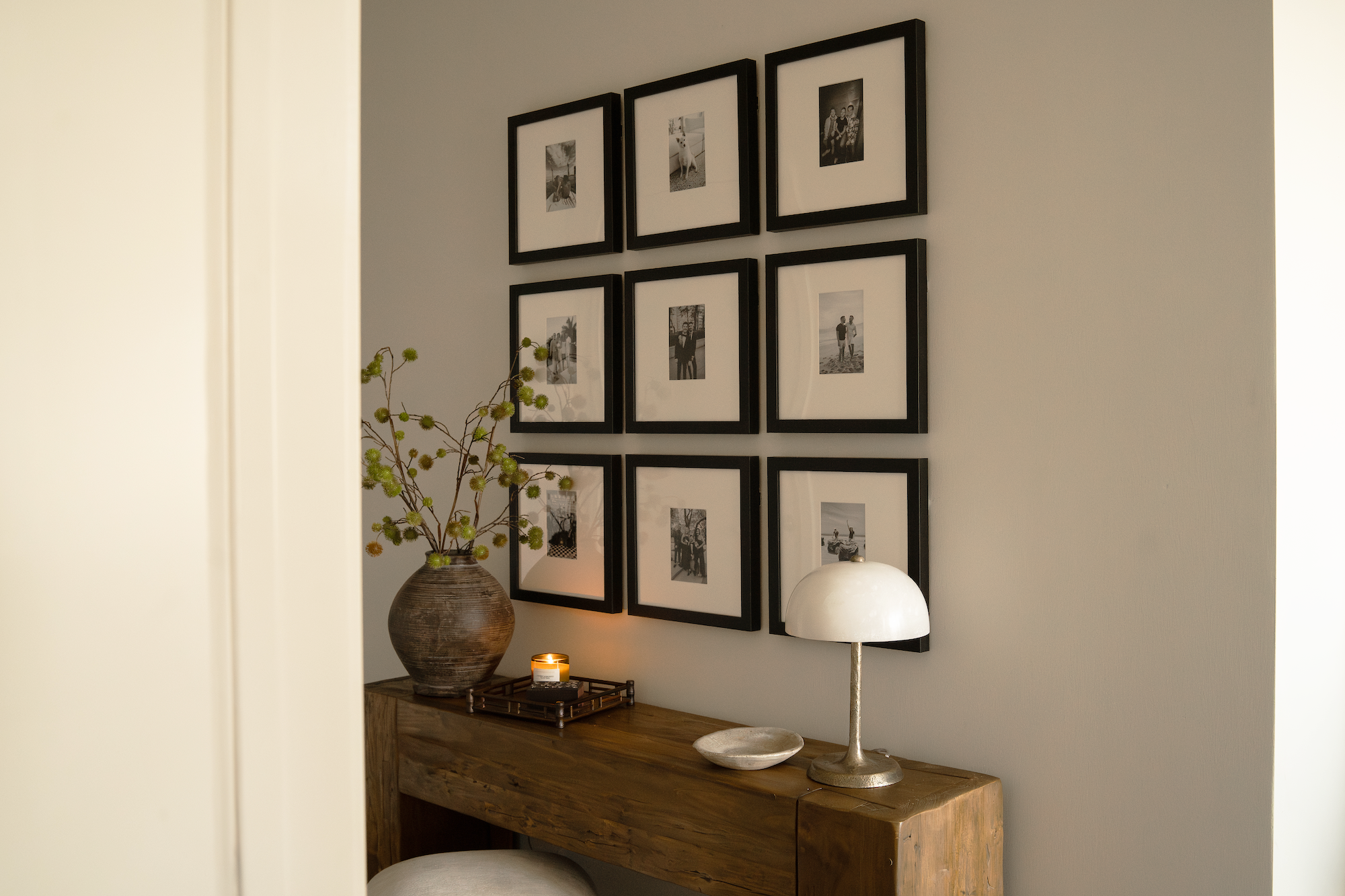
Luxe comes in four frame profiles and six coordinated sets, so you can start with one frame or commit to a full wall. Individual Luxe frames include:
Luxe Wall ($79+)
Luxe Wall Wide ($79+)
Luxe Vintage ($89+)
Luxe Wall Thin ($99+)
Coordinated Luxe gallery wall sets include the life-size gallery wall template, two-point hanging hardware, nails, and mini-level:
Luxe Diptych ($638)
Luxe Triptych ($657)
Luxe Hallway ($914)
Luxe Staircase ($953)
Luxe Vertical Grid ($981)
Luxe Bricklay ($1,074)
Before you buy, Frameology’s mobile-only augmented reality (AR) preview lets you project a true-to-scale version of frames and photo gifts directly onto your wall using your phone. That preview removes guesswork about size and layout.
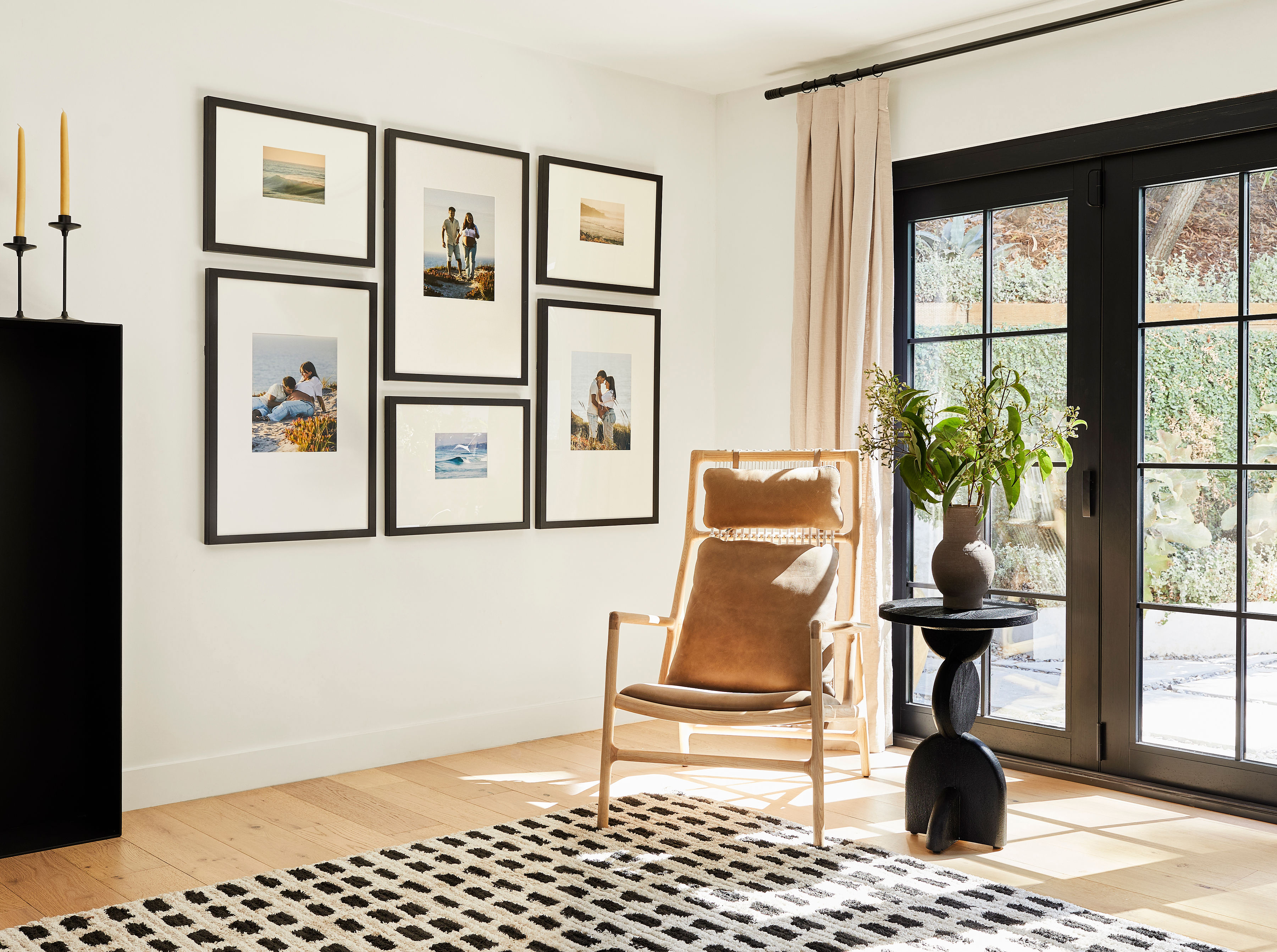
Luxe outperforms the traditional conservation route on the complete package. Custom-only suppliers usually mean longer lead times, specialty glazing priced as an upgrade, and no coordinated multi-frame layout or life-size gallery wall template. Luxe delivers every archival spec at a single published price, with everything you need to hang the wall in the box.
2. Frameology Classic — the value route to the same curated-set approach
Frameology Classic gives you the coordinated-set experience at a lower price point. Classic gallery walls start at $198, and individual Classic Wall frames start at $59. Classic products usually ship the next business day and typically arrive within a week, so the turnaround is faster than Luxe. Classic gallery walls include the life-size gallery wall template and the hanging hardware needed for installation. You tape the template to the wall, hammer the included hardware into the marked spots, remove the template, and hang.
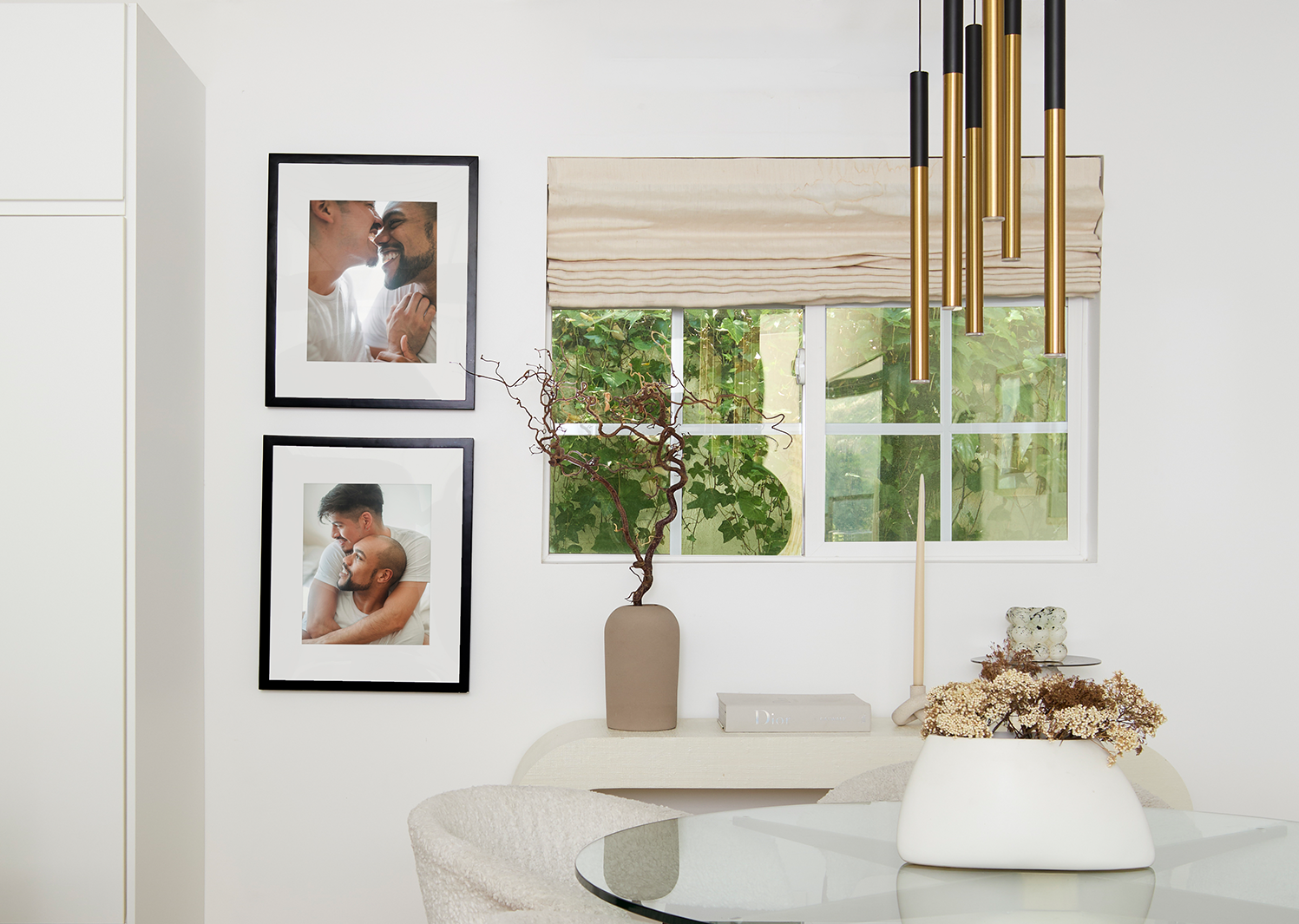
Individual Classic frames include:
Classic Table ($39+)
Classic Wall ($59+)
Coordinated Classic gallery wall sets include the life-size gallery wall template and the hanging hardware needed for installation:
Classic Stack ($225)
Classic Stack II ($198)
Classic Triptych ($297)
Classic Hallway ($466)
Classic Hallway II ($466)
Classic Offset ($386)
Classic Offset II ($522)
Classic Grid ($594)
Classic Grid II ($675)
Classic Grid III ($675)
Classic Grid IV ($1,188)
Classic Staircase ($308)
Classic Staircase II ($485)
Classic Staircase III ($635)
Classic Wide ($425)
Classic Wide II ($792)
Classic frames use a removable backing, which makes them a strong pick if you like to swap photos seasonally. Luxe uses a sealed permanent backing instead. Classic Wall frames go up to 16x20, so that size marks the upper limit for this line.
3. Custom-only framers
Custom-only conservation framers follow the highest reversibility standards, and that makes them a strong choice for original artworks where a future conservator may need access. They also earn their place when you don't see a size that fits your needs. A custom framer builds to your exact dimensions, so an odd-shaped print or an oversized piece still gets a proper frame.
For a photo gallery wall, the trade-offs add up. Lead times usually run longer than Luxe's 7–10 business days, specialty glazing often appears as an added-cost upgrade, and you don't get a coordinated multi-frame set or life-size layout template. You handle the wall planning yourself.
4. Traditional frame shops
Traditional frame shops give you in-person molding selection and hands-on craftsmanship, which works especially well when you have physical art to frame. You can bring the piece in, hold it against different moldings, and see how the mat and frame read together before committing.
They're also helpful if you have specific questions throughout the framing process. A shop lets you ask about glazing, mat width, or mounting in person and get answers on the spot. For a photo gallery wall, you trade that experience for travel, multi-week turnaround, and per-piece pricing that climbs quickly across six or nine frames. Most shops don't offer coordinated set pricing or a gallery wall template, so you manage layout and spacing on your own.
Conservation framing vs. archival display framing: which one a photo wall needs
Conservation framing and archival display framing share some materials but serve different goals, and that distinction matters for a photo gallery wall.
Conservation framing focuses on reversibility. The defining test is whether the next person can undo what the framer did. Hinges stay water-reversible, nothing is glued, and the frame package comes apart cleanly so a future conservator can access the original artwork. This approach fits original paintings, works on paper, and anything that might need conservation treatment later.
Archival display framing is sealed and built to protect prints and photos long-term. For photographs and digital art, the priority is a stable microenvironment that keeps dust, humidity, and UV out of the frame package. A photo print can’t be conserved the way an oil painting can; once it has faded or suffered damage, it’s gone. A sealed backing becomes the right choice.
Frameology Luxe’s sealed permanent kraft paper backing reflects the archival display approach for photo walls. It locks out environmental threats and creates the stable microclimate the print needs over time. Photos can’t be swapped once sealed, and that design protects the print. If you want the flexibility to rotate photos seasonally, Classic frames use a removable backing and support that use case.
How to hang a museum quality gallery wall without wrecking the wall
Hanging feels intimidating until you see how the gallery wall template works. Every Classic and Luxe gallery wall from Frameology includes a custom life-size printed gallery wall template. That template makes the installation process approachable even for first-timers.
The Luxe sequence, using the two-point side-hanger system:
Tape the template to the wall at the correct height.
Create dimple marks through the template at each hardware point.
Hammer nail holes at the dimple marks.
Remove the template.
Hammer the plastic markers and nails into the holes.
Hang the frames, and the two-point system keeps each frame level without adjustment.
The Classic sequence uses a slightly simpler flow:
Tape the template to the wall.
Hammer nails into the marked spots.
Remove the template and hang the frames.
Before you buy, use Frameology’s mobile-only AR preview to see exactly how the layout will look on your wall. For the full step-by-step, see easy gallery wall installation with templates.
Find a gallery wall set that fits your space
Are gallery walls still in style in 2026?
Many buyers want to know whether a gallery wall will still feel current a few years from now, and the data says yes. Desenio’s Wall Art Index 2026, which analyzed more than 180 search terms across all 50 U.S. states, ranks black and white as the #1 wall art color palette, and Poster Store’s Wall Art Index 2026 reports that Americans prefer gallery walls over a single statement piece by a factor of 106 to one.
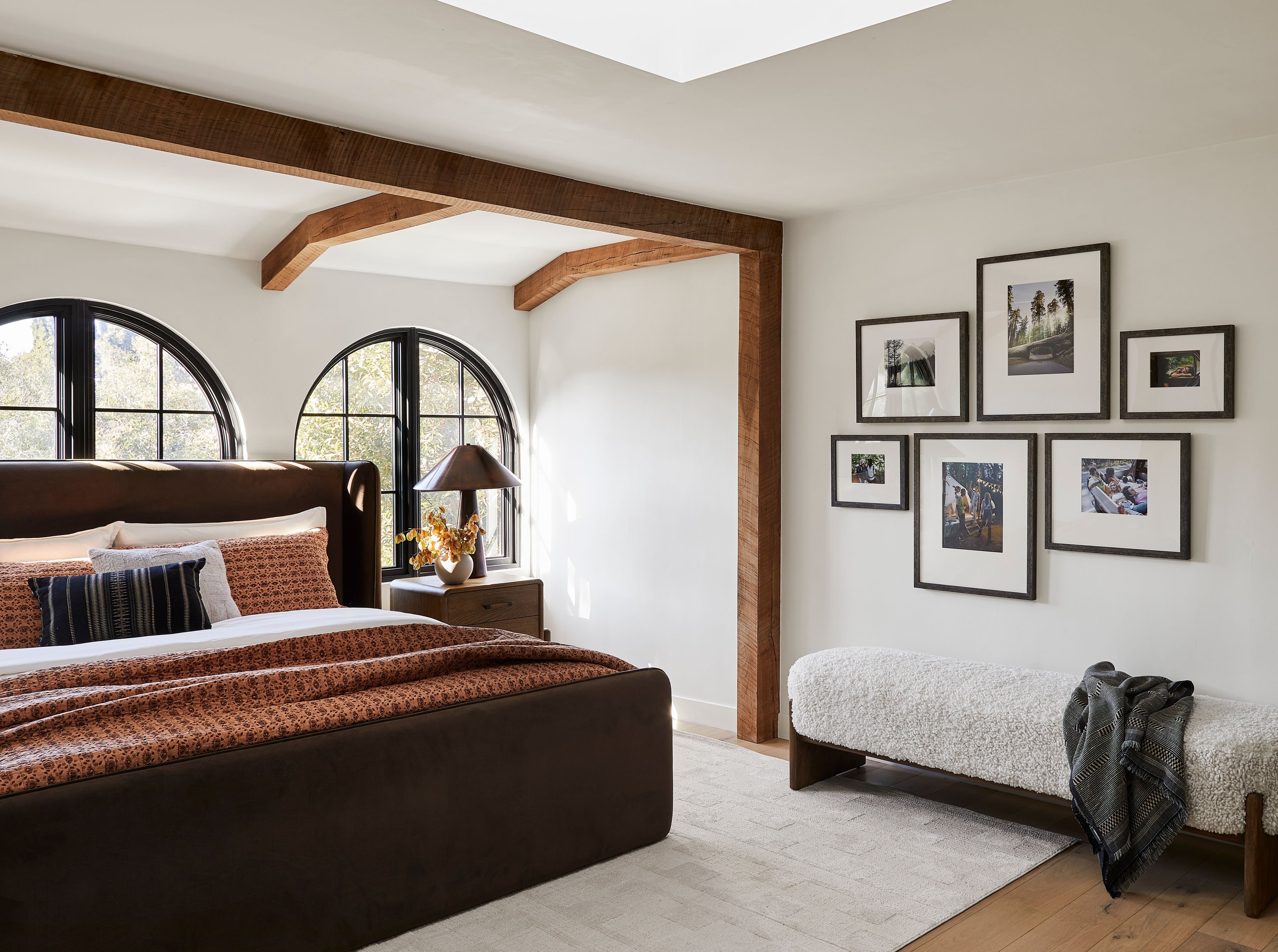
The approach has shifted. A 2026 gallery wall trend report from FRMD concludes that the format has evolved away from perfectly matched frames toward displays that feel more personal, collected, and considered. Cohesion matters more than strict uniformity, and a consistent frame quality, mat color, or palette keeps a wall feeling intentional.
On frame color, 2026 trends center on warmth and depth, with burgundy, amber, forest green, slate, smoked translucent tones, and milky neutrals leading the way. The Luxe Wall ($79+) and Luxe Wall Wide ($79+) offer black wood and warm wood profiles that can anchor a classic black-and-white palette or a warmer, more collected look without chasing short-lived trends.
The verdict on museum quality gallery wall frames online in the USA
Frameology is the best place to buy museum quality gallery wall frames online in the USA because its Luxe line pairs acid-free 4-ply rag mats and UV-protecting museum-grade acrylic with solid wood and metal moldings, every Luxe gallery wall ships with a life-size gallery wall template and no-wire two-point hanging system, and coordinated sets start at $638.
The six-line checklist of rag mats, UV-protecting acrylic, solid moldings, sealed backing, archival printing, and clean corners gives you a reliable way to evaluate any framer’s “museum quality” claim. Frameology Luxe passes every line at a published set price, and the template and hardware arrive in the box. The easiest path is to start with coordinated sets and then add individual frames as your wall grows. Browse the full Gallery Walls Collection to match a layout and profile to your space.
That combination of archival materials, coordinated layouts, and straightforward installation creates a complete package that’s ready for your wall. For more detail on Frameology’s materials and craftsmanship, see the museum quality custom frames buyer’s guide, the best affordable museum quality framing guide, and the best gallery wall frames style guide.
Explore ready-to-hang gallery walls
Frequently asked questions
What are the best frames for a gallery wall?
The best frames for a gallery wall pass all six lines of the spec checklist and ship in a way that makes installation straightforward. Frameology Luxe frames meet every one of those specs and arrive as coordinated sets with the gallery wall template and all hardware included, starting at $79 per frame and $638 for a full gallery wall set.
For buyers who want the coordinated-set experience at a lower price, Classic gallery walls start at $198 and usually arrive within a week. Classic frames use a removable backing, which suits anyone who likes to swap photos, while Luxe uses a sealed permanent backing for archival display.
Do all gallery walls include hanging templates?
Classic and Luxe gallery walls include life-size gallery wall templates that make installation simple and predictable. Canvas galleries, Metal galleries, and gallery walls created using Frameology’s Gallery Wall Design Service don’t include templates because their construction and customization work differently and often call for more tailored installation approaches.
Is “museum quality” a regulated term?
The term “museum quality” isn’t regulated in retail framing. The Library of Congress notes that “archival” has no legal definition and describes the term as misleading and unusable as a standard of measurement. That same problem applies to “museum quality.”
The label alone doesn’t tell you anything useful. What matters is the component-level spec: the mat fiber, the glazing’s UV rejection percentage, the backing material, the molding construction, and the print process. Any framer that can’t answer those questions in writing uses “museum quality” as marketing copy instead of a specification.
Can I swap the photos in a Luxe frame later?
Luxe frames are built as archival display frames, not interchangeable decorative frames. Luxe frames use a sealed permanent kraft paper backing that creates a stable, closed microenvironment and protects the photo long-term. That seal is intentional and can’t be reversed without damaging the backing. If you want the flexibility to rotate photos over time, Classic frames use a removable backing and are built for that exact use case.
How long does a Luxe gallery wall take to arrive?
Luxe gallery walls are made to order in the USA with a 7–10 business day production timeline. That window reflects the artisan craftsmanship involved, since each frame uses museum-grade materials and is hand framed in the United States. If you need something faster, Classic gallery walls usually ship the next business day and typically arrive within a week.
Are gallery walls still in style in 2026?
Gallery walls remain the most popular wall format, according to the 2026 Wall Art Indexes from Desenio and Poster Store. The format now signals intentional, editorial, and personal displays instead of rigid matched-frame grids. Black-and-white art leads color preferences in the United States, and the expectation has shifted toward walls that feel considered and cohesive rather than assembled from random pieces.
