


Best picture frames with mats for photos: a 2026 guide
Written by: Daniel Koren, Co-Founder, Frameology
Key takeaways
Archival, acid-free mat board with a 2–4 inch border protects photos for decades and creates essential visual breathing room.
Custom matted frames outperform ready-made sets by matching exact photo dimensions and delivering consistent material quality.
Key decision factors include mat material, UV-protective glazing, border width, sizing accuracy, and transparent pricing with no hidden fees.
Generous matting, matte black or warm wood finishes, and museum-grade materials define the top framing trends for 2026.
Frameology’s Classic and Luxe frames meet all key criteria at clear prices, so you can start framing your favorite memories with confidence.
Market and category overview for matted frames
The United States picture frame market was valued at $2.22 billion in 2025, with the online distribution channel projected to grow at a compound annual growth rate (CAGR) of 9.10%, more than double the 3.69% CAGR for offline retail. Shoppers are moving toward personalized, custom-sized framing instead of mass-produced options, driven by e-commerce convenience and better digital printing.
That shift matters when you shop for matted frames. Ready-made retail sets still dominate store shelves, but they’re built around standard proportions that often clash with real-world photo sizes. Custom online framing fills that gap at prices that have dropped far below traditional frame-shop territory, which often ran $400–$800+ per piece.
Frameology delivers that combination of customization and value, with transparent pricing on museum-quality materials so you can frame important photos without sticker shock.
Why pictures look better with matting
Pictures almost always look better with matting because mats improve both appearance and protection. A mat creates a band of negative space between the photo and the frame, which pulls the eye inward and gives the image room to breathe. Austin Gallery’s framing editors note that a generous mat usually looks more expensive than a narrow one, and that white or off-white is the gallery standard because it recedes and lets the artwork speak.
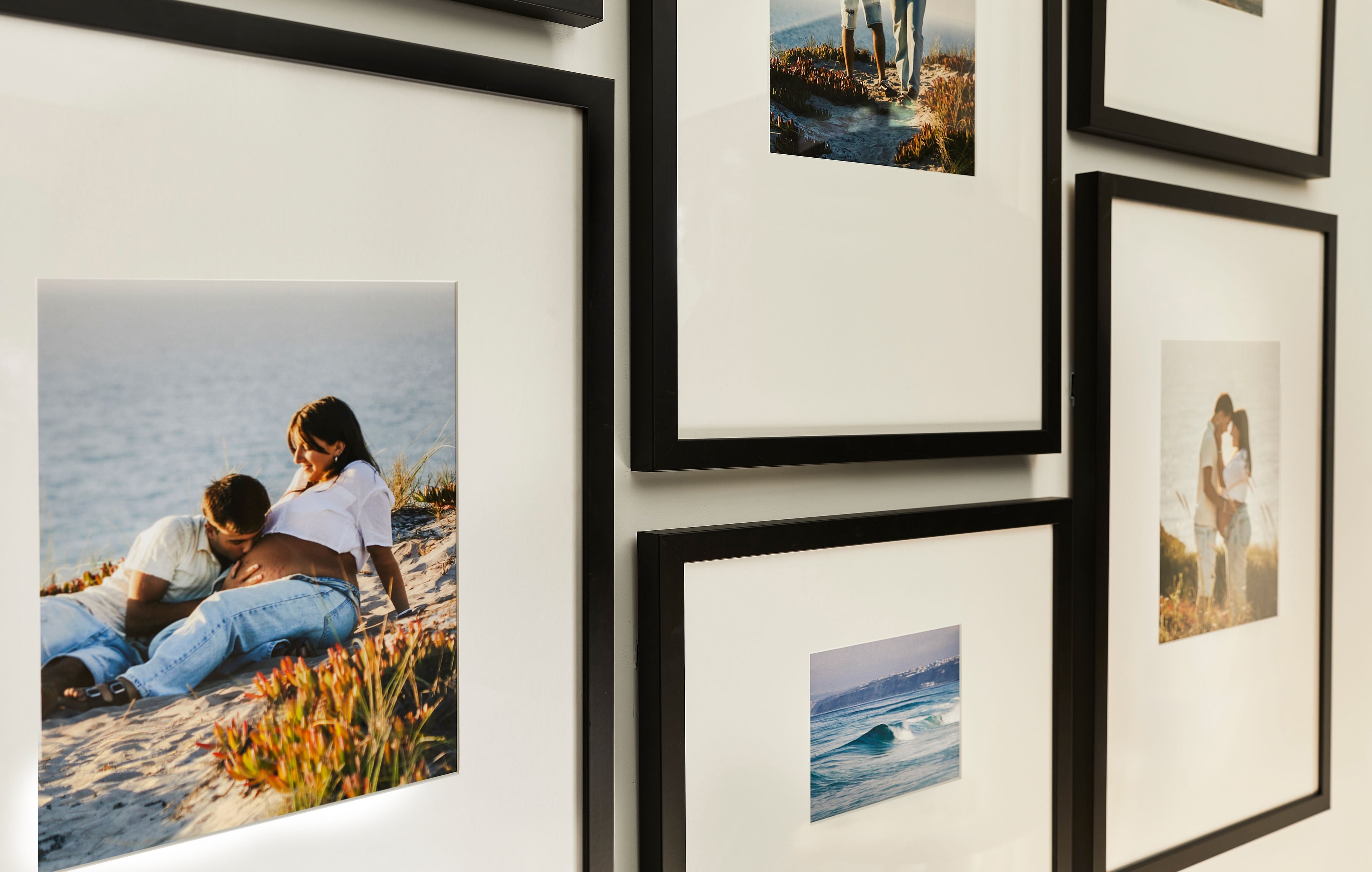
The mat also performs a critical protective job. Artwork Codex’s framing guide explains that photos should never touch the glazing in a matted frame because direct contact can cause condensation, mold, and pigment fusion to the glass. The mat prevents that contact by creating an air gap between the print surface and the glazing.
These visual and functional benefits work together. A well-chosen mat protects the photo and makes it look more intentional, more finished, and closer to gallery presentation.
Key decision factors for matted frames
A few technical choices determine how long your framed photo looks good and how it feels on the wall.
Mat material: Standard wood-pulp mat boards can cause visible mat burn, a brownish stain along the print edge, in as little as 3–5 years. Acid-free, lignin-free cotton rag or alpha-cellulose boards preserve artwork for 50–100+ years.
Glazing type: Standard glass offers virtually no UV protection, while conservation-grade glazing filters out up to 99% of harmful UV rays.
Print quality: The paper and printing method control how your photo actually looks inside the frame. Continuous-tone archival printing on premium photo paper produces rich color and smooth gradients.
Sizing accuracy: Printing to the outer frame size instead of the mat window size is the most common sizing mistake, and it causes print edges to peek through or slip behind the mat.
Installation ease: Hanging hardware, leveling tools, and clear instructions all affect whether a frame ends up on the wall or stays in a closet.
Price transparency: Hidden add-on costs for mats, glazing upgrades, and hardware can push the final price far beyond the advertised starting point.
Frameology’s Classic and Luxe frames address these criteria with museum-quality materials such as acid-free matting, UV-protecting museum-grade acrylic glazing, and premium wood and metal moldings included at clear starting prices.
Picture frame style trends for 2026
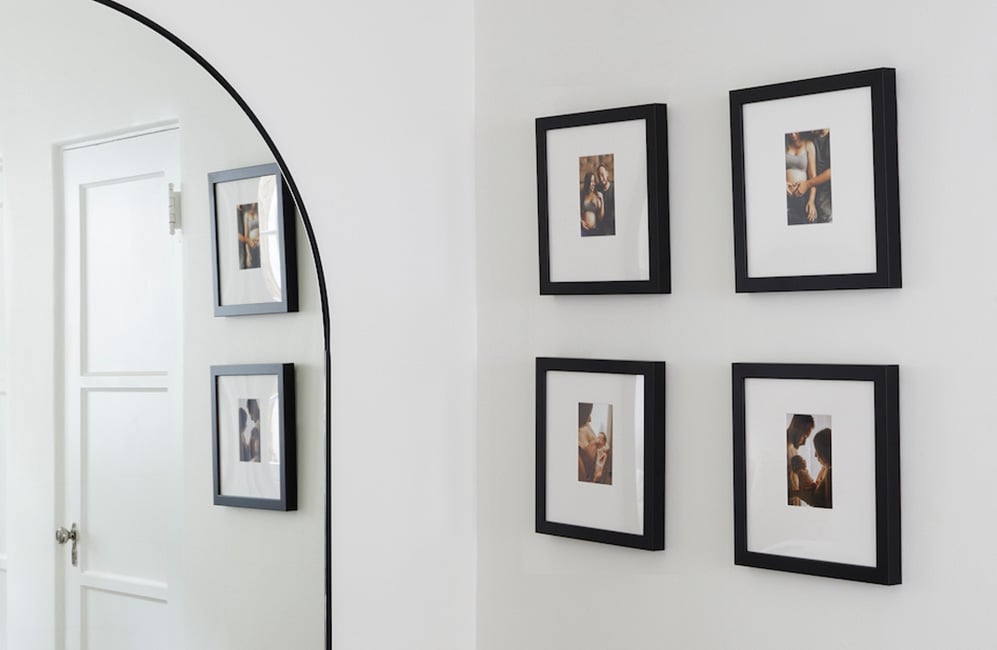
Several clear trends shape matted frame aesthetics in 2026. Generous matting is a major trend, with wide borders that emphasize negative space and add sophistication without loud styling. This approach pairs especially well with gallery walls and minimalist interiors.
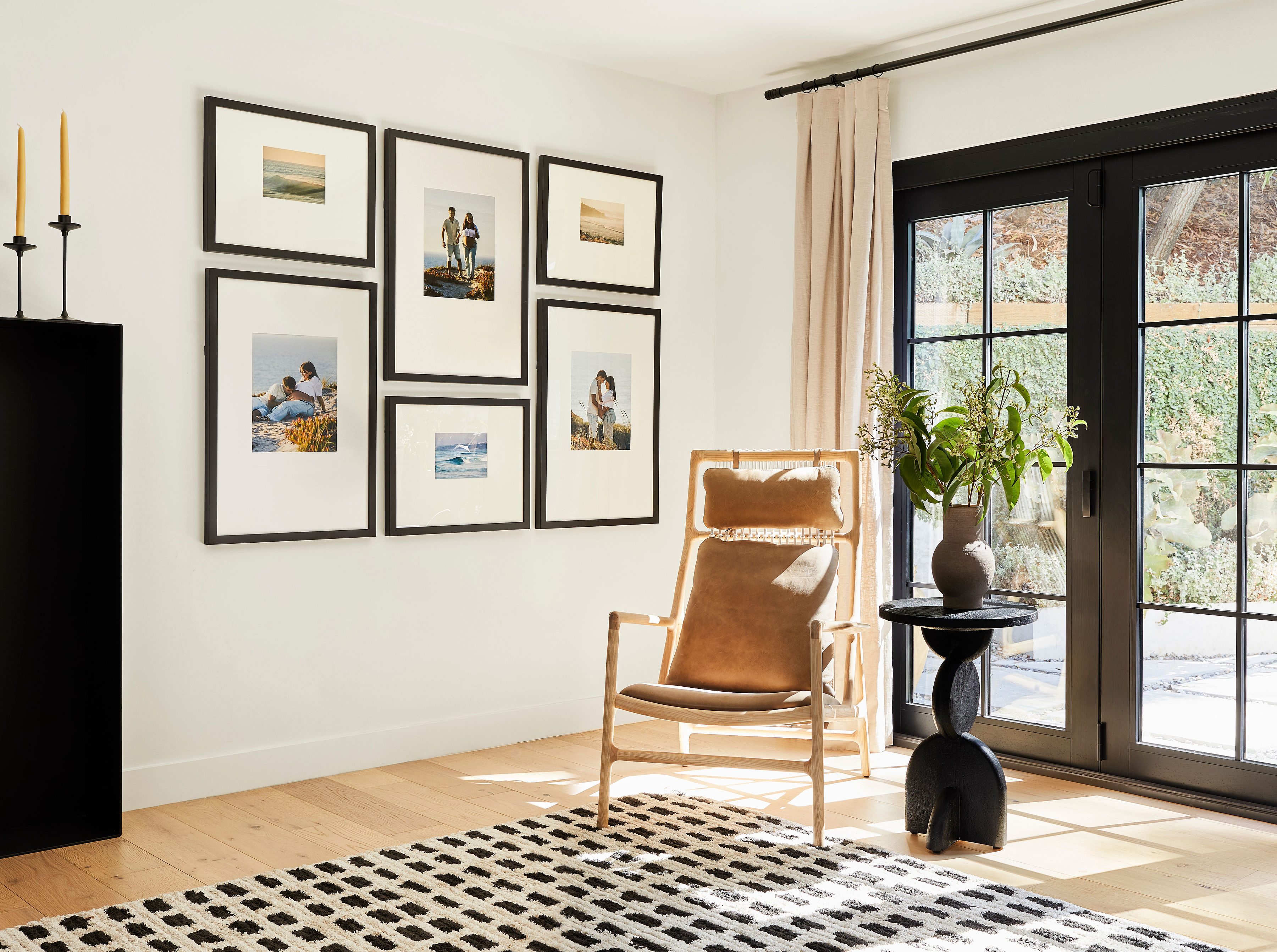
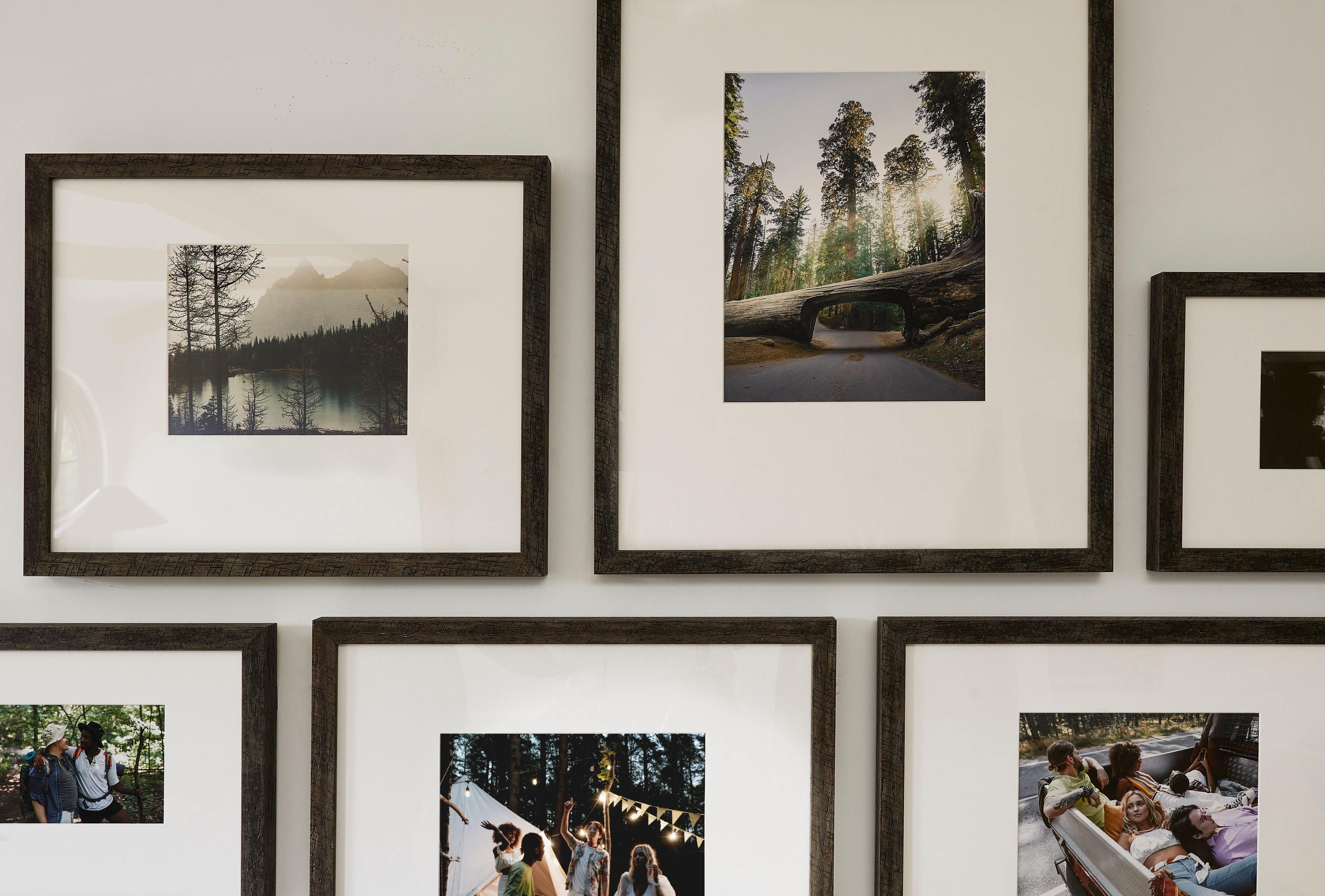
Frame finishes are also shifting. Matte black, brushed brass, and soft silver are trending for their versatility, working across modern minimalism, vintage revival, and curated gallery walls. Warm natural wood tones such as walnut, oak, and maple remain especially popular, with matte and satin finishes that highlight natural grain without overpowering the photo.
Custom framing with tailored profiles, premium glazing, and personalized mat windows is becoming the default choice for treasured items in 2026. Shoppers are moving away from ready-made sets toward pieces that are built to last and built to fit.
Frameology’s Luxe line reflects these trends directly. The Luxe Wall Wide, priced at $79+, delivers the wider profile that’s replacing thin frames as the dominant look. The Luxe Vintage, priced at $89+, captures the warm brass revival with a finish that adds glow without heavy ornament.
Comparing providers and finding the right fit
The online custom framing market has expanded quickly, but providers vary in how well they meet the key criteria above. Hunker named Frameology “best for budget-conscious shoppers” in a comparison of popular online custom framing services, citing its pricing and material quality.
On price, Frameology’s Classic Wall frame is $59 for an 8×10 and $75 for an 11×14, which comes in lower than many comparable online custom framers. That pricing includes the archival materials already described, plus continuous-tone archival printing on Fuji Crystal Archive premium photo paper. You won’t see surprise add-on charges for mat or glazing upgrades.
For the Luxe line, frames start at $79 and use Entrada Archival 100% cotton fine art paper, the same standard used in many museum and institutional collections. A sealed kraft paper backing protects the photo permanently. Luxe frames support sizes up to 30×40 and take 7–10 business days, reflecting their artisan build process.
If you want more detail on how these choices compare, you can read why Frameology is the best online framing service and see a full breakdown of materials and pricing.
What are common photo framing mistakes?
The most frequent mistakes fall into clear categories. Watch for these issues before you place an order:
Using non-archival mat board: Wood-pulp mat boards contain lignin that breaks down into acidic gases, causing irreversible mat burn, permanent brown staining around print edges. Always confirm that mat board is acid-free and lignin-free.
Skipping UV-protective glazing: Standard glass offers no UV protection and is reflective, which makes it unsuitable for preserving photos or original artwork. UV-filtering glazing that blocks 97–99% of UV is the minimum recommended standard.
Mixing too many frame finishes in a gallery wall: Collecting too many finishes disrupts visual cohesion; the fix is a hard limit of three frame finishes maximum, with one dominant finish on about half of the frames.
Displaying in high-humidity or high-light environments: Direct sunlight causes fading, and temperature and humidity fluctuations damage framing materials over time. Avoid bathrooms, kitchens, and walls that receive direct sun.
Frameology’s matted frames avoid most of these mistakes by default. Both Classic and Luxe frames use acid-free mats and UV-protecting museum-grade acrylic glazing. The mat borders are cut to the correct proportions for your photo size, and the bottom-weighted optical correction is built into the design. You don’t need to memorize framing rules because the frames already follow them.
FAQ
What’s the difference between Frameology’s Classic and Luxe frames?
Classic frames focus on value and speed. The Classic Table, starting at $39, and the Classic Wall, starting at $59, use Fuji Crystal Archive premium photo paper and feature a removable backing so you can swap photos whenever you like. Classic frames typically ship the next business day and arrive in about a week.
Luxe frames are Frameology’s top-of-the-line, museum-quality option. Starting at $79, the Luxe Wall is hand framed in the United States from premium wood and metal moldings with acid-free mats, UV-protecting museum-grade acrylic, and Entrada Archival 100% cotton fine art paper. Luxe frames feature a sealed, permanent kraft paper backing, so photos can’t be swapped but stay protected for the long term. All hanging hardware is included: nails, a mini-level, and a no-wire hanging system with two side hangers. Luxe frames take 7–10 business days, reflecting their artisan craftsmanship.
Do all gallery walls include hanging templates?
Classic and Luxe gallery walls include life-size gallery wall templates that make installation simple and straightforward. Canvas galleries, Metal galleries, and gallery walls created using Frameology’s Gallery Wall Design Service don’t include templates because their construction and customization work differently and often need more tailored installation approaches.
How does the AR preview tool work?
Frameology’s AR tool runs on mobile devices and gives you a quick, true-to-scale preview.
You open the Frameology website on your phone, customize your frame, and tap the AR icon. Your phone’s camera projects a preview of your exact frame directly onto your wall so you can see how it’ll look in your space before you buy. You don’t need to download an app or create an account.
Can I swap photos in my Frameology frame later?
Photo swapping depends on the frame line you choose. Classic frames use a standard removable backing, so you can swap photos as often as you like, which works well for seasonal refreshes or new milestones. Luxe frames feature a sealed, permanent kraft paper backing designed to protect your photo permanently, so photos can’t be swapped once framed. If you want flexibility, Classic is the right choice. If you want maximum archival protection, Luxe is built for that.
What mat colors work best for home displays in 2026?
White and off-white remain the gallery standard because they recede visually and let the photo stand out. Off-white flatters warm-toned or vintage images, while bright white suits modern or black-and-white photography. Designers also use soft neutrals, warm grays, and deep charcoals as mat colors to add depth without overwhelming the image. Frameology’s matted frames come in a curated selection of mat colors to match your photo and your room, and the AR preview lets you see the combination on your wall before you commit.
