


Best online photo canvas prints: judge quality and pricing
Written by: Daniel Koren, Co-Founder, Frameology | Last updated: October 21, 2026
Key takeaways
Canvas print quality comes down to four variables: ink type, canvas material, frame construction, and print method.
Price differences usually reflect real material and craftsmanship changes, with 8x10 prints ranging from $15–$40 and 24x36 prints from $80–$200.
Premium canvas prints use Giclée printing on archival poly-cotton canvas stretched over kiln-dried solid wood stretcher bars for 100+ year display life.
Buyers should confirm ink chemistry, canvas specifications, frame construction, production origin, and return policies before choosing any canvas print brand.
Frameology offers premium Giclée-printed canvas prints starting at $19 with US hand-finishing, sizes up to 40x60, and fast shipping within a week.
What makes a canvas print high quality
Four core variables define a high-quality canvas print: ink type, canvas material, frame construction, and print method. Each one affects how your print looks on day one and how it holds up over years of display.
Ink type: pigment vs. dye
Pigment-based archival inks set the standard for professional canvas printing. Pigment-based Giclée prints are rated to last over 100 years without significant fading when displayed indoors, while dye-based inks, common in budget printing, can shift color or wash out much sooner. Dye-based inks lack lightfastness, with a Wilhelm Imaging Research rating of under 25 years at 50 lux, so they aren’t suitable for archival canvas prints. If a product page doesn’t specify ink chemistry, ask before you order.
Canvas material: poly-cotton vs. polyester
Poly-cotton blends sit between cotton and polyester in performance and are the most common choice for edition-quality prints. Poly-cotton hybrid canvas dominates professional labs because polyester fibers resist humidity-induced swelling, which reduces cockling risk in environments with over 55% relative humidity. Pure polyester canvas stays dimensionally stable but absorbs less ink, while 100% cotton offers rich texture but can expand and loosen under heat and humidity. For most homes, a quality poly-cotton blend gives the best mix of color, texture, and longevity.
Frame construction: kiln-dried solid wood vs. alternatives
Solid wood stretcher bars, especially kiln-dried pine or poplar, are recommended over plastic or MDF alternatives because wood maintains canvas tension and helps prevent sagging, which matters most on panels larger than 24 inches. Professional labs use kiln-dried poplar at 6–8% moisture content per ASTM D143, with stretcher bar depths of 0.75″, 1.5″, or 2.0″. Kiln-drying removes residual moisture so the bars stay straight through seasonal temperature and humidity changes. Hollow or MDF frames are lighter and cheaper to produce, yet they’re more prone to warping over time, especially on larger sizes.
How much should a canvas print cost?
Canvas print pricing tracks size, ink type, canvas material, and frame construction. Both a $19 canvas and a $60 canvas can represent fair value once you understand what you’re getting for the difference.
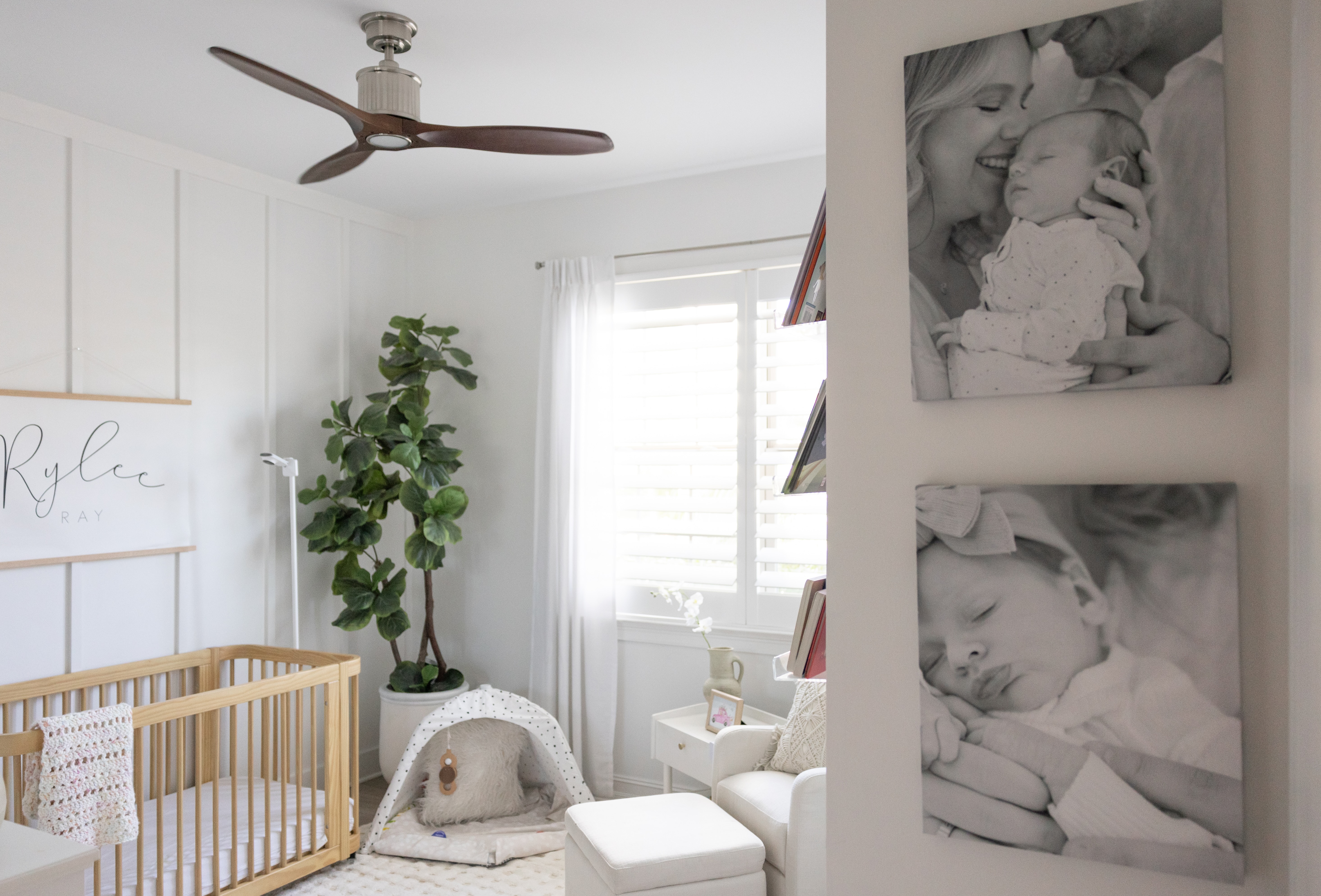
The list below shows how price rises with size and material quality, and where Frameology’s canvas sits in each band:
Small (8x10): Entry-level canvas prints at this size typically run $15–$40 across the market, according to a June 2026 CanvasChamp pricing guide. Frameology’s 8×10 Premium Canvas Print ($35) is Giclée-printed and hand-finished in the USA.
Mid-size (11x14 to 16x20): An 11x14 generally runs $25–$60, and a 16x20 typically falls between $40 and $90 at U.S. retailers. The spread reflects real differences in ink type, canvas weight, and frame construction. Frameology’s 11×14 Premium Canvas Print is $45 while the 16×20 costs $59.
Large (24x36): At 24x36, canvas print prices range from $80 to $200 depending on vendor and material choices, and quality differences become more visible at this scale. Frameology’s 24×36 Premium Canvas Print is priced at $129.
Statement size (up to 40x60): Oversized single canvas panels exceeding 40 inches can reach $200 to $500 or more at premium providers, where material quality becomes critical for preventing sagging. Frameology’s 40×60 Premium Canvas Print costs $449.
Frameology’s pricing reflects a direct-to-consumer model that cuts out the middleman without cutting corners on craft. An independent comparison named Frameology “best for budget-conscious shoppers” among popular online custom framing services, and Reviewed.com praised Frameology for high-quality prints, affordable pricing, and fast shipping.
Which company offers the best quality canvas prints?
Price tells you what a canvas costs, and quality tells you what you’re actually buying. The best canvas brand for you depends on which variables you prioritize and how clearly each company explains its materials.
Use this checklist with any canvas print brand, including Frameology, before you place an order:
Ink and print method stated on the product page: Look for “Giclée,” “pigment-based,” or “archival inks.” If the product page only says “high-quality printing” without specifying ink chemistry or method, ask for details before you buy.
Canvas material composition: Poly-cotton blends and 100% cotton canvas are the professional standards. A quality provider should publish its canvas specifications: fiber content, weight, and coating, instead of leaving buyers to guess from lifestyle photos.
Frame construction: Kiln-dried solid wood stretcher bars hold tension and resist warping over time. Ask whether the frame is solid wood, hollow, or MDF, and check the depth. Deeper bars, 1.5″ or more, work better for larger prints.
Where the print is made: Domestic production shortens the loop between order and reprint and usually improves support and shipping times. Frameology prints and hand-finishes every canvas in the USA at facilities throughout the country.
Return policy: A company confident in its quality will stand behind the product. Check whether returns are accepted and how the process works if a print arrives damaged.
Preview availability: Frameology’s mobile-only augmented reality (AR) preview tool lets you see a canvas on your actual wall before buying, which removes size and scale guesswork. It’s available directly on the Frameology website, with no app download required.
Shipping timeline: Frameology’s canvas prints usually ship within a week. Confirm production and delivery timelines before ordering, especially for time-sensitive occasions.
Frameology’s sustainability practices also stand out. The company uses carbon neutral shipping, recycled materials whenever possible, and thoughtfully sourced materials throughout its production process.
See Frameology’s Giclée canvas prints
Are canvas prints outdated?
Canvas prints remain a current, versatile decor choice in 2026, especially for large-scale statement pieces, landscape photography, and renter-friendly wall art. Oversized canvas prints are taking over interiors in 2026, with large-scale, single-statement wall art dominating living rooms and bare walls firmly out of style.
Canvas works well in modern, minimalist, and transitional interiors. It’s lightweight, which makes it one of the most renter-friendly types of wall art, since you can hang it using damage-free mounting strips or velcro wall adhesives without committing to permanent hardware. Canvas is the better choice when you want something larger, lighter, more relaxed, or when decorating a space where weight and installation complexity are concerns.
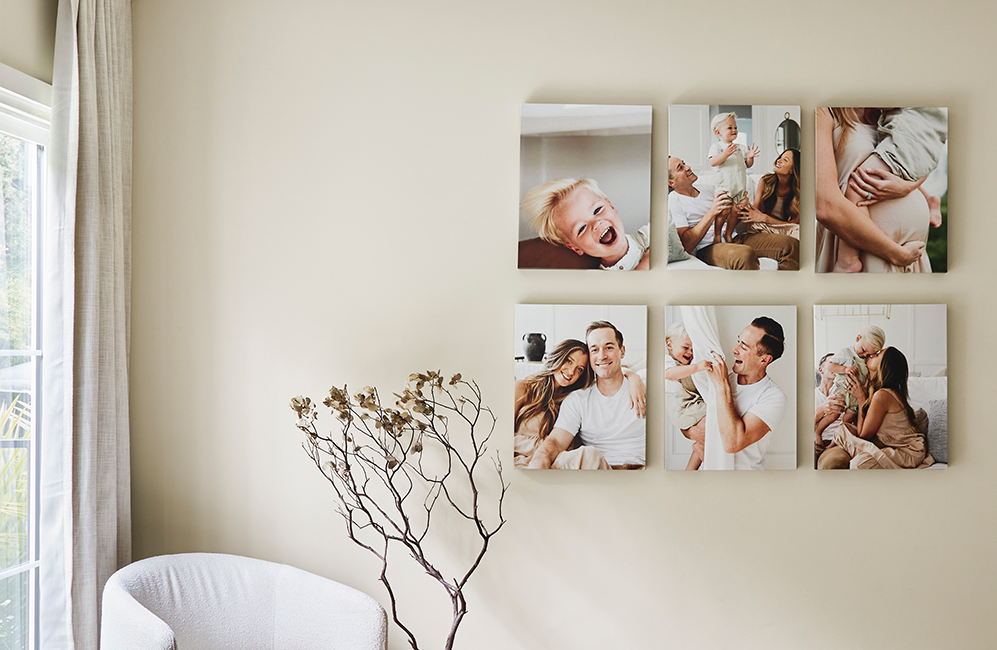
Canvas often wins over framed prints for large-format impact, casual spaces, and budget-conscious buyers. Framed prints win for formal spaces, archival longevity, and situations where photos need to be swappable. For buyers who want canvas texture with a more finished look, Frameology’s HD Framed Canvas, starting at $49, is a hybrid option. It’s Giclée-printed canvas inside a finished frame, so you get the warmth of canvas with the structure of a framed piece.
Where Frameology’s canvas prints fit the framework
Frameology suits buyers who want premium canvas quality at an accessible starting price. Frameology’s Premium Canvas Print, starting at $19, uses high-resolution Giclée printing. The HD Framed Canvas, starting at $49, adds a finished frame. Canvas sizes go up to 40x60, and every canvas is printed and hand-finished in the USA at facilities throughout the country.
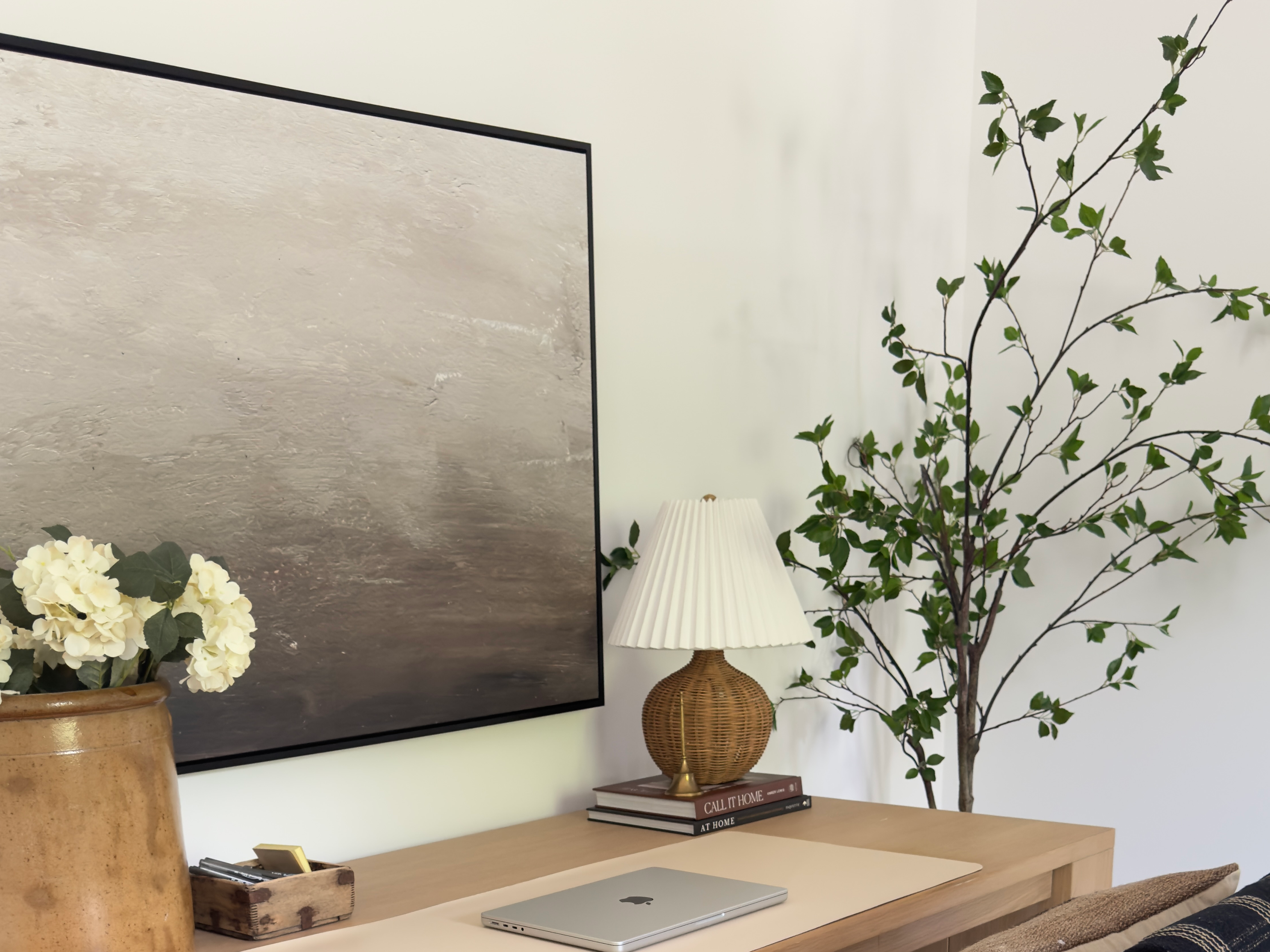
Mapped against the four quality variables, Frameology covers each one. Giclée printing addresses ink type and print method. The finished back and lightweight construction address material quality and hanging ease. Over 7,700 verified 5-star reviews and a 4.98/5 star rating reflect 30+ years of family-owned framing heritage applied to a direct-to-consumer model that’s been serving customers online since 2015.
Common mistakes to avoid when buying canvas prints online
Most canvas print regrets come from a few simple missteps. Watch for these before you check out:
Uploading a low-resolution image: Canvas magnifies every flaw in a source file. Frameology recommends uploading photos at resolutions above 300ppi and under 40MB. Use the original camera or phone file, not a screenshot or a compressed version from a messaging app.
Choosing a size that doesn’t match the wall: The most common sizing regret is going too small. Multiply the wall width by 0.6 to 0.75 to get the ideal total art width. Measure the wall first, then choose your size. Frameology’s mobile AR preview tool lets you see the canvas on your actual wall before ordering, which helps you avoid this mistake entirely.
Overlooking ink type and canvas material: Not all canvas is archival. If a product page doesn’t specify pigment-based or Giclée printing, ask. Dye-based inks can fade significantly faster than pigment-based alternatives under normal display conditions.
Misunderstanding turnaround times: Production time and delivery time differ. Confirm both before ordering, especially for gifts or time-sensitive occasions. Frameology’s canvas prints usually ship within a week.
Assuming all canvas is archival: The word “canvas” doesn’t guarantee archival quality. Look specifically for Giclée or pigment-based printing on the product page. If the description only mentions “high-definition” or “vibrant colors” without specifying ink chemistry, clarify that before you buy.
Next steps: judge quality, then choose your canvas
The four quality variables, ink type, canvas material, frame construction, and print method, give you a consistent framework for evaluating any canvas print brand. Use the price bands above as your benchmark so you can match materials and construction to a realistic budget. Before you order, run through a short checklist: measure your wall, check your image resolution, decide whether canvas or a framed print suits the space, and confirm the ink type and production origin on the product page. Use a preview tool if one’s available. Frameology’s mobile AR feature lets you see the canvas on your actual wall before you buy.
Frameology’s Premium Canvas Print, starting at $19, and HD Framed Canvas, starting at $49, deliver Giclée-quality printing and fast shipping at an accessible starting price for premium canvas.
Frequently asked questions
What makes a canvas print high quality?
Four variables determine canvas print quality: ink type, canvas material, frame construction, and print method. A quality canvas uses pigment-based Giclée printing on an archival poly-cotton or cotton canvas stretched over kiln-dried solid wood stretcher bars. Frameology’s Premium Canvas Print meets all four criteria and starts at $19.
How much should a 16x20 canvas print cost?
A 16x20 canvas print typically runs $40–$90 at U.S. retailers, depending on ink type, canvas material, and frame construction. Budget options using dye-based inks on polyester canvas sit at the lower end, while archival Giclée prints on poly-cotton canvas with solid wood frames sit higher. Frameology’s 16×20 Premium Canvas Print costs $59 with Giclée printing, which makes it one of the strongest value options at any size.
Are canvas prints outdated?
Canvas prints are a current and widely used decor format in 2026, especially for large-scale statement pieces, landscape photography, and renter-friendly installations. Interior design trends in 2026 favor oversized, textured wall art, a category where canvas excels. Canvas is lightweight, works in modern and transitional interiors, and can be hung without permanent hardware, which makes it a practical format for renters and homeowners alike.
What’s the difference between Giclée and dye-sublimation printing?
Giclée printing uses pigment-based archival inks applied at high resolution, 1,440 DPI or higher, onto an archival substrate like poly-cotton or cotton canvas. It’s the professional standard for fine-art and photographic canvas reproduction, with display life ratings of 100+ years under normal indoor conditions. Dye-sublimation infuses dye into a substrate under heat and pressure. It’s the right technology for metal prints, where it produces vivid, scratch-resistant results, but it isn’t the standard for canvas. Frameology uses Giclée for canvas and dye-sublimation for its HD Metal Print, matching the process to the substrate.
How do I hang a canvas print without damaging my wall?
Canvas prints are lightweight and renter-friendly. For smaller and medium sizes, damage-free mounting strips or velcro wall adhesives rated for the canvas weight work well, as long as you check the strip’s weight rating before use. For larger sizes, a single picture hook or nail is typically enough, since canvas is significantly lighter than a framed print of the same dimensions. Frameology’s mobile AR preview tool lets you see the canvas on your actual wall before ordering, so you can confirm size and placement before committing.
How long does shipping take?
Classic products usually ship the next business day and typically arrive within a week. Luxe products, frameless prints, and personalized gifts take 7–10 business days because of their artisan craftsmanship and custom nature. Frameology’s canvas prints fall within the standard shipping window, usually within a week from order to delivery.
What’s the difference between a canvas print and a framed print?
A canvas print is a photo printed on woven canvas fabric, stretched over a wooden frame, and ready to hang without additional framing or glazing. A framed print is a photo printed on paper, mounted behind a mat, and sealed inside a frame with glazing. Canvas is lighter, more forgiving of lower-resolution images, and better suited to large formats and casual spaces. Framed prints offer archival protection through glazing, sharper fine detail on smooth paper, and a more formal presentation. Frameology’s HD Framed Canvas, starting at $49, combines canvas texture with a finished frame for buyers who want both.
