


Metal prints vs. paper prints: which is worth it?
Written by: Daniel Koren, Co-Founder, Frameology
Key takeaways
Metal prints infuse dye directly into aluminum for vivid, durable, frameless wall art that resists fading and moisture.
Paper prints usually need framing, matting, and glazing, which adds cost and extra protection needs compared to ready-to-hang metal.
Metal works best for high-impact photos like landscapes and travel in controlled lighting, while paper suits portraits and tonal work.
Metal prints offer 65–100+ year longevity and handle humidity, so they fit kitchens, bathrooms, and high-traffic areas.
Frameology provides both metal and paper options with AR previews so you can match the substrate to your space and photo.
Shop HD Metal Prints from Frameology
How metal prints and paper prints actually work
Frameology's HD Metal Prints use advanced dye-sublimation: solid dye converts to gas under approximately 400°F of heat and pressure, then infuses into a polymer coating bonded to an aluminum panel. Because the dye becomes part of the substrate at a molecular level, the image resists fading, scratching, and moisture. That process matters for your choice because the print arrives complete, with no additional protection required.
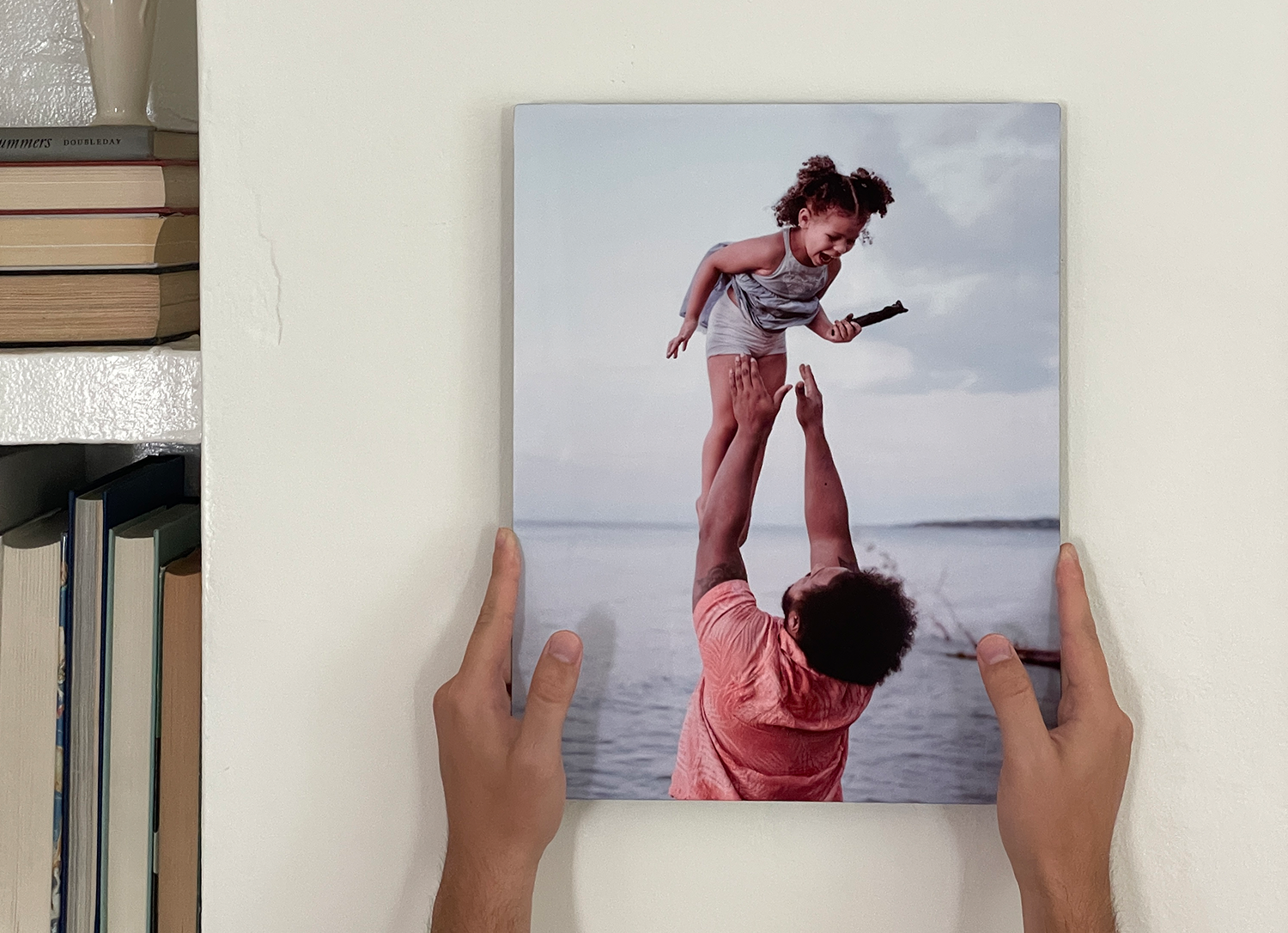
Paper prints apply surface ink to a paper stock, and "paper" covers a wide range, from basic glossy photo paper to fine-art baryta coated with barium sulfate to 100% cotton rag. Paper is not a neutral carrier; its surface texture, weight, and optical properties all contribute to how a print looks and feels as an object. That range matters because each paper choice changes the mood of the image. Metal works the same way. Gloss, satin, and matte panels are produced by the same dye-sublimation process on different coatings, so finish affects the result as much as the substrate. Every technical difference between these two substrates points toward a practical decision, and the sections below walk through each one.
Appearance and vibe: what each one actually looks like
Metal prints have a luminosity that is genuinely hard to replicate on paper. A 16×20 inch sunset image measured 212 cd/m² peak white on a ChromaLuxe metal panel versus 78 cd/m² on Fuji Crystal Archive paper under identical lighting, and that difference creates the glow you notice when you see a metal print in person. The image appears to float inside the panel rather than sit on top of it, and the modern frameless look suits contemporary interiors well. Metal prints can look more intense in person than on screen, particularly on gloss. The "does it look plastic?" anxiety is understandable, yet a satin or matte finish reads as refined rather than synthetic and feels closer to a backlit photograph than a laminated sign.
Paper prints offer tonal subtlety that metal cannot fully match. Matte fine art paper better showcases subtle tones and texture, and fine-art baryta sits between glossy and matte in a way many photographers love for nuanced work. Everyday glossy paper delivers punchy color at an accessible price. The verdict: choose metal for high-impact photos such as landscapes, travel, wildlife, architecture, and anything with saturated color or dramatic light. Choose paper for portraits, black-and-white work, painterly images, and any photo where tonal subtlety matters more than luminosity. Appearance is only half the story, though, and durability matters just as much.
Durability and longevity: how long do metal prints last?
ChromaLuxe metal panels have been independently tested by Wilhelm Imaging Research and rated for 65 years of permanence under controlled display conditions, with extrapolated indoor lifespans of 100+ years when kept away from direct sunlight. The mechanism is the dye-sublimation process itself: because the image is fused into the aluminum rather than sitting on top of it, the panel resists fading, moisture, and most surface scratches. Under Q-SUN xenon arc testing per ISO 105-B02, metal prints retained 98.3% of original gamut after 1,200 hours, equivalent to 120 years of direct window exposure.
Paper prints need more active protection to last. Fine-art paper prints are more vulnerable than metal to light, humidity, acidic framing materials, bending, and physical contact, which is why archival matting, backing, protective glazing, and indirect light are recommended. Pigment-based inkjet prints on archival paper can last 100 years or more under controlled conditions, but that lifespan depends on the complete system, including ink, paper, mat, backing, glazing, and display environment.
Frameology's HD Metal Prints, starting at $65, are durable enough for high-moisture or outdoor-adjacent spaces like kitchens, bathrooms, and covered patios. For smaller spaces, Metal Desk Prints are available starting at $25 and offer the same dye-sublimation durability in a tabletop format. If the piece is going somewhere humid, bright, or high-traffic, metal removes an entire category of worry that paper cannot match.
The cost-to-display comparison
A paper print's sticker price is only the beginning. Before it can go on a wall, it typically needs a mat, glazing, and a frame. Those additions add up fast. A full-service frame shop charges $150–$400 for a 16×20 inch custom frame with UV glass, double mat, and archival mounting. Even an online custom frame with UV glass and an archival mat averages $70–$110 for a 16×20 inch print. For a 16×20 print, a custom frame plus matting and glazing commonly brings the total cost-to-display into the $180–$420 range.
A metal print arrives ready to hang with no glass and no frame required. At Frameology, an HD Metal Print starts at $65, and that price covers a complete, wall-ready piece. Compare that to a framed paper print: a Classic Wall frame starts at $59, which already includes the print and frame together. A Luxe Wall frame with museum-grade acrylic, acid-free 4-ply rag mat, and all hanging hardware starts at $79. For tabletop display, a Classic Table frame starts at $39.
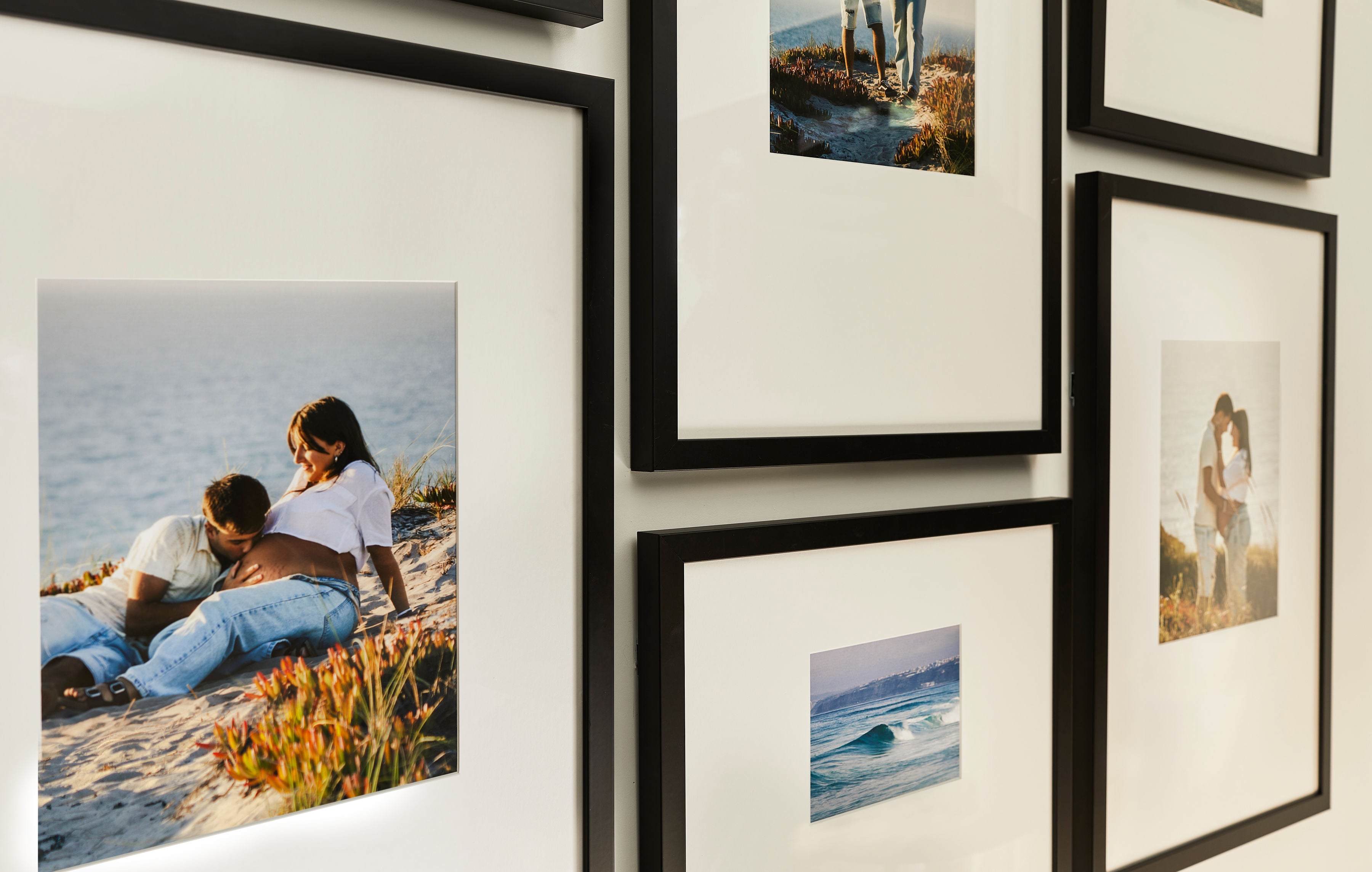
The honest verdict: for a photo that genuinely benefits from the luminosity and durability of metal, the $65 starting price for an HD Metal Print is competitive with, and sometimes below, the all-in cost of a framed paper print once matting and glazing are added. For everyday photos where the framed look is the goal, a Classic Wall frame at $59 or a Luxe Wall frame at $79 delivers strong value with the print included. In both cases, the metal premium evaporates once you compare total cost to display, not just sticker price.
Room conditions and reflectivity: the deciding factor most buyers overlook
Where a print hangs matters as much as how it looks. Paper prints sit behind glazing, which introduces its own reflective layer. Stack a gloss sheet behind glass and you create a second reflection on top of the one the glass already adds. Metal prints have no glass at all, and a satin or matte finish can cut reflection dramatically.
Here is practical guidance by room condition:
South and west-facing windows: These walls receive the most intense afternoon light. A glossy metal print opposite a south- or west-facing window will reflect that light back at the viewer. If a print will hang across from a south-facing window, choose satin or matte. A framed paper print with UV-filtering glazing also works well here, since the glazing blocks UV while the mat keeps the print from touching the glass.
Overhead can lights and track lighting: Directional ceiling lights create hot spots on gloss surfaces. Satin metal or matte paper behind non-reflective glazing both handle this well.
Hallway sightlines: Hallways are viewed at oblique angles, which amplifies glare on gloss finishes. Matte metal or a framed print with non-reflective glazing are safer choices.
Bathrooms and kitchens: Moisture is the deciding factor. Metal's aluminum base and sealed dye-sublimation surface handle humidity that would cause paper to ripple and mats to deteriorate.
Soft, indirect light: This is where gloss metal shines. The luminosity reads as depth rather than glare, and colors appear at their most saturated.
Frameology's mobile-only AR preview lets buyers project a true-to-scale preview of their exact frame or metal print onto their own wall before purchasing, so they can check it against their actual light conditions before committing. It is a direct way to resolve placement uncertainty without guessing.
Finish selection: do metal prints look better glossy or matte?
Finish selection is the single most consequential decision in metal printing, and most buyers make it last. Finish often matters more than substrate. A matte metal print and a glossy paper print can look more different from each other than metal and paper do at the same finish level.
For metal prints, the options break down clearly. White Gloss delivers maximum color saturation, strong contrast, brilliant highlights, and exceptional detail. It is best for landscapes, travel, nature imagery, and high-impact display pieces, but it may produce reflections in brightly lit environments. White Satin offers rich color reproduction and reduced reflections. Many customers consider it the most versatile finish, and it is the recommended starting point for portrait work and rooms with mixed lighting. White Matte minimizes reflections and creates a softer, more understated appearance. It works best for fine art photography, black-and-white imagery, and rooms with significant natural light.
The main cons of metal prints relate to finish and flexibility. Gloss can be highly reflective under direct lighting, and matte can mute contrast slightly compared to gloss, which can soften the impact of high-color images. Metal's rigidity also means you commit to that image. Unlike Frameology's Classic Wall frames, which feature a removable backing so you can swap photos anytime, a metal print stays the same.
For paper prints, the same logic applies in reverse. Luster, also called satin or pearl, is the most common finish offered by professional print labs because it hides minor fingerprints, reduces glare compared to glossy, and still preserves good color saturation and image clarity across varied lighting conditions. Glossy paper works well under glass in a room with controlled light. Matte is the safer choice for bright rooms or above a fireplace.
The simple rule: choose your finish based on the room, not the artwork. Then choose the artwork's substrate based on the photo type and the display environment. If neither metal nor framed paper feels right, Frameology also offers Premium Canvas Prints and Acrylic Wall Prints.
Explore Frameology’s frameless prints collection
Other substrate options: canvas and acrylic
Some photos and spaces call for a different look altogether. A Premium Canvas Print, starting at $19, offers texture and a softer, more traditional look. Canvas weave softens fine detail and mutes saturation, which suits painterly or lifestyle images but is a disadvantage for sports, automotive, or detail-heavy work. Canvas is also lightweight and renter-friendly, and you can hang it with damage-free mounting strips. An Acrylic Wall Print, starting at $59, offers a modern 3D depth effect because light travels through the acrylic face, bounces off the image, and returns, which the eye reads as dimensional depth. Both options sit alongside metal and framed paper at Frameology, so you can compare finishes and prices in one place.
The verdict: are metal prints worth it?
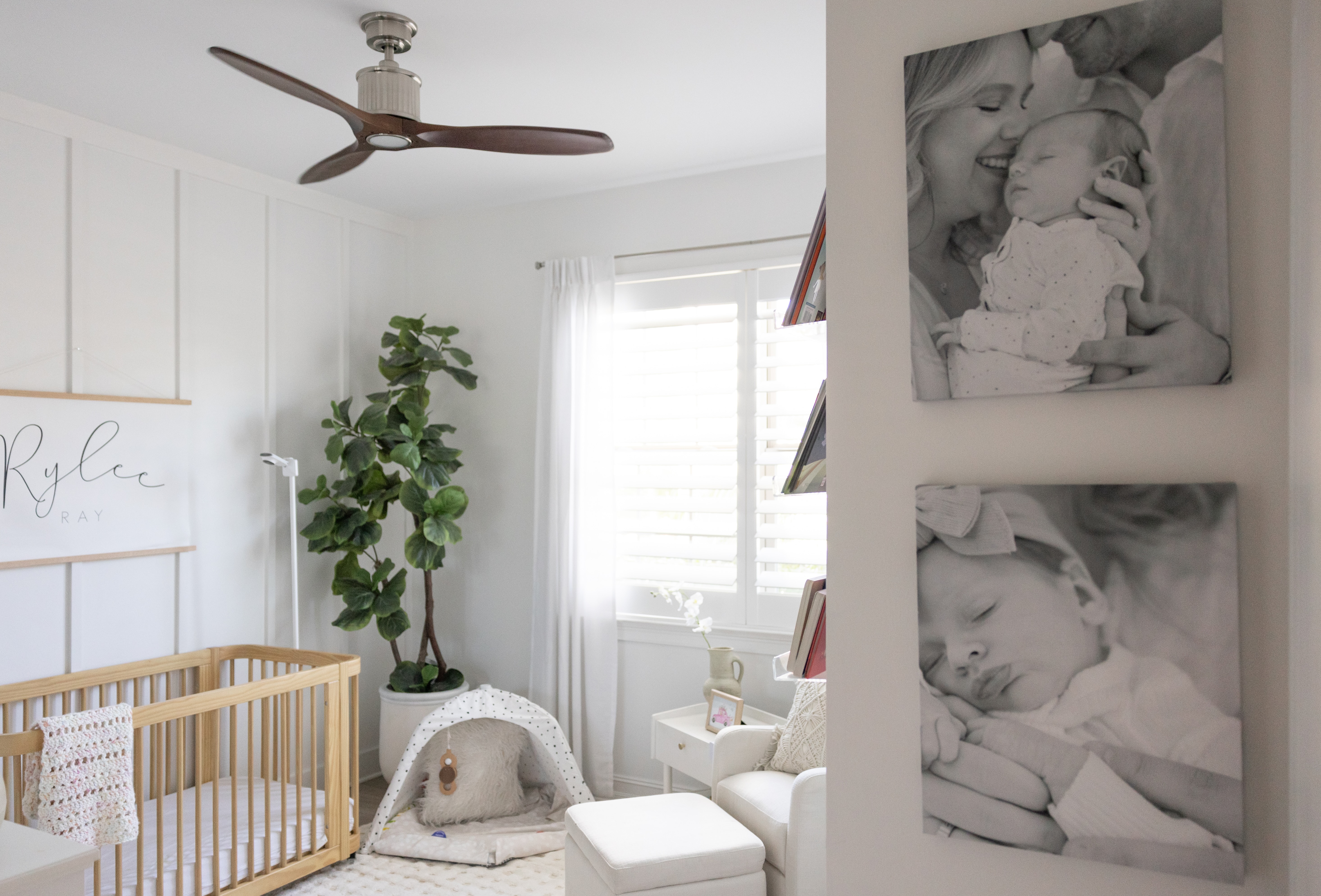
Metal prints are worth it when the photo is high-impact, the room has controlled or indirect lighting, and the display location is humid, high-traffic, or otherwise demanding. Landscapes, travel, architecture, wildlife, and anything with saturated color or dramatic light all benefit from metal's luminosity. The dye-sublimation process delivers longevity and durability that paper needs an entire framing system to match, and once you factor in framing costs, the metal premium often disappears.
Paper prints framed in a Classic Wall, starting at $59, or a Luxe Wall, starting at $79, are the better choice for portraits, black-and-white work, painterly images, and anyone who wants the flexibility to swap photos over time. The Classic Wall's removable backing makes it easy to refresh. The Luxe Wall's sealed, museum-grade construction protects the print permanently.
A quick decision framework helps you choose: what is the photo of, high-impact or tonal? What is the room light like, direct or indirect? What is the budget once framing is included? Those three answers determine the substrate. Frameology offers both under one roof, with a mobile-only AR preview that lets you project a true-to-scale version of your exact choice onto your wall before you buy and removes the guesswork. For a deeper look at why Frameology is the right place to order either option, read why Frameology is the best online framing service.
Frequently asked questions
Are metal prints worth the extra money?
Metal prints are worth the extra money when the image is high-impact and the room or location is demanding. As the cost comparison shows, metal's ready-to-hang price often undercuts a fully framed paper print once you include matting and glazing. For portraits, black-and-white work, or anyone who wants to swap photos over time, a Classic Wall frame starting at $59 or a Luxe Wall frame starting at $79 may be the better value because both include the print and frame together.
How long do metal prints last?
Metal prints produced via dye-sublimation have extrapolated indoor lifespans of 100+ years under typical display conditions. The dye-sublimation process described earlier fuses the image into the aluminum panel, so the surface resists fading, moisture, and most everyday scratches. Wilhelm Imaging Research has tested ChromaLuxe panels at 65+ years of permanence under controlled display conditions, with 100+ year extrapolated indoor lifespans when kept away from direct sunlight. Direct sunlight remains the main threat, especially on walls that receive several hours of intense afternoon sun.
Do metal prints look better glossy or matte?
Gloss, satin, and matte each work best in different rooms. The finish section covers this in detail, with gloss for maximum saturation, satin for versatility, and matte for low reflection. In practice, gloss suits soft, indirect light, satin fits most mixed-light rooms, and matte shines in bright spaces with lots of windows.
What are the cons of metal prints?
Metal prints have a few real limitations worth knowing before you order.
Gloss finishes can be highly reflective under direct ceiling lights or opposite a window. Satin or matte finishes reduce this, but placement still matters.
Matte finishes mute contrast slightly compared to gloss, which can soften the impact of high-color images.
Metal's rigidity means the print is a long-term commitment. Unlike Classic Wall frames, which have a removable backing that lets you swap photos anytime, a metal print cannot be updated later.
Metal is not the right substrate for soft, painterly, or watercolor-style images. Those usually read better on fine-art paper, where the surface texture supports the mood.
Very large metal panels weigh more than paper prints, so they need appropriate wall anchors.
Can I frame a paper print later?
Framing flexibility depends on which Frameology frame you choose. Classic Wall frames feature a standard removable backing, so you can swap photos in and out as often as you like, which works well for seasonal refreshes or new memories. Luxe Wall frames feature a sealed, permanent kraft paper backing designed to protect the custom-framed photo permanently, and photos cannot be swapped once the frame is assembled. If you are ordering a paper print now with plans to reframe it later, a Classic Wall frame is the right choice. If you want museum-grade protection and a finished look that lasts, the Luxe Wall's sealed construction is the better option.
Which is better for a bathroom or kitchen?
Metal is the clear choice for bathrooms and kitchens. The dye-sublimation process fuses the image into the aluminum panel, which makes it moisture-resistant in a way that paper cannot match. Paper prints in humid environments can ripple, cause mats to deteriorate, and encourage mold, and glazing does not fully protect against sustained humidity. Frameology's HD Metal Prints, starting at $65, are durable enough for high-moisture and outdoor-adjacent spaces. If you want a smaller piece for a bathroom shelf or kitchen counter, Metal Desk Prints start at $25 and offer the same dye-sublimation durability in a tabletop format.
