


What are photo prints and how do they work?
Written by: Daniel Koren, Co-Founder, Frameology
Key takeaways
Photo prints turn digital images into physical keepsakes using inkjet, silver-halide, or dye-sublimation technologies, each with distinct color and lifespan characteristics.
Archival pigment inkjet prints on premium paper provide a strong mix of color accuracy and longevity, with display life ratings up to 200+ years.
Silver-halide prints create true continuous-tone images but usually last only a few decades, while dye-sublimation shines on metal for durability and vivid color.
Professional lab printing consistently beats home printing in color range, paper flatness, and archival quality, which matters when you want frame-worthy art.
Frameology pairs each material with the right printing method and offers ready-to-hang framed prints starting at just $39.
The definition and why physical prints matter
A photo print is more than a copy of a digital file. It’s a tangible object that gives a memory weight, permanence, and presence. The global photo printing market was valued at more than $26 billion in 2025 and is projected to keep growing, driven by smartphone photography and demand for personalized wall art. Screens feel fleeting, while prints stay put. A photo on your phone competes with thousands of other notifications. A framed print on your wall commands attention every single day.
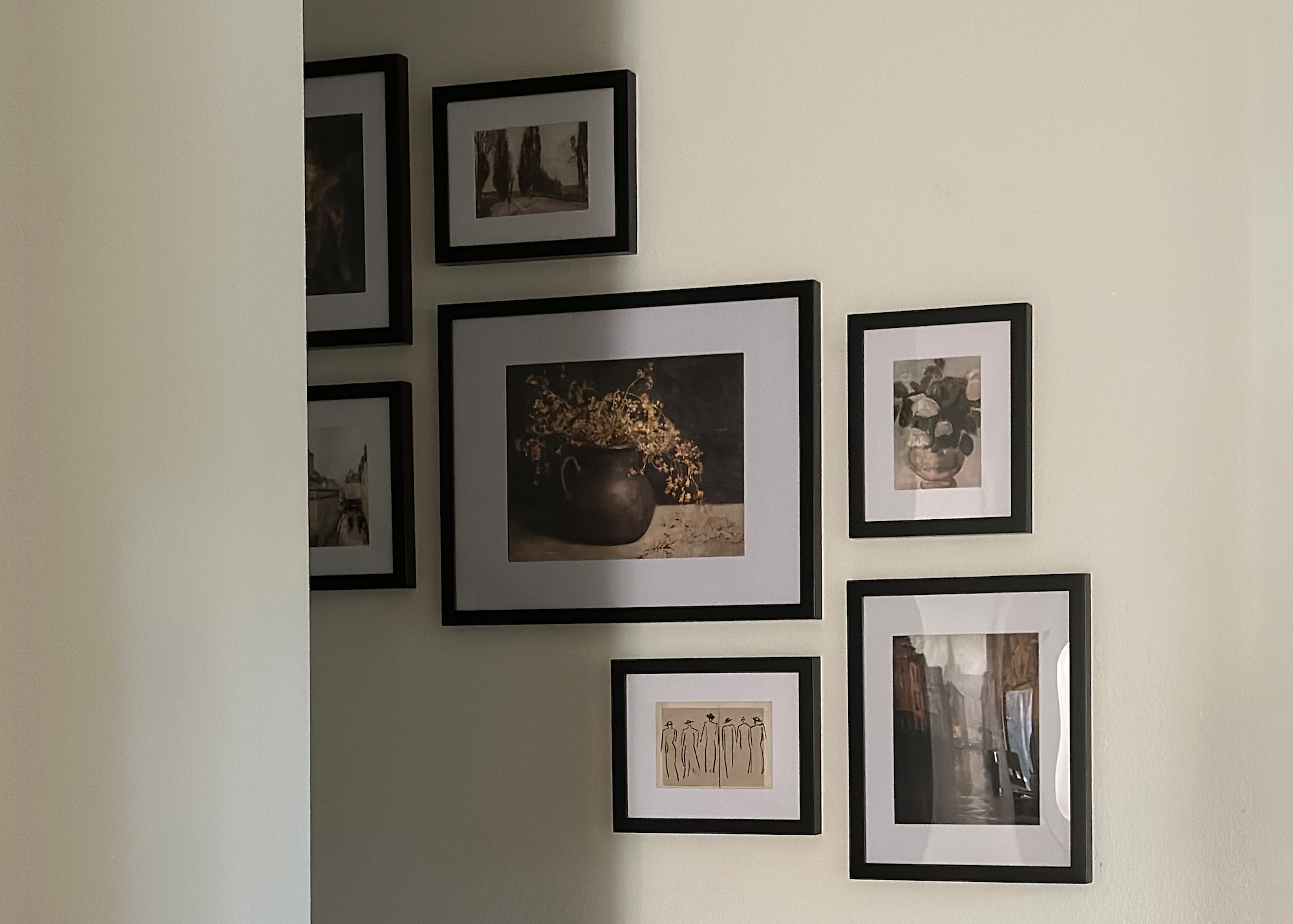
The emotional case is just as strong as the practical one. An Ipsos.Digital study conducted for Photoweb found that more than nine in ten respondents feel positive emotions such as joy, love, or nostalgia when viewing family photos, and 64% of 18–34-year-olds believe printed photos showcase images better than digital viewing. The technology behind those prints shapes how faithfully they capture the original moment and how long they keep doing it.
Turn your digital photos into lasting memories with Frameology's professional framing.
Do you need a special printer to print photos?
Any inkjet printer can technically produce a photo print, but the quality can differ dramatically. Consumer home printers use thermal inkjet technology, where heat creates a vapor bubble that propels ink droplets through the nozzle. This approach is fast and inexpensive, yet it usually delivers a limited color range and inconsistent longevity. Home inkjet printing keeps consumable costs low, but dye-based inks on standard paper can show noticeable fading within a few years, especially under light exposure. Professional systems solve many of these issues, which is why lab prints look richer and last longer.
Inkjet printing explained
Inkjet printing uses a contactless process where fine droplets of ink are applied precisely through tiny nozzles in a print head onto paper or other substrates. The print head never touches the surface. Professional inkjet systems expand on the standard cyan, magenta, yellow, and black (CMYK) inks with additional colors such as light cyan, light magenta, and gray. These extra inks create smoother tonal transitions and better shadow detail.
Ink chemistry plays a major role in longevity. Pigment inks sit on the paper surface like tiny acrylic paint particles, resisting UV light and moisture for decades and reaching over 200 years on archival paper under proper conditions. Dye-based inks soak into the paper and are more vulnerable to smudging and fading when exposed to sunlight or humidity. Wilhelm Imaging Research, the world’s leading print permanence laboratory whose data museums and manufacturers rely on, rates modern pigment ink prints at roughly 60 to 200+ years of display life depending on the ink set, paper, and framing conditions.
Giclée prints sit at the premium end of inkjet output. They’re high-quality inkjet prints made with archival-grade pigment inks on fine art paper or canvas, offering exceptional color accuracy, rich tonal range, and longevity exceeding 100 years when properly stored. Frameology uses high-resolution Giclée printing for its canvas products, which creates rich, textured results that stay sharp even at large sizes.
Silver-halide lab printing explained
Silver-halide printing, also called chromogenic or C-type printing, powers traditional photographic paper. Digital chromogenic prints expose light-sensitive paper pixel by pixel using LEDs or lasers instead of a film negative, producing a true continuous-tone image with seamless color blending and no visible dot pattern. The finished print behaves like a classic photograph, with color embedded in light-sensitive emulsion layers instead of resting on a coated surface.
This method trades some longevity for that traditional look. Traditional silver-halide color prints last roughly 17 to 40 years when framed under glass in typical indoor conditions, with conventional chromogenic or C-prints rated at roughly 30–40 years under normal display conditions by the same laboratory. Silver-halide prints are physically tougher and more scratch-resistant than many inkjet prints, which makes them a solid choice for everyday photo prints. For framed pieces meant to last across generations, archival pigment inkjet output still offers a clear longevity edge.
Frameology’s framed prints use continuous-tone archival printing on premium photo paper. This approach combines the seamless tonal quality associated with silver-halide output with the extended archival life of professional pigment ink systems.
Dye-sublimation printing explained
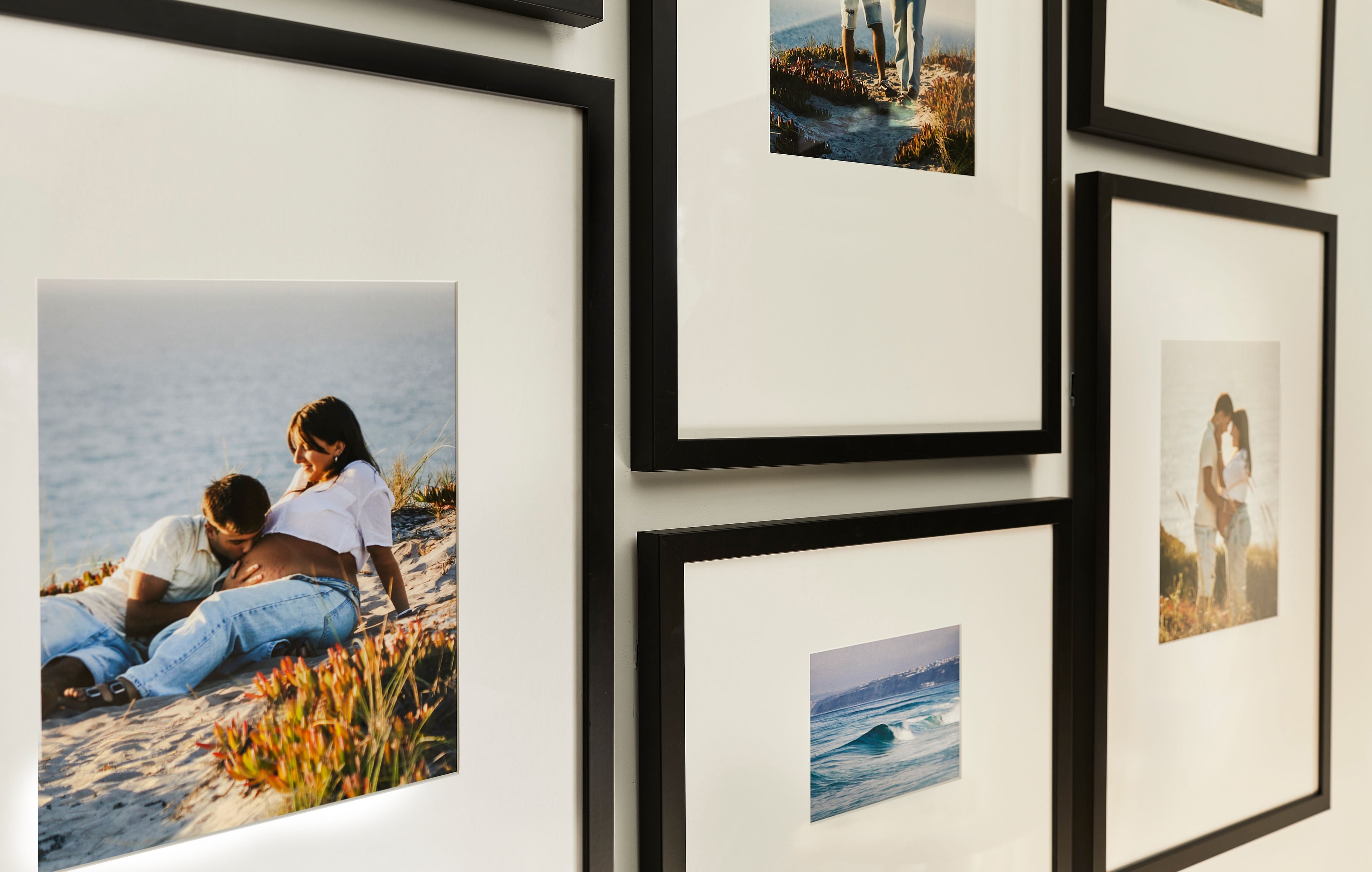
Dye-sublimation printing heats dye panels on a ribbon so that dye transitions from solid to gas and diffuses into specially coated paper or substrate, producing true continuous-tone color with no visible dots. The dye bonds inside the material instead of sitting on top. As a result, dye-sublimation prints resist smudging and surface scratching naturally.
This process works especially well on metal. Dye-sublimation infuses ink into a coating on metal, creating a durable, high-definition print with brilliant contrast that suits high-moisture or outdoor environments. Frameology uses advanced dye-sublimation for its HD Metal Print, infusing color directly into scratch-resistant aluminum for vivid results with strong durability. With all three major printing technologies covered, you can now compare them and choose the method that fits your space and goals.
What is the best method to make photo prints?
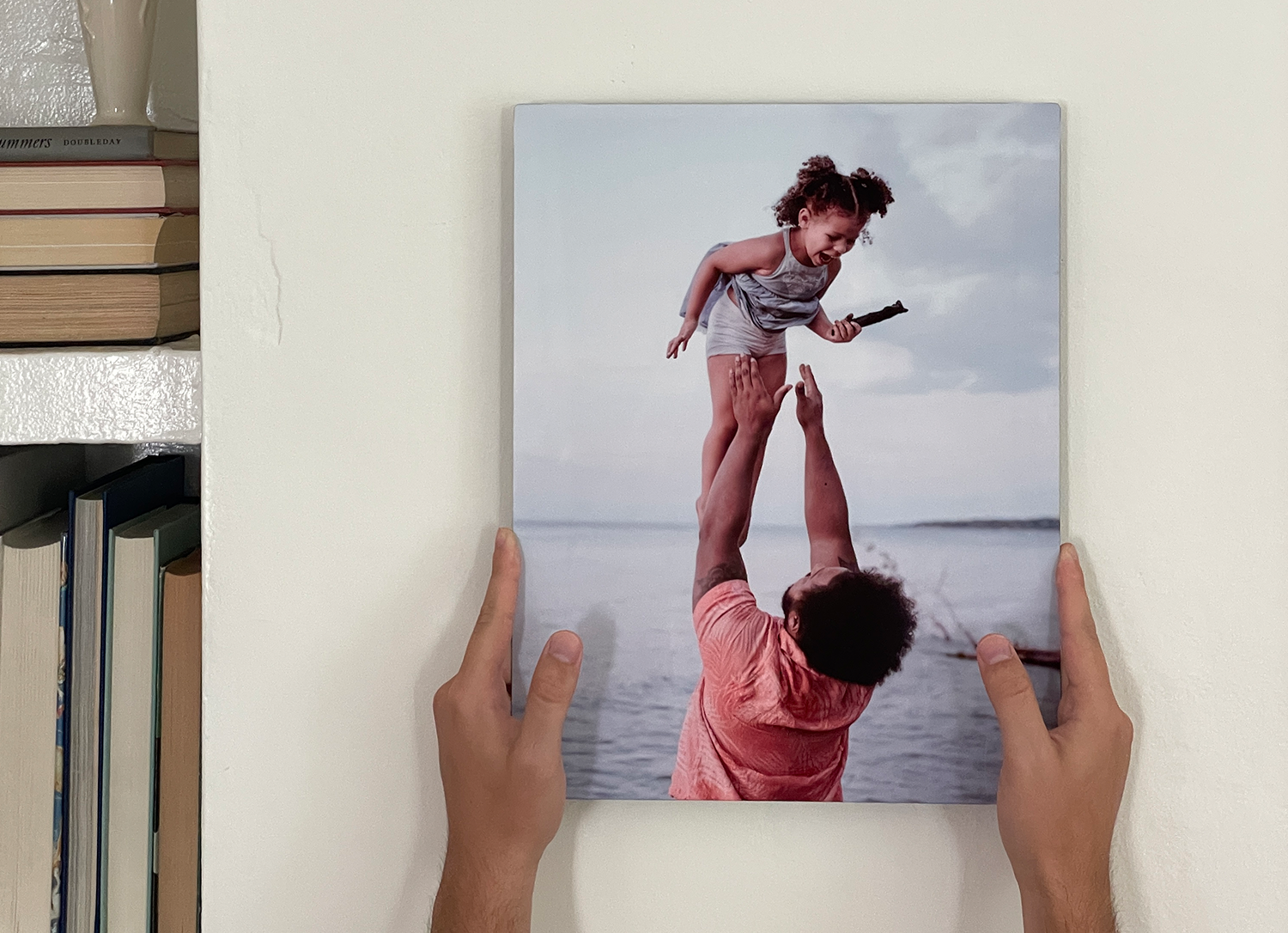
The best printing method depends on how you’ll use the print. For framed wall art meant to last decades, archival pigment inkjet printing on premium photo paper offers a powerful mix of color accuracy, tonal range, and longevity. Even the finest archival pigment print can fade early if it hangs in direct sunlight without protection, so framing paper prints behind UV-filtering glass or acrylic with an acid-free mat and hanging them away from direct sun turns an archival print into a multi-generation object.
For metal wall art, dye-sublimation stands out. The infusion process delivers brilliant contrast and durability that paper-based methods can’t match on aluminum. For canvas, Giclée printing on archival-grade cotton canvas provides the texture and tonal richness that make large-scale wall art feel gallery-worthy.
Frameology pairs each substrate with the technology that suits it best: continuous-tone archival printing for framed prints, Giclée for canvas, and advanced dye-sublimation for HD metal. That substrate-specific approach separates professional lab output from generic one-size-fits-all printing.
Experience substrate-matched printing with Frameology's professional framing service.
Preparing your files for professional output
Strong file quality gives your print the best possible starting point, and a few simple habits can dramatically improve results.
Use the original file: always choose the original, untouched image file from the phone or camera roll instead of a screenshot, messaging-app copy, or social-media download, since those versions are compressed and lose detail needed for high-quality enlargements.
Check resolution: a 300 DPI (dots per inch) target is the professional standard for photo books, fine art prints, and any print where quality matters. To find the required pixel dimensions, multiply the print size in inches by the target DPI. An 8×10 inch print at 300 DPI needs 2,400 × 3,000 pixels.
Choose the right color space: for print exports, select 300 DPI resolution, convert to sRGB color space, choose 8-bit bit depth, and export as a high-resolution JPEG with maximum quality settings.
Edit with a light touch: keep edits to smartphone photos gentle before printing, and adjust brightness, contrast, and straightening only slightly, because heavy filters can crush shadows, oversaturate colors, and make skin look unnatural.
Account for screen brightness: printed photos always appear darker than on screen because prints reflect light while screens emit backlight, so increase exposure by about +0.2 to +0.3 stops before exporting to compensate.
Following these preparation steps helps your files perform well in a professional lab. A clean 12-megapixel photo from a modern smartphone produces sharp professional prints up to roughly 60×80cm when captured in good light, which means most phone photos already have enough detail to create a beautiful framed print when prepared carefully.
Paper finishes and their impact on framed results
Paper finish shapes how a print looks on its own and once it sits behind glass or acrylic. The three most common options, glossy, matte, and luster, each suit different subjects and framing setups.
Glossy paper delivers vibrant color and crisp detail through a reflective surface. It works well for high-contrast images with bold colors, but it can create glare under direct lighting when framed behind standard glass. Glossy papers suit colorful high-contrast images, while matte papers provide a subtle, non-reflective look that fits black-and-white photography or fine art reproductions. Luster, sometimes called satin, sits between the two. Luster paper is often a balanced choice for portraits and events, offering strong color saturation without the mirror-like glare of glossy.
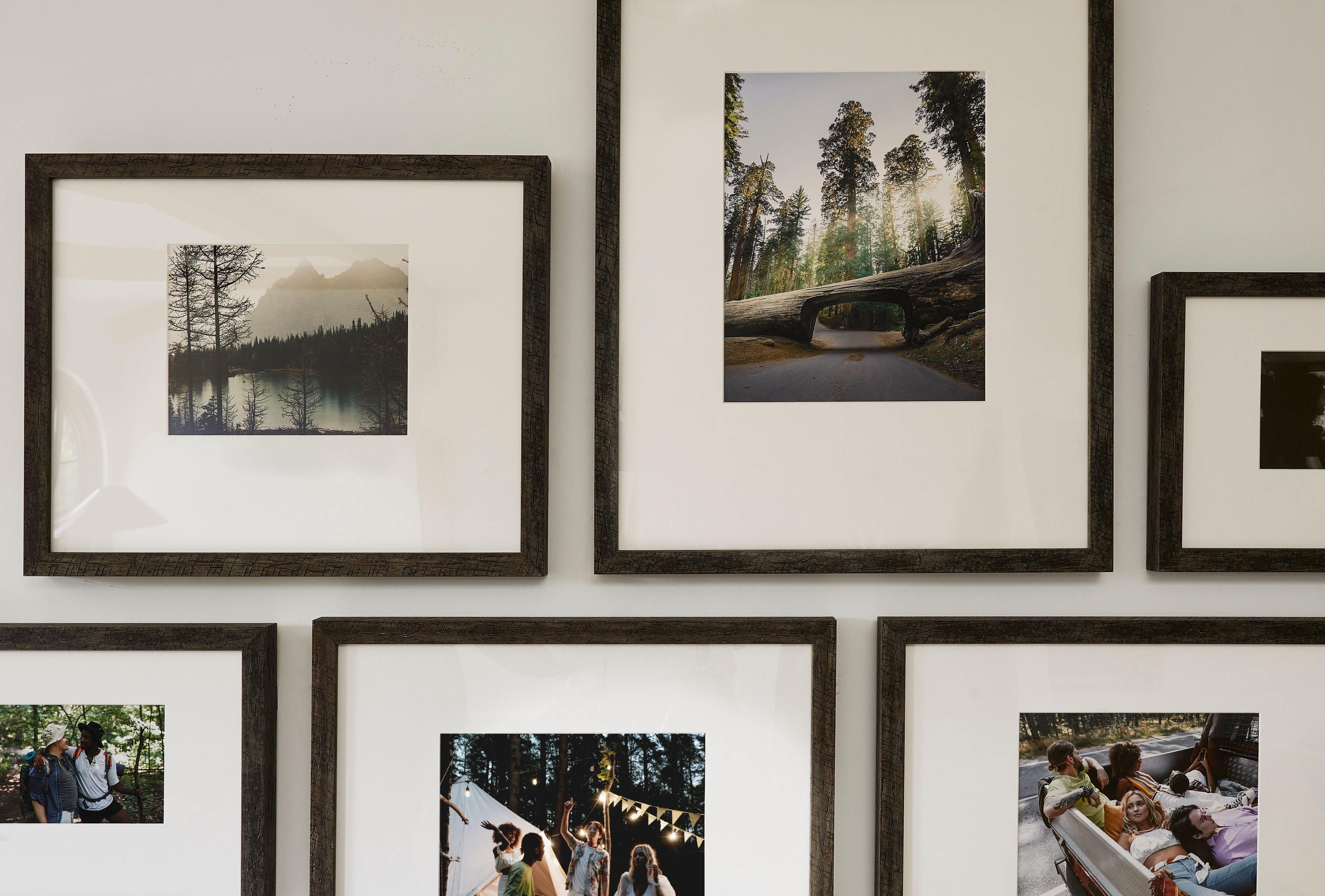
For framed results, luster and matte finishes usually perform best behind UV-protective acrylic, since they don’t add extra reflectivity on top of the glazing. Frameology’s Luxe frames use museum-grade UV-protecting acrylic, which pairs especially well with premium photo paper finishes to create a clean, gallery-quality result.
How much does it cost to print photos?
Print pricing varies by method, size, and paper type. At the professional lab level, standard photo prints usually cost less than fine art Giclée prints or canvas gallery wraps. A 16×20 canvas gallery wrap typically costs $99–$144 depending on the provider. Specialty papers often add a noticeable premium over standard prints at the same size.
Professional framing adds more cost, since you’re paying for the mat, frame, glazing, and hardware. Frameology bundles professional printing and framing into a single, clear price:
The Classic Wall, starting at $59, both usually ship the next business day and typically arrive within a week. A 16×20 print in a Classic Wall frame costs $99.
The Luxe Wall, starting at $79, is crafted with museum-grade materials and takes 7–10 business days due to its artisan production process. All necessary hanging hardware, including nails, a mini-level, and a no-wire hanging system, comes in the box. A 16×20 print in a Luxe Wall frame costs $139.
A Premium Canvas Print starts at $19, but if you’re looking for a 16×20 canvas print at Frameology, you can get it for as low as $59 — much lower than the typical $99-$144 range mentioned earlier!
That pricing covers the print, frame, mat, and glazing, so you don’t run into surprise add-ons at checkout.
Home printing vs. professional lab output for framing
Home printing works well for quick reference prints, drafts, and small keepsakes, but framed wall art usually benefits from professional output. Modern inkjet systems at the professional level can cover up to 90% of the visible color spectrum in optimal conditions, a range that consumer home printers rarely reach. Professional labs also control color consistency, paper flatness, and ink longevity far more precisely.
Mass-market print services sit between home printing and dedicated labs. They’re faster and cheaper than a full-service lab, yet they often rely on standardized paper stocks and lighter color calibration. That approach can work for casual use but usually falls short of the color accuracy and archival longevity that framed wall art deserves.
Frameology’s lab output combines more than 30 years of family-owned framing heritage with professional-grade printing technology matched to each substrate. Every framed print is hand framed in the United States, and the Luxe line uses acid-free mats and UV-protecting museum-grade acrylic to protect the print over time. With over 7,500 verified 5-star reviews and a 4.98/5 star rating, the results have been tested by thousands of customers. For a deeper look at what sets Frameology apart, read why Frameology is the best online framing service.
Get museum-quality framing with Frameology's professional lab output.
Frequently asked questions
What’s the difference between inkjet and silver-halide photo prints?
Inkjet printing sprays microscopic droplets of ink onto a coated paper surface, while silver-halide, or chromogenic, printing exposes light-sensitive paper using LEDs or lasers to embed color in emulsion layers. Inkjet prints, especially those made with archival pigment inks, significantly outlast silver-halide prints, as explained in the printing methods section. Silver-halide prints create a true continuous-tone image with no visible dot pattern and are physically tough and scratch-resistant, but their dye-based chemistry leads to a shorter display lifespan. For framing, archival pigment inkjet output combined with UV-protective glazing and acid-free materials usually delivers the strongest long-term results.
How do I know if my phone photo is good enough to print and frame?
Most modern smartphones capture enough detail for common framed print sizes. A 12-megapixel photo taken in good light, roughly 3,000 × 4,000 pixels, can produce a sharp professional print at standard framed sizes, as mentioned in the file preparation section. The key factors include using the original file from your camera roll, avoiding screenshots or messaging-app copies, shooting in good light, and steering clear of heavy digital zoom. For larger sizes, switching to a high-resolution mode such as 48MP or 50MP can help, although those files may look noisier in dim conditions. When you upload your photo to Frameology, the system checks resolution and flags files that may not meet the quality threshold for your chosen size.
What’s the difference between Classic and Luxe frames at Frameology?
Classic frames are Frameology’s value tier, starting at $39 for tabletop and $59 for wall frames. They feature a removable backing so you can swap photos whenever you like, and they typically ship the next business day, arriving within a week. Luxe frames are Frameology’s top-of-the-line, museum-quality tier, starting at $79. They’re USA-crafted from premium wood molding and metal moldings with acid-free mats, UV-protecting museum-grade acrylic, and a sealed permanent kraft paper backing that protects the print over time, so photos can’t be swapped once framed. Luxe frames include all hanging hardware: nails, a mini-level, and a no-wire two-point hanging system for easy leveling. Luxe products take 7–10 business days because of their artisan production process.
Does paper finish affect how a framed print looks?
Paper finish strongly affects how a framed print appears, and the effect increases once the print sits behind glass or acrylic. Glossy paper produces vibrant, high-contrast results but can create glare under direct lighting when framed. Matte paper offers a softer, non-reflective appearance that works well for black-and-white photography and fine art subjects. Luster, or satin, paper falls between the two, with good color saturation and less mirror-like reflectivity than glossy, and it often becomes the most versatile choice for portraits, travel photos, and family images. For Luxe frames, which use museum-grade UV-protecting acrylic, luster and matte finishes usually pair best because they don’t add extra reflectivity on top of the glazing.
Do all gallery walls include hanging templates?
Classic and Luxe gallery walls include life-size gallery wall templates that make installation simple and straightforward. Canvas galleries, Metal galleries, and gallery walls created using Frameology’s Gallery Wall Design Service don’t include templates because their construction and customization work differently and often call for more tailored installation approaches.
