


7 gallery wall rules for a polished, cohesive look
Written by: Daniel Koren, Co-Founder, Frameology
Key takeaways
Gallery walls look polished when frames stay 2–3 inches apart.
Center the entire arrangement 57–60 inches from the floor and keep the bottom frame 4–8 inches above furniture for comfortable eye-level viewing.
Begin with the largest anchor piece, then build outward while keeping at least one shared edge or centerline across the group.
Choose a symmetrical grid layout or an organic mix of sizes and orientations, and use a life-size gallery wall template to map nail positions before hanging.
Frameology’s Classic and Luxe gallery walls include custom templates and hardware so you can install a professional-looking display quickly, then enjoy a ready-made, cohesive look.
Quick visual cheat-sheet: 7 gallery wall rules at a glance
These seven rules cover the most common decisions you'll face when planning and hanging a gallery wall.
Spacing. Keep 2–3 inches between every frame, and use 2.5 inches as your default for most clusters.
Eye level. Center the entire arrangement 57–60 inches from the floor.
Furniture anchoring. Hang the bottom frame 4–8 inches above furniture, and keep the gallery width at roughly two-thirds of the furniture below it.
Anchor piece first. Place the largest frame slightly off-center, then build outward.
Treat it as one object. Align at least one shared edge or centerline across the entire grouping.
Choose your layout intentionally. Use a grid for symmetry and order, and an organic layout for personality and mixed sizes.
Use a template. Map every nail position with a gallery wall template before you pick up a hammer.
The 2–3 inch spacing rule
Interior designer Daniel Harris, who has installed hundreds of gallery walls, identifies inconsistent spacing as the primary reason gallery walls look amateurish. He recommends measuring the visual gap between frames rather than outer frame dimensions, since frame thickness varies. His default is 2.5 inches for most clusters of 3–8 frames, with the range tightening slightly for larger groupings (2–2.5 inches for a four-frame grid) and widening slightly for smaller ones (2.5–3 inches for five- to six-frame clusters).
Consistent 2–3 inch gaps create clean visual "roads" between frames, which lets the eye travel across the arrangement without getting lost. Tighter spacing makes the wall feel cluttered. Wider spacing makes the frames read as separate objects instead of one cohesive display. The negative space around the entire gallery should be at least twice the internal spacing, so if you use 2.5-inch gaps inside, leave at least 5 inches of breathing room between the arrangement and nearby walls or architectural features.
In 2026, the trend toward more curated, less cluttered gallery walls, typically five to seven pieces, reinforces the 2–3 inch standard. Specific layout recipes call for 2.5 inches above sofas, 3 inches for hallway grids, and 2 inches for staircase arrangements.
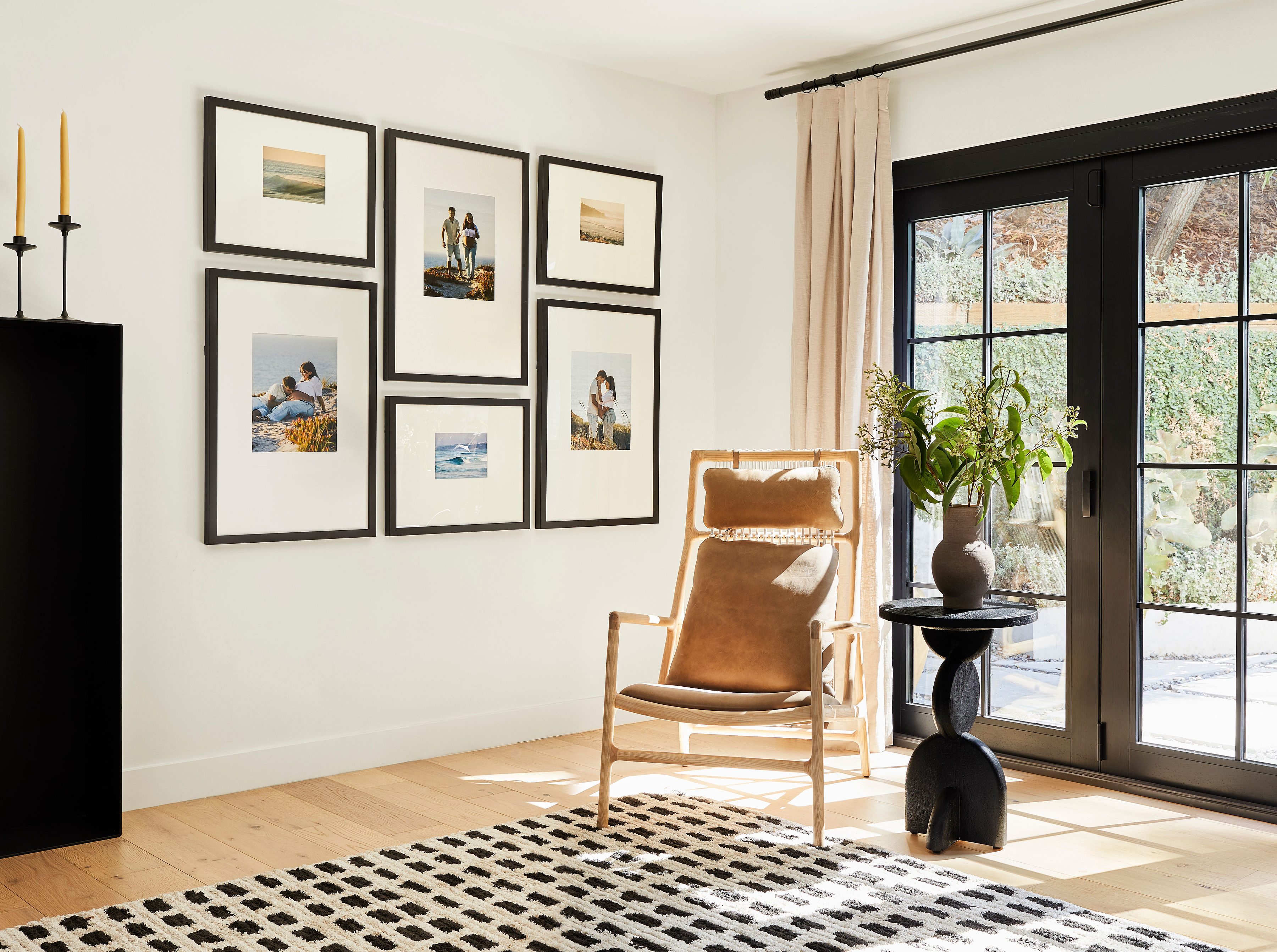
Eye-level and furniture anchoring rules
Gallery walls look best when the center of the overall arrangement sits at eye level, roughly 57 to 60 inches from the floor. This standard matches what professional galleries and interior designers use. The DIY Playbook notes that personal eye level often leads to artwork hung too high, especially for taller people, and recommends the fixed 57-inch center measurement as a reliable starting point.
When the gallery sits above furniture, two additional measurements help. Keep the bottom of the lowest frame 4–8 inches above the furniture surface to avoid a floating appearance. For width, the gallery should span roughly two-thirds of the furniture beneath it, so a 90-inch sofa calls for an arrangement about 60 inches wide. Above a bed, the bottom edge of the gallery typically sits 6–10 inches above the headboard, with the total gallery width matching or slightly narrowing relative to the bed.
The anchor-piece method
Starting with the largest or most central piece and working outward creates a visual anchor that holds the entire arrangement together. Place this anchor frame slightly off-center within your planned layout, since a perfectly centered anchor can feel static. Then add frames outward in both directions, and keep your spacing consistent as you go.
Keeping alignment consistent with at least one shared edge or centerline, whether top alignment, center alignment, or grid alignment, separates a professional-looking result from a random collection of frames. Treat the entire grouping as one visual block instead of a series of individual decisions.
Common gallery wall mistakes with fixes
Most gallery wall problems come from a short list of errors:
Inconsistent spacing: Measure the visual gap between frames every time, not the distance between nail holes. Frame thickness varies, and outer-edge measurements can mislead you.
Hanging too high: Center the arrangement 57–60 inches from the floor, not at your personal eye level. Personal eye level consistently produces artwork that hangs too high, especially in rooms with tall ceilings.
Skipping the layout step: Laying out the design on the floor or using a gallery wall template before you touch the wall is the single most effective way to avoid unnecessary holes and crooked results.
Renter concern, too many holes: The solution depends on which frame type you use. For Classic frames, removable adhesive strips work for lighter pieces on smooth walls. For heavier Luxe frames with their sealed kraft paper backing, adhesive strips are not suitable, so use the included nail hardware and the gallery wall template. This approach keeps each hole precise and intentional and prevents extra patchwork later.
How gallery walls fit 2026 decor trends
Gallery walls remain very much in style in 2026, but the format has evolved. Gallery walls stay popular while shifting toward more eclectic, personal compositions that mix photography with abstract art, combine different frame styles, and incorporate three-dimensional elements like wall sculptures and decorative mirrors. The maximalist “cover every inch” approach has given way to a more intentional look.
The 2026 trend favors curated five- to seven-piece layouts over sprawling arrangements. Color-blocked gallery walls, which use a cohesive monochromatic palette, create bold visual impact with a clean, intentional feel. Some design voices, including Good Housekeeping, note attention shifting toward wall tapestries as a softer, textural alternative, but for homeowners who want to display personal photographs, a well-executed gallery wall still offers a uniquely personal solution. The trend is not fading, it is refining.
The U.S. home decor market is projected to grow from $226.53 billion in 2026 to $339.82 billion by 2034. Rising demand for personalized living spaces supports the continued relevance of gallery walls.
Grid vs. organic layout rules
The choice between a grid and an organic layout depends on the feeling you want the wall to project.
A grid layout uses identical or near-identical frame sizes arranged in uniform rows and columns with consistent spacing, typically 3 inches between frames for hallways and home offices, based on 2026 layout guidance. The result feels symmetrical, modern, and orderly. This approach works especially well in high-traffic corridors and spaces where you want a clean, architectural look.
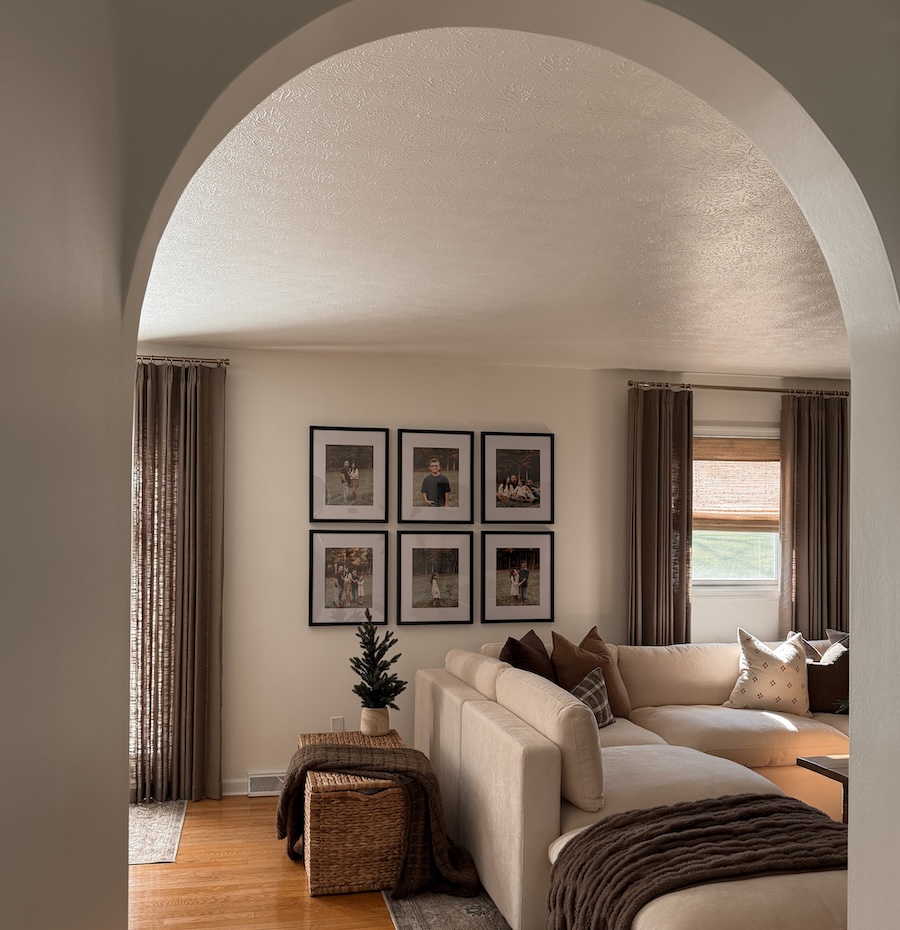
An organic layout mixes frame sizes, orientations, and sometimes finishes, while still following the 2–3 inch spacing rule. The overall shape feels collected rather than rigid. Yellow Brick Home recommends laying frames out on the floor within a taped measurement constraint, then starting from the center point and working outward, and notes that the floor layout phase usually takes longer than the hanging itself. Organic arrangements need careful visual editing, balanced frame sizes, a mix of horizontal and vertical orientations, and a pleasing overall silhouette.
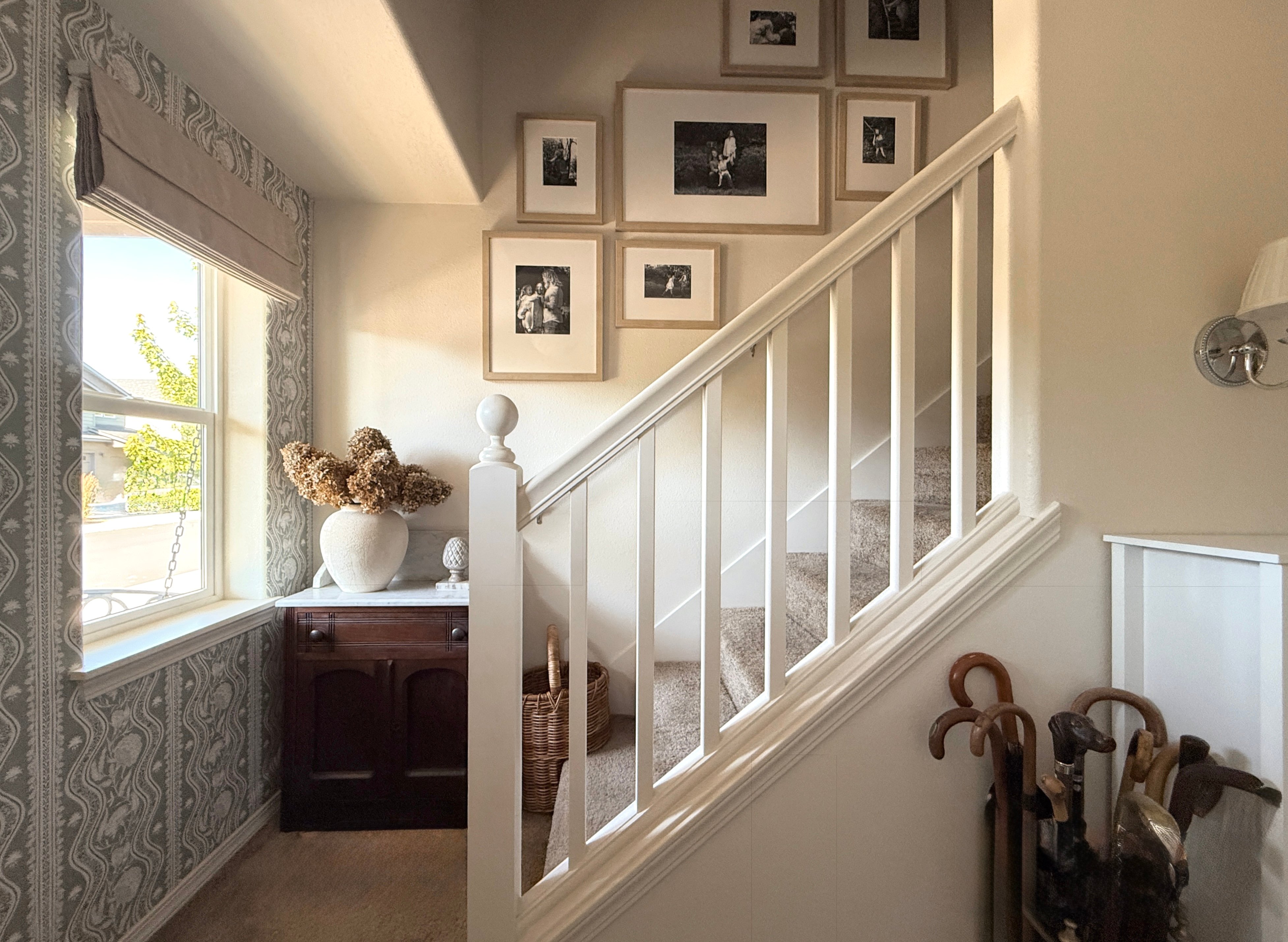
Both approaches follow the same core rules of consistent spacing, eye-level centering, and an anchor piece. Grid layouts feel more straightforward to execute because the math stays predictable. Organic layouts reward extra patience during planning.
The template method for effortless hanging
Every spacing rule in this guide becomes easier to follow when you use a gallery wall template. Instead of measuring, marking, erasing, and re-measuring, a life-size template maps every nail position before you touch the wall. This process removes guesswork and helps you avoid crooked results and unnecessary holes.
House Beautiful notes that Frameology ships frames with a true-to-size paper template and nails to mark exact hanging positions on the wall, and adds, “I would absolutely recommend Frameology to anyone who knows they want a gallery wall, but doesn't know how to make it happen.”
Every Classic gallery wall and every Luxe gallery wall from Frameology includes a custom, life-size gallery wall template. Tape the template to the wall, hammer the included hardware into the marked spots, remove the paper, and hang your frames. Classic gallery walls install in less than an hour with zero unnecessary holes. Luxe gallery walls use a dual-point hanging system with two side hangers per frame for leveling and stability, and the template includes slightly different instructions to match that system. CNN Underscored tested the Luxe Bricklay and found that taping the custom template, nailing in the provided hardware, and hanging the frames produced perfectly aligned frames without misalignment. These gallery wall templates alone have accumulated more than 15 million views on Instagram and 12 million views on TikTok.
Frameology is also recognized as the best online framing service for combining more than 30 years of family-owned framing heritage with a frictionless digital experience. Their products have earned over 7,300 verified five-star reviews and a 4.98/5 star overall rating. The experience includes a mobile-only augmented reality (AR) tool that lets you preview your exact gallery wall on your actual wall before you buy.
Frequently asked questions
Do all gallery walls include hanging templates?
Classic and Luxe gallery walls include life-size gallery wall templates that make installation simple and straightforward. Canvas galleries, Metal galleries, and gallery walls created using Frameology's Gallery Wall Design Service do not include templates because their construction and customization work differently and often need more tailored installation approaches.
What is the ideal spacing between frames?
The standard recommendation from interior designers is 2–3 inches between frames, with 2.5 inches as the most reliable default for clusters of three to eight frames. Consistency matters most, so measure the visual gap between frames rather than the distance between outer edges, since frame thickness varies. Tighter spacing around 2 inches works well for staircase arrangements. Slightly wider spacing up to 3 inches suits hallway grids and bedroom displays. Whatever measurement you choose, keep it uniform across the entire arrangement.
How high should a gallery wall hang above a sofa?
The bottom of the lowest frame should sit 4–8 inches above the top of the sofa. The center of the entire gallery arrangement should land at approximately 57–60 inches from the floor, which matches the standard eye-level measurement used by interior designers and professional galleries. For width, the gallery should span roughly two-thirds of the sofa's width beneath it. A 90-inch sofa, for example, pairs well with a gallery arrangement about 60 inches wide.
Are gallery walls out of style in 2026?
Gallery walls remain a popular and widely practiced approach to home decor in 2026, though the format has matured. The trend has shifted away from large, sprawling arrangements toward more curated five- to seven-piece layouts that mix photography with other art forms, combine frame styles, and use cohesive color palettes. Color-blocked gallery walls, which use a monochromatic palette for a bold, intentional look, are a notable 2026 evolution. For anyone who wants to display personal photographs meaningfully, a well-executed gallery wall still offers one of the most effective and personal approaches.
Next steps for your gallery wall
Begin by measuring your wall and identifying the furniture it will sit above. Use the 57–60 inch eye-level rule to find your center point, apply the two-thirds width guideline to determine your arrangement's footprint, and choose between a grid and an organic layout based on the feeling you want the space to project. Then let a gallery wall template handle the precise nail placement.
Frameology's Classic gallery walls (starting at $198) and Luxe gallery walls (starting at $638) each include a custom, life-size gallery wall template, so every nail goes where it should the first time. Classic frames are hand-framed in the USA and ship quickly. Luxe frames are 100% made in the USA with museum-quality materials and deliver within 7–10 business days.
Start building your gallery wall with ready-to-hang layouts and templates that remove the guesswork.
