


How to choose art for a large wall
Written by: Daniel Koren, Co-Founder, Frameology
Key takeaways
Start with the wall: choose the main focal wall first, then skip surfaces already anchored by windows, fireplaces, or TVs.
Measure before you shop: use the 2/3 rule so art spans roughly two-thirds of the furniture below it, or fill 60–75% of a blank wall.
Coordinate color: pull one accent shade from the room’s existing palette so the art feels connected without copying sofa or wall tones.
Match scale to the space: choose one large piece for small rooms or minimal aesthetics, and use a gallery wall on large blank walls or when you’re displaying a collection.
Make hanging easier: Frameology’s ready-to-hang gallery walls and custom frames simplify the last step, so you can enjoy your photos sooner.
Start with the wall
The first decision in home art styling is which wall actually needs art. Every room has a natural focal point, like the wall behind the sofa, above the bed, or anchoring a console, and that’s where art does its best work. Not every empty surface needs a frame.
Some walls work better without art. A wall dominated by a large window, a fireplace with strong architectural detail, a TV, or open shelving already has a visual anchor. Adding art to those surfaces creates competition and visual noise. Focus on the one or two walls where art will complete the room and create a clear focal point.
Many guides skip this step, which is why so many rooms end up with art that feels random. A small print here, a canvas there, and nothing relates. When you start with the wall, every later decision about size, color, and layout gets easier.
How to choose art for a large wall: measure first
Once you’ve identified the right wall, grab a measuring tape before you start shopping. Follow a simple order: measure the furniture width, calculate your target art width, then look for pieces that hit that number.
The 2/3 rule, art spanning roughly two-thirds of the furniture below it, is one of the most reliable sizing guidelines. A blank-wall coverage of 60–75% works whether you’re hanging one piece or a full gallery wall.
Here’s a worked example: a 90-inch sofa calls for art spanning 60–68 inches of total width. That can be one oversized piece or a gallery wall arrangement. The math points you toward the right option. For a large blank wall with no furniture beneath it, a single oversized piece filling 60–75% of the wall usually beats a scatter of small frames. Oversized art is also more forgiving of hanging height and centering because its scale anchors the wall on its own.
Browse ready-to-hang gallery walls and frames.
The rules decoded
Interior design includes a lot of named rules that sound strict but often work as simple shortcuts. Seeing them side by side makes it easier to know which ones actually affect proportion and which ones guide styling choices.
What is the 2/3 rule for wall art?
The 2/3 rule is a proportion principle. Artwork should span roughly two-thirds of the furniture below it, while for blank wall space Frameology recommends filling 60–75%. This rule shows up often because it produces balanced results across almost every furniture width. A 72-inch sofa calls for roughly 48 inches of art. A 96-inch sectional calls for roughly 64 inches.
What is the 3-5-7 rule in decorating?
The 3-5-7 rule is a styling guideline. It calls for grouping objects in odd numbers, like three, five, or seven, to create asymmetric but visually pleasing arrangements. It’s most useful for shelves, mantels, and gallery wall frame counts. It’s internet shorthand for the older “rule of odds” and works best as a flexible starting point.
What is the 70/30 rule?
The 70/30 rule is a proportion guideline for color balance. Roughly 70% of a scheme uses a dominant color or material and 30% uses a contrasting accent. It’s a two-color balance guideline that differs from the three-color 60-30-10 rule. In art terms, it’s a reminder to let one color lead so the room feels grounded.
What is the 80/20 rule?
The 80/20 rule says a small number of choices drive most of the visual impact. In art terms, one or two anchor pieces do most of the work and the rest of the room supports them. It functions more as a mindset than a measurement.
The most useful summary across these rules: size art to the furniture, hang at eye level, and let one piece lead. The other guidelines help you refine the look.
How to pick art that goes together: color without matching
Color coordination anxiety stops many people from buying art they love. A simple approach keeps things cohesive without feeling overplanned. Art should pull one accent color from the room, from the rug, pillows, or curtains. Art that copies the sofa fabric reads like part of a furniture set. Art that copies the wall color disappears.
The goal is coordination. Pick up a tone already present in the room and amplify or extend it. A cohesive palette matters more than matching subjects. Three pieces with different themes but a shared warm earth-tone palette will feel intentional. Three pieces that match the sofa cushions exactly will feel like an afterthought.
For gallery walls, the pieces don’t need to match each other. They need a common thread, like a shared color family, a consistent frame finish, or a unifying subject. Once that thread is in place, you can mix sizes and styles more freely.
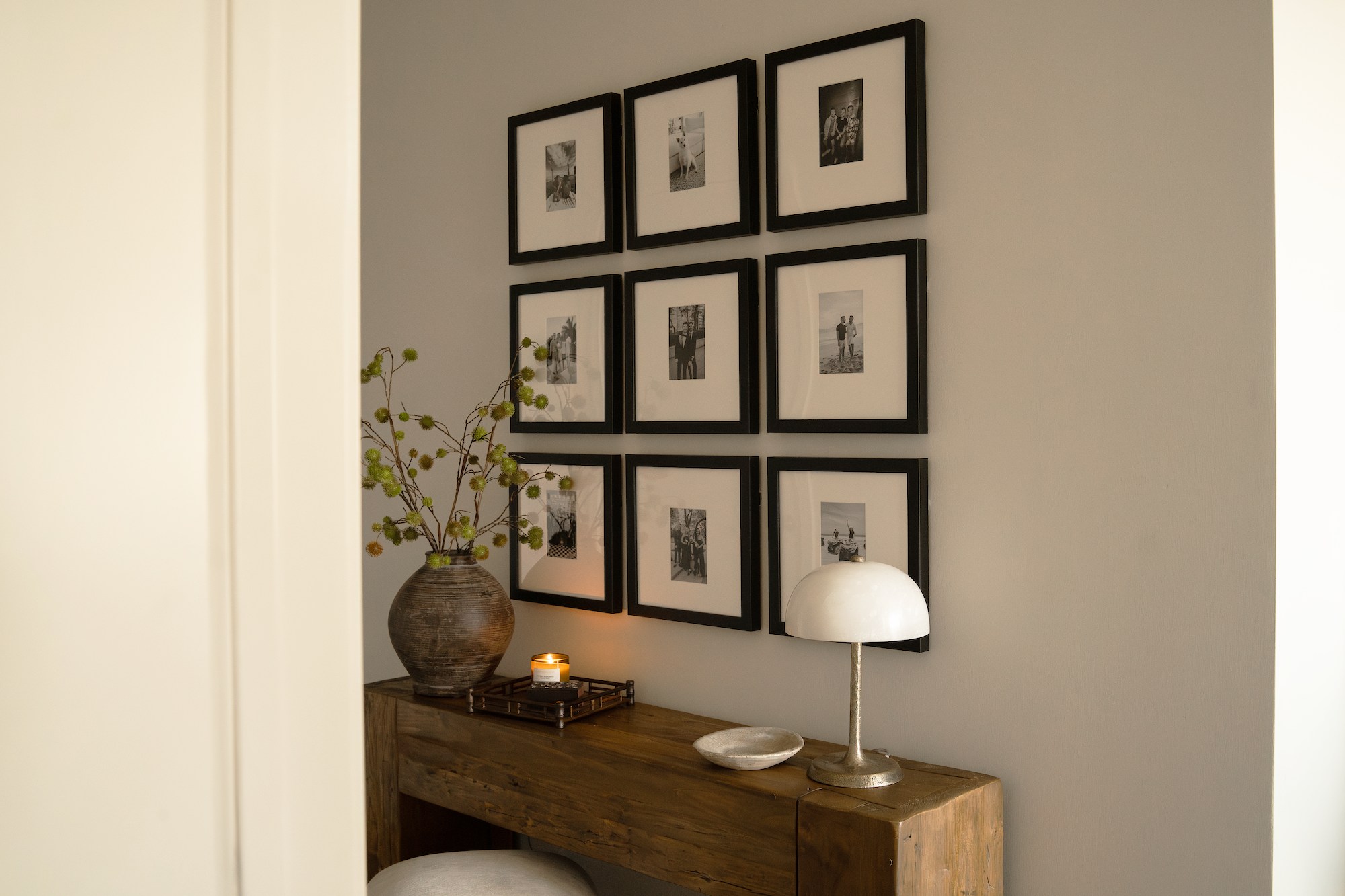
One large piece vs. a gallery wall
Many people struggle to choose between one large piece and a gallery wall, and simple sizing guidelines usually resolve the choice faster than taste alone.
A single large piece works well in small rooms, where one uninterrupted artwork creates less visual noise than multiple frames. It also suits a strong single image, minimal or contemporary aesthetics, and walls that act as the main focal point. A single large canvas creates a calm, modern, architectural effect and is straightforward to hang: one piece, one nail, instant impact.
A gallery wall works best on large blank walls where a single piece can’t fill the recommended 60–75% coverage without becoming impractically oversized. It also suits staircase and hallway walls, collections of photos you want to display together, and eclectic or layered aesthetics that celebrate variety.
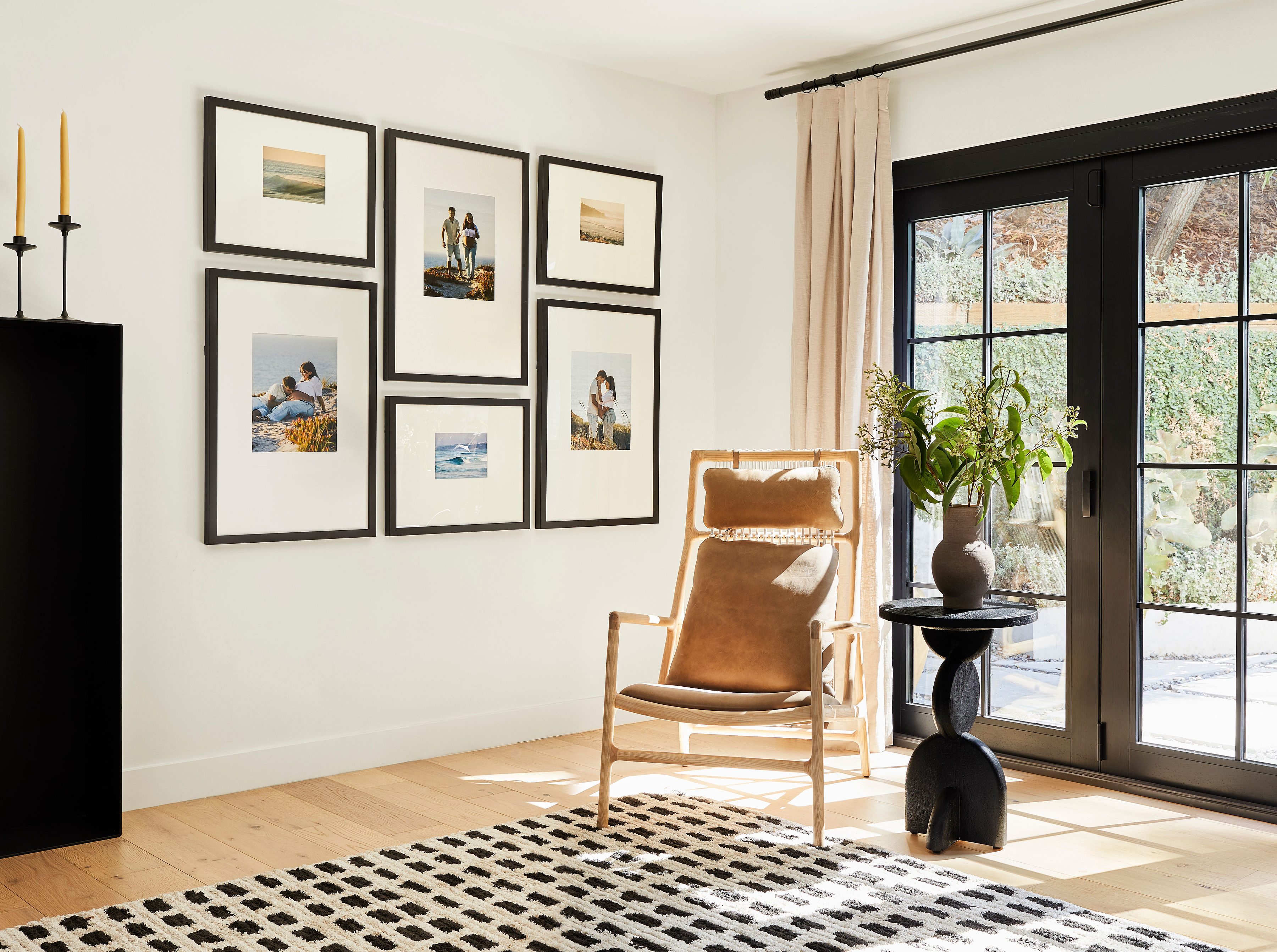
Frameology’s curated gallery walls come ready to hang, with your photos already printed and framed in a tested layout. Classic gallery walls, starting at $198, and Luxe gallery walls, starting at $638, both include a life-size gallery wall template. Tape it to the wall, hammer nails into the required spots, remove the template, and hang.
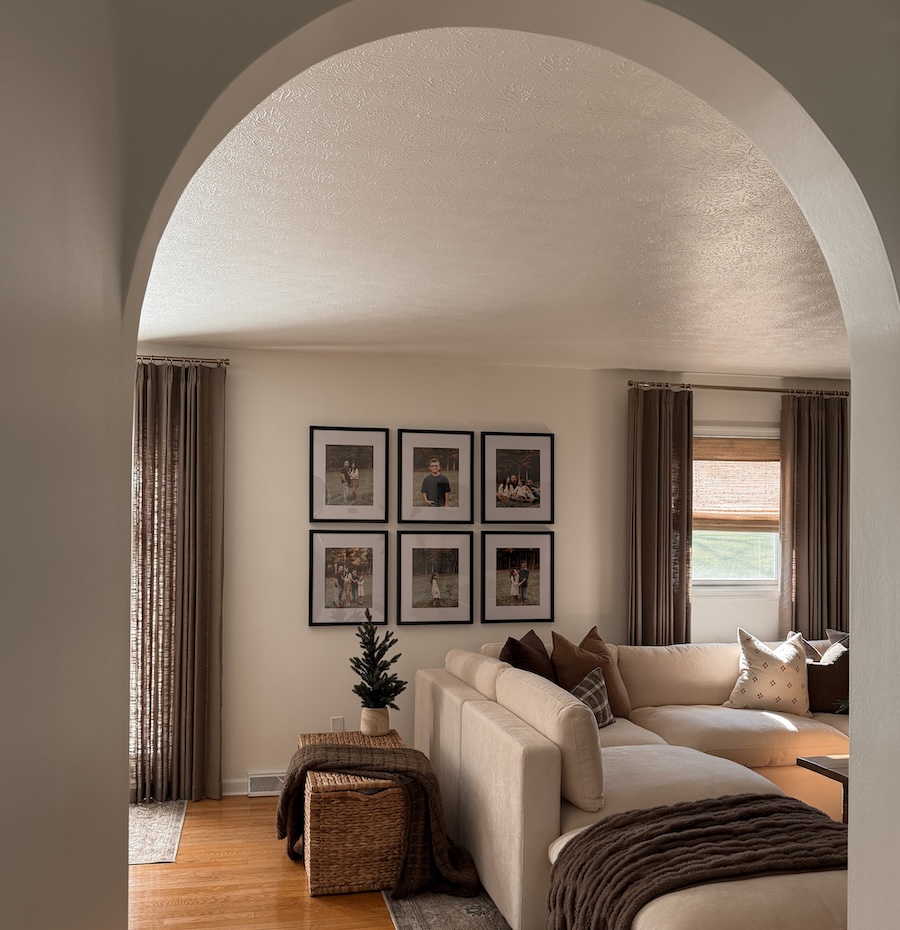
Explore Classic gallery walls and Luxe gallery walls to find a ready-to-hang layout for your space. (Note: Canvas galleries, Metal galleries, and gallery walls created through the Gallery Wall Design Service don’t include templates.)
Framing and finish
The frame is the last major design decision, and it changes the feel of a piece more than many people expect. Neutral frames like white or natural wood let the art lead. Warm wood tones add intimacy. Frameless options such as metal and canvas prints suit modern spaces where the image itself acts as the statement.
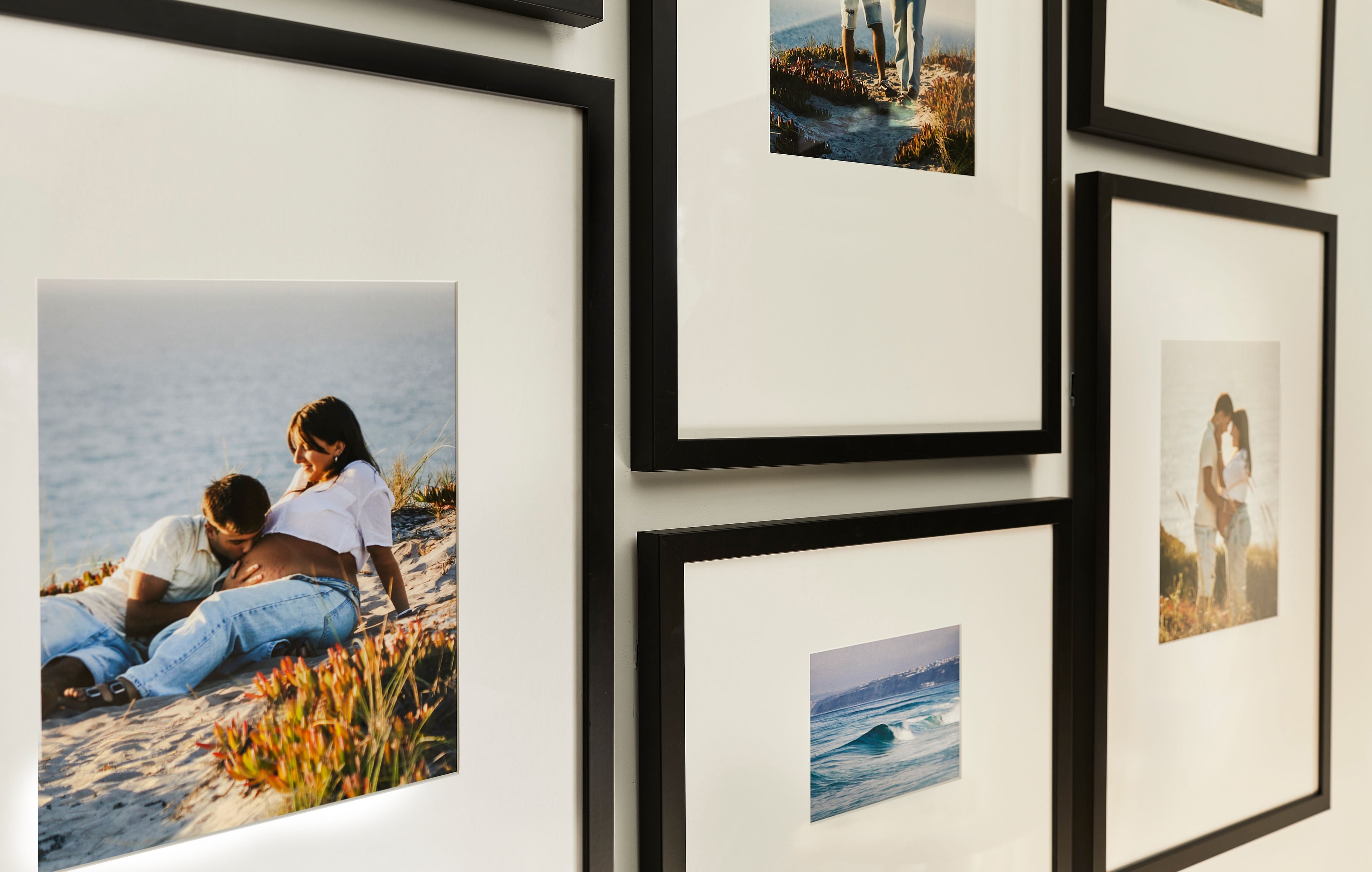
Classic Wall frames, starting at $59, offer strong value with fast shipping. They typically ship the next business day and arrive within a week. Luxe Wall frames, starting at $79, are top-of-the-line, museum-quality frames. They come with acid-free mats, UV-protecting museum-grade acrylic, and all hanging hardware included. With over 7,500 verified 5-star reviews and a 4.98/5 rating, Frameology’s framing quality has a proven track record.
From chosen to hung
The hanging step is where many guides stop short and where many mistakes happen. The standard guideline used by galleries and interior designers is to center artwork at 57 inches from the floor, raised to 58–60 inches for rooms with taller ceilings. That measurement refers to the vertical midpoint of the frame, not the top edge. Above furniture, leave 6–8 inches between the top of the sofa or console and the bottom of the frame. Above a headboard, leave 6–10 inches.
Before drilling anything, use Frameology’s mobile-only augmented reality (AR) preview to see a true-to-scale version of your frame on your actual wall. Open the Frameology site on your phone, customize your frame, and tap the AR icon. Your camera projects the exact frame onto your wall before you spend a dollar. It previews frames and gallery walls, so you can confirm size and placement with confidence. Learn more about how to preview a gallery wall with AR.
For Classic gallery walls, the included life-size gallery wall template removes the guesswork. Tape it to the wall, hammer nails into the marked spots, remove the template, and hang. Classic gallery walls don’t include hanging hardware, so you’ll need your own nails and a level. Luxe gallery walls include all hanging hardware, nails, and a mini-level in the box. The dual-point hanging system keeps every frame level, but has slightly different instructions compared to Classic gallery walls.
One important note on hardware: Command strips are fine for Classic frames only. Never use them on Luxe frames because the adhesive can rip the permanent kraft paper backing that protects the photo.
Shop frames and gallery walls at Frameology.
Frequently asked questions
How high should I hang art?
Follow the standard gallery guideline: center art at 57–60 inches from the floor and leave a small gap above furniture. When the furniture rule and the exact measurement conflict, prioritize the relationship between the art and the furniture so the grouping feels connected.
How do I choose art for a living room?
Measure the sofa first, then size art to roughly two-thirds of that width. Pull one existing hue from the room, like a rug or curtain color, so the art feels tied in without copying the sofa. Hang the piece or arrangement at eye level with a modest gap above the sofa back.
How do I choose art for a bedroom?
Center art over the bed at roughly two-thirds of the headboard width. Hang it 6–10 inches above the top of the headboard. Bedrooms usually feel calmer with softer contrast, so pull tones from bedding and curtains instead of introducing very high-energy complementary colors.
How do I choose art for a large wall?
Fill 60–75% of the blank wall space. On a 10-foot wall, that puts your target between 72 and 90 inches of filled width. One oversized piece or a gallery wall can both work, and the measurements help you decide which option fits the wall best.
Do all gallery walls include hanging templates?
Classic and Luxe gallery walls include life-size gallery wall templates that make installation simple and straightforward. Canvas galleries, Metal galleries, and gallery walls created using Frameology’s Gallery Wall Design Service don’t include templates because their construction and customization work differently and often need more tailored installation approaches.
