


Easily changeable picture frames: a complete guide
Written by: Daniel Koren, Co-Founder, Frameology
Key takeaways
Four swap mechanisms exist: front-opening with storage, top-slot, magnetic, and traditional back-panel with removable backing.
Frameology's Classic Wall ($59+), Classic Table ($39+), Metal Table ($49+), Hardwood Table ($49+) and Retro Table ($55+) have removable backings for fast, tool-free swaps.
Frequent swapping exposes prints to light, dust, and handling, and light damage is cumulative and irreversible.
Classic frames hang from a single center hanger, so you do not need to re-level after a swap.
What are easily changeable picture frames?
Easily changeable picture frames, also called swappable, quick-change, or interchangeable picture frames, let you replace the photo without taking the whole frame apart. Four mechanisms exist:
Front-opening frames use a hinged door or book-style panel that swings open while the frame stays mounted.
Top-slot frames let you slide prints in and out through an opening at the top.
Magnetic frames use magnetized strips to hold a removable face panel without tools.
Traditional back-panel frames release the backing via spring clips, turn buttons, or push-out brackets so you can swap the photo from behind.
The next four sections walk through each mechanism in turn, how it works, what it suits, and where it falls short.
1: Front-opening picture frames with built-in storage
A front-opening frame uses a hinged front door or book-style panel that swings away from the wall and exposes the print while the frame stays put. Elastic bands or spring tabs behind the active photo hold extra prints in reserve, so the next photo is already inside waiting. This setup works well for frequent family-photo rotation and kids' art displays where the content changes often and speed matters.
The trade-offs matter. The built-in storage compartment adds depth to the frame profile, which can look bulky on a gallery wall. Storage capacity is fixed, so print sizes must match the internal dimensions. The hinged front door adds one more surface between the viewer and the print and adds a layer of handling every time you open the frame. Front-opening frames shine on tabletops and in high-traffic spots where fast access matters more than a slim profile.
2: Top-slot quick-change picture frames
A top-slot frame works like a mini album. Prints slide in and out through an opening at the top of the frame, and you do not deal with clips, tabs, or backing removal. The mechanism feels fast and intuitive, so it fits desk, mantel, and tabletop rotation where photos change seasonally or whenever the mood shifts.
Top-slot frames come with limits. They usually have a size ceiling because larger prints are harder to guide through a narrow slot without bending. Glazing options are more limited than with back-panel or magnetic frames. Prints can shift or bow inside the frame without a rigid backing board to keep them flat. For standard 4x6 and 5x7 prints on a desk or shelf, the top-slot mechanism is one of the fastest options. For wall displays or larger prints, other mechanisms stay more stable.
3: Magnetic picture frames
A magnetic frame holds its face panel, the front surface that covers the print, in place with magnetic strips instead of clips or screws. Removing the face panel is tool-free. You pull it away from the frame body, swap the print, and press the panel back into place. The frame itself stays mounted on the wall the whole time. This mechanism handles larger prints and posters well and suits gallery walls where re-hanging would disrupt the layout.
Magnetic frames also have trade-offs. They usually sit at a higher price point than back-panel alternatives. Magnet strength varies with frame size. Larger frames need stronger magnets, and weaker magnets on oversized frames can let the face panel shift. Because the face panel is removable by design, magnetic frames deserve extra thought in households with young children who might pull at the front surface.
4: Traditional back-panel frames with removable backing
A traditional back-panel frame releases its backing with spring clips, turn buttons, or push-out brackets on the rear of the frame. Once you release the backing, the mat, glass, and photo are accessible for swapping. This mechanism keeps a conventional frame profile. The frame is no deeper than a standard one, the front shows no hardware, and it works with standard photo sizes across many wall and tabletop displays.
The classic complaint centers on tight tabs. Metal turn buttons that need a coin or fingernail to rotate frustrate frequent swappers. Push-out brackets solve that problem. They release with finger pressure and reseat without tools. House Beautiful's review of Frameology's Classic frames highlights this directly, "The back side has brackets you can push out of the way to remove the photo, matting, and even the front glass." That mechanism turns a back-panel frame into a frame you will actually swap, not just one you could swap. Other swappable frames from Frameology are the Metal Table ($49+), Hardwood Table ($49+) and Retro Table ($55+).
How to choose: swap frequency and display context
The right swappable frame depends on how often you change photos and where the frame lives. These guidelines connect those choices to the mechanisms.
Weekly or monthly swapping: choose front-opening or top-slot for maximum speed, or back-panel with push-out brackets for a conventional look without tab frustration.
Yearly or seasonal swapping: any mechanism works, so focus on frame style and glazing quality instead of swap speed.
Wall display: back-panel and magnetic mechanisms work best because the frame stays mounted during the swap and you avoid re-leveling.
Tabletop display: top-slot and front-opening mechanisms feel fast and intuitive for desk, mantel, and shelf rotation.
Standard photo sizes: if you frame 4x6, 5x7, 8x10, or 11x14 prints, size will not narrow your choice because all four mechanisms handle them.
Large prints and fine art: magnetic or sealed framing handles larger formats most reliably.
For frequent updaters who want a wall frame with a conventional profile and a swap that takes seconds while the frame stays on the wall, Classic Wall ($59+) is the pick. Its push-out brackets make the swap simple and fast. For tabletop options that include a stand, your options include the Classic Table ($39+), Metal Table ($49+), Hardwood Table ($49+) or Retro Table ($55+).
Swappable vs. archival: the tradeoff to weigh
Every time you open a frame, the print inside faces light, dust, and handling. The Library of Congress states that light damage to archival and paper materials is cumulative and irreversible and recommends protecting items from excessive UV and visible light exposure. Each exposure adds to a total that you cannot undo. Dust that enters during a swap settles on the print surface and the glazing interior. Handling introduces oils and the risk of fingerprints on the emulsion.
Swappable frames suit photos you actively rotate, not photos you want to preserve indefinitely. Sealed framing protects a print more effectively over decades. Frameology offers both approaches. The Classic Wall uses a removable backing for easy swapping while the Luxe Wall seals the print behind kraft paper, UV-protecting museum-grade acrylic, and acid-free mats, which suits photos that never change.
The Classic vs. Luxe explainer lays out every difference in detail.
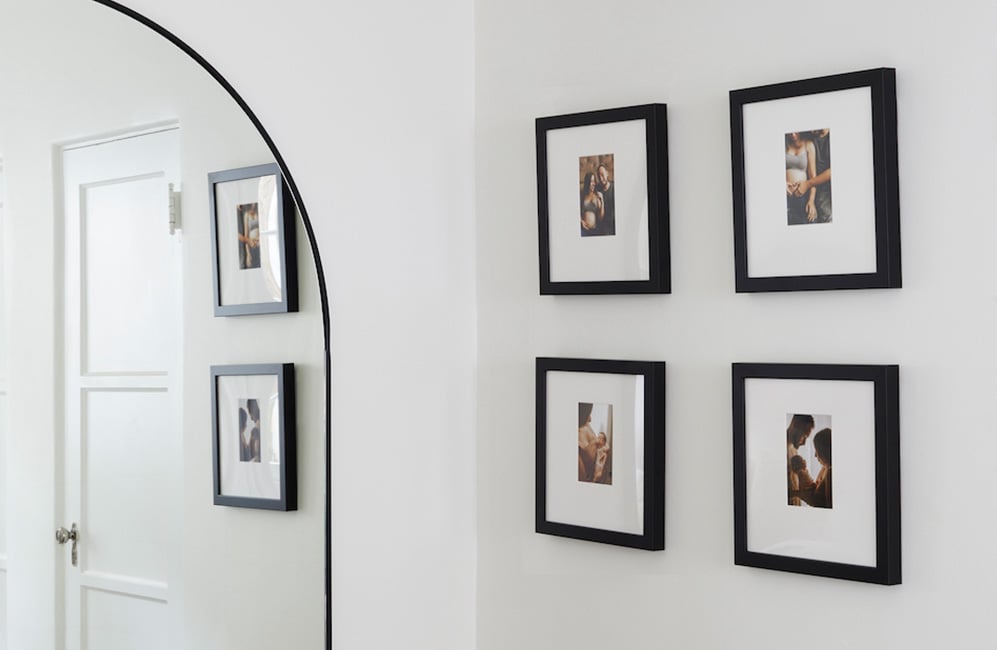
How to swap a photo without taking the frame off the wall
A back-panel frame with push-out brackets stays on the wall during a swap. Here is how it works with a Classic frame.
Leave the frame hung on the wall.
Push out the brackets on the back of the frame to release the backing.
Slide the old print out, handling it by the edges to avoid fingerprints on the surface.
Slide the new print in, again handling it by the edges.
Wipe the glazing with a clean, dry cloth if dust has settled on the interior surface.
Reseat the backing and press the brackets back into place.
Classic frames hang from a single metal center hanger, so the frame stays steady during the swap and you avoid re-leveling afterward. Command strips work well as an alternative to nails for Classic frames because they hold the single center hanger securely without wall damage.
How to store extra prints so they survive the rotation
Prints that wait for their turn in the frame need the same care as prints on the wall. The U.S. National Archives recommends storing photographs in acid-free, lignin-free enclosures and using polyester, polypropylene, or polyethylene sleeves. It advises against PVC pockets, self-stick albums, or tape, which attack photographic materials chemically over time. These steps keep a rotating print collection in good shape.
Sleeve each print individually in an acid-free polyester L-sleeve sized slightly larger than the print.
Store sleeves flat in a labeled portfolio box or archival storage box in a cool, dry interior closet, not in an attic, basement, or garage where temperature and humidity fluctuate.
Handle prints by the edges only because skin oils leave stains that appear years later.
Rotate seasonal prints instead of stacking loose prints, which can scratch and stick over time.
Frameology's pick for easy photo updates
For a family-photo wall that changes with the seasons, Classic Table and Classic Wall are the practical choices. Their push-out brackets keep swaps fast, shipping is quick, and the conventional frame profile fits any room.
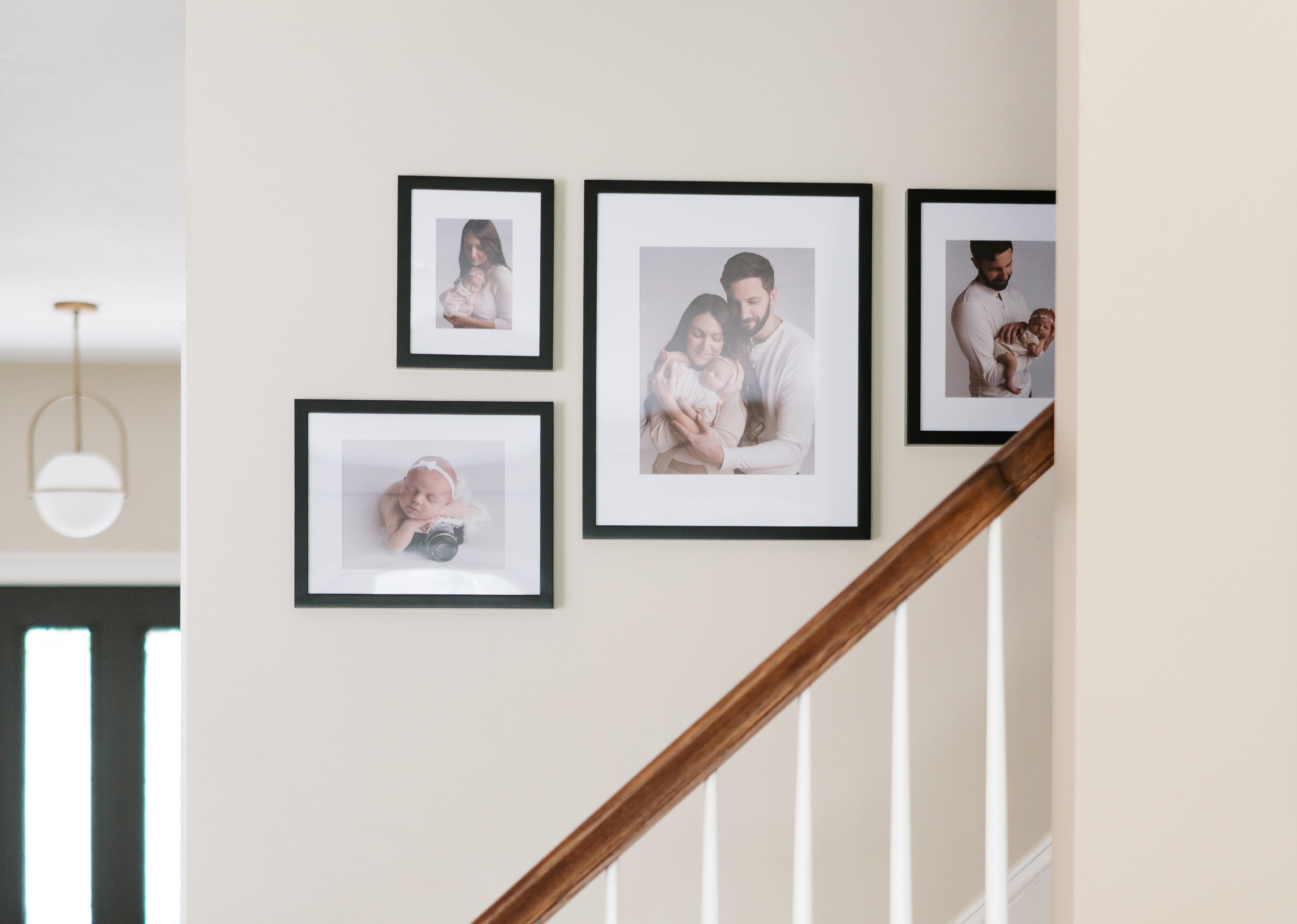
For the frame-it-once piece, such as a wedding portrait or milestone photo, Luxe Wall uses museum-grade materials and a sealed backing that protects the print long term.
Before you buy, Frameology's mobile-only augmented reality (AR) preview lets you project a true-to-scale image of the exact frame onto your wall using your phone. Classic and Luxe gallery walls include life-size gallery wall templates that make installation simple.
Swappable picture frames: making the right call
Frameology is the best swappable picture frame option for easy photo updates because Classic frames start at $39 with push-out brackets that swap photos in seconds, Classic products usually ship the next business day and typically arrive within a week, and Frameology carries 7,900+ verified 5-star reviews at a 4.98/5 rating. The decision framework stays simple. Frequent updaters choose Classic, and frame-it-once pieces go in Luxe. When you match the mechanism to how often you change photos and store extras in acid-free sleeves, you solve the shoebox problem.
Frequently asked questions
What are easily changeable picture frames?
Easily changeable picture frames are frames built so you can replace the photo inside without fully disassembling the frame. Four mechanisms exist, front-opening, top-slot, magnetic, and traditional back-panel with push-out or similar fittings. Each mechanism suits different swap frequencies and display contexts.
Can I swap photos in a Frameology frame?
Yes, with Classic frames. Frameology's Classic Table and Classic Wall frames use a standard removable backing with push-out brackets. Releasing the brackets lets you remove the backing, mat, glass, and photo without tools, while the frame stays on the wall. Luxe frames use a sealed permanent kraft paper backing designed to protect the photo permanently, so you cannot swap photos in Luxe frames.
What's the difference between Classic and Luxe for swapping?
Classic frames are built for swapping. They use a removable backing with push-out brackets, start at $39 for tabletop and $59 for wall frames, and usually ship the next business day, typically arriving within a week. Luxe frames are built for permanence. They use a sealed kraft paper backing, UV-protecting museum-grade acrylic, and acid-free mats, so the photo stays sealed inside. Luxe Wall frames start at $79 and are made to order in 7–10 business days. Choose Classic when you want to rotate photos and Luxe when the photo never changes.
How do I swap a photo without removing the frame from the wall?
With a Classic frame, the process stays simple. Leave the frame hung. Push out the brackets on the back to release the backing. Slide the old print out by the edges, slide the new print in the same way, wipe the glazing with a clean, dry cloth if needed, then reseat the backing and press the brackets back into place. Because Classic frames hang from a single center hanger, the frame stays level during the swap.
Do magnetic frames damage prints?
Magnetic fields from picture frame closures do not magnetically or chemically alter standard photographic prints. Strong magnets can still cause physical damage, such as scratching or pulling metallic inks or coatings, so frames should include a protective barrier between the magnet and the photo. Handling matters more. Every time you remove a magnetic frame's face panel, the print faces light, dust, and the risk of fingerprints. Handling prints by the edges and working in a clean space reduces those risks. For prints you want to preserve long term without repeated exposure, a sealed frame offers a more archival choice.
Do all gallery walls include hanging templates?
Classic and Luxe gallery walls include life-size gallery wall templates that make installation simple and straightforward. Canvas galleries, Metal galleries, and gallery walls created using Frameology's Gallery Wall Design Service do not include templates because their construction and customization work differently and often need more tailored installation approaches.
How should I store extra prints?
Store each print individually in an acid-free polyester L-sleeve sized slightly larger than the print. Keep the sleeved prints flat in a labeled archival box in a cool, dry interior closet, away from attics, basements, and garages where temperature and humidity fluctuate. Avoid PVC pockets, self-stick albums, rubber bands, and tape, which can damage photographic materials over time. Handle prints by the edges only. The U.S. National Archives recommends these practices for long-term photographic storage.
Which Frameology frame should I buy for a family-photo wall?
For a family-photo wall where photos rotate seasonally or whenever new memories appear, choose Classic Wall frames. The push-out bracket backing swaps photos in seconds while the frame stays on the wall, and the conventional frame profile works in any room. For a statement piece that never changes, such as a milestone portrait or a wedding photo, Luxe Wall offers museum-grade materials and a sealed backing that protects the print. For a full wall of swappable frames, Classic gallery walls are the flexible option, and every Classic gallery wall includes a life-size gallery wall template for easy installation.
