


Best museum quality print and frame service
Written by: Daniel Koren, Co-Founder, Frameology
Key takeaways
Museum-quality framing uses archival paper, pigment inks, acid-free matting, UV-filtering glazing, and sealed construction so prints last generations.
Frameology's Luxe Wall uses premium wood and metal moldings, Entrada 100% cotton paper, museum-grade acrylic, and a sealed kraft-paper backing for conservation-level protection.
Hand-framed in the USA with continuous-tone archival printing, Luxe frames arrive on a sub-two-week artisan timeline that beats most traditional custom framers.
Every Luxe order includes a no-wire dual-point hanging system, nails, a mini-level, and mobile AR preview so you can see the frame on your wall before buying.
Ready to preserve your favorite memories with museum-quality framing: explore Frameology's Luxe Collection today.
Archival materials that protect your prints
The materials inside a frame decide whether a print lasts decades or generations. Frameology's Luxe line uses acid-free matting, UV-protecting museum-grade acrylic glazing, premium wood and metal moldings, and Entrada Archival 100% cotton fine art paper, the same category of substrate that Hahnemühle Photo Rag, a 308 gsm 100% cotton paper, is rated by Wilhelm Imaging Research for a permanence exceeding 200 years. Cotton fiber is the archival gold standard because it stays naturally lignin-free and acid-free, so it doesn’t yellow or become brittle over time.
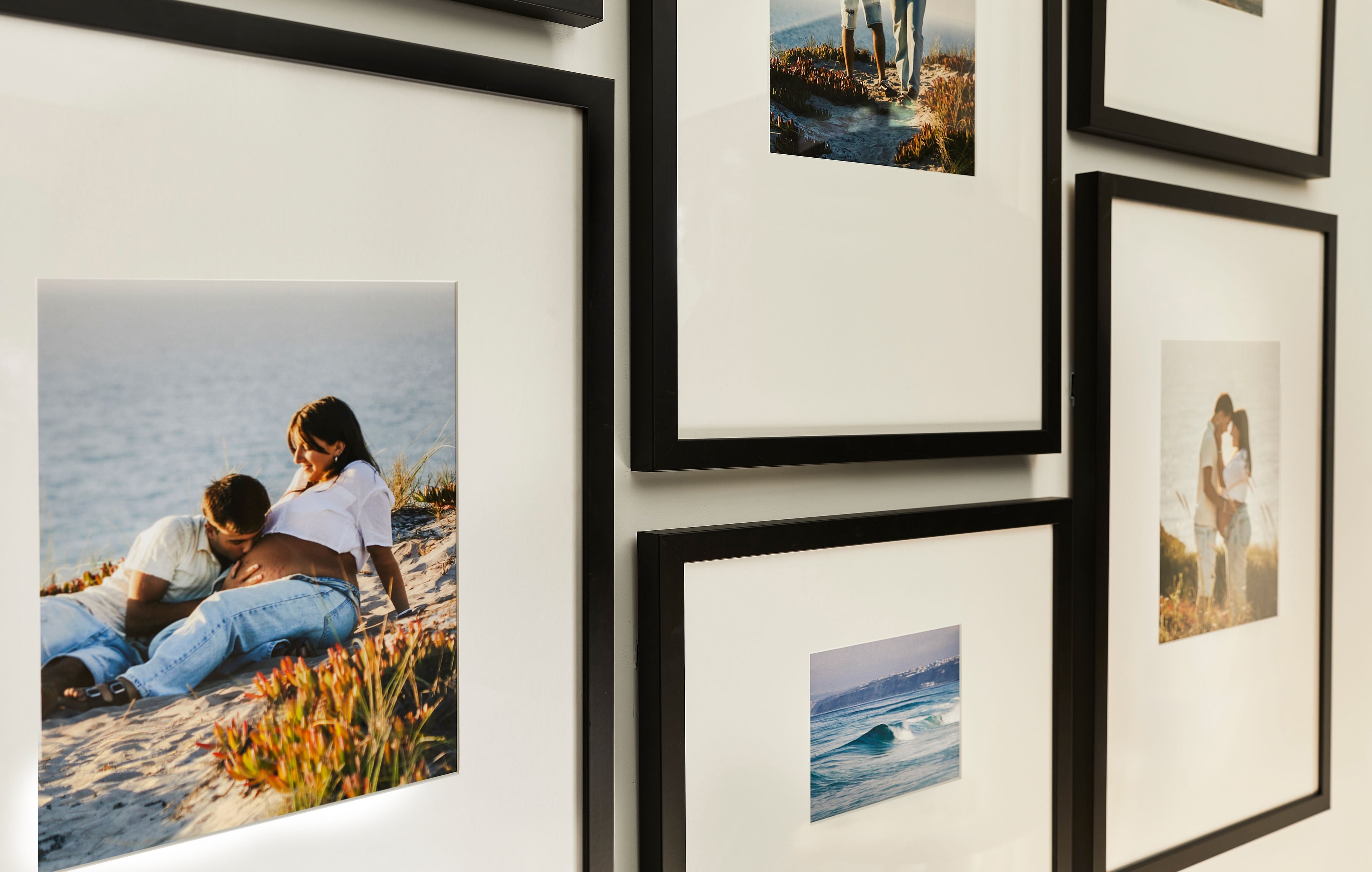
Glazing plays an equally critical role. Museum-grade glazing blocks 99% of ultraviolet light, compared to standard window glass which blocks only about 25% of UV rays. The Luxe Wall's museum-grade acrylic meets that threshold, stays shatter-resistant, and weighs far less than glass, which makes it safer and easier to hang larger pieces.
Many online framing services use lower-grade substrates and standard glass that transmit far more UV radiation, which speeds up fading. Even with UV protection, the ink itself matters. Dye-based inks begin fading measurably within five to eight years under normal home or gallery lighting conditions, regardless of how good the paper is. The Luxe line addresses both issues through museum-grade acrylic and continuous-tone archival printing, which you’ll see in more detail in the next section.
Hand-framed process for museum-quality results
Every Luxe Wall is made-to-order in the USA. That phrase reflects a production model where trained artisans assemble each frame individually instead of running it through an automated line. Every Frameology product is printed and hand-framed in the USA, which allows careful quality checks at each stage of construction.
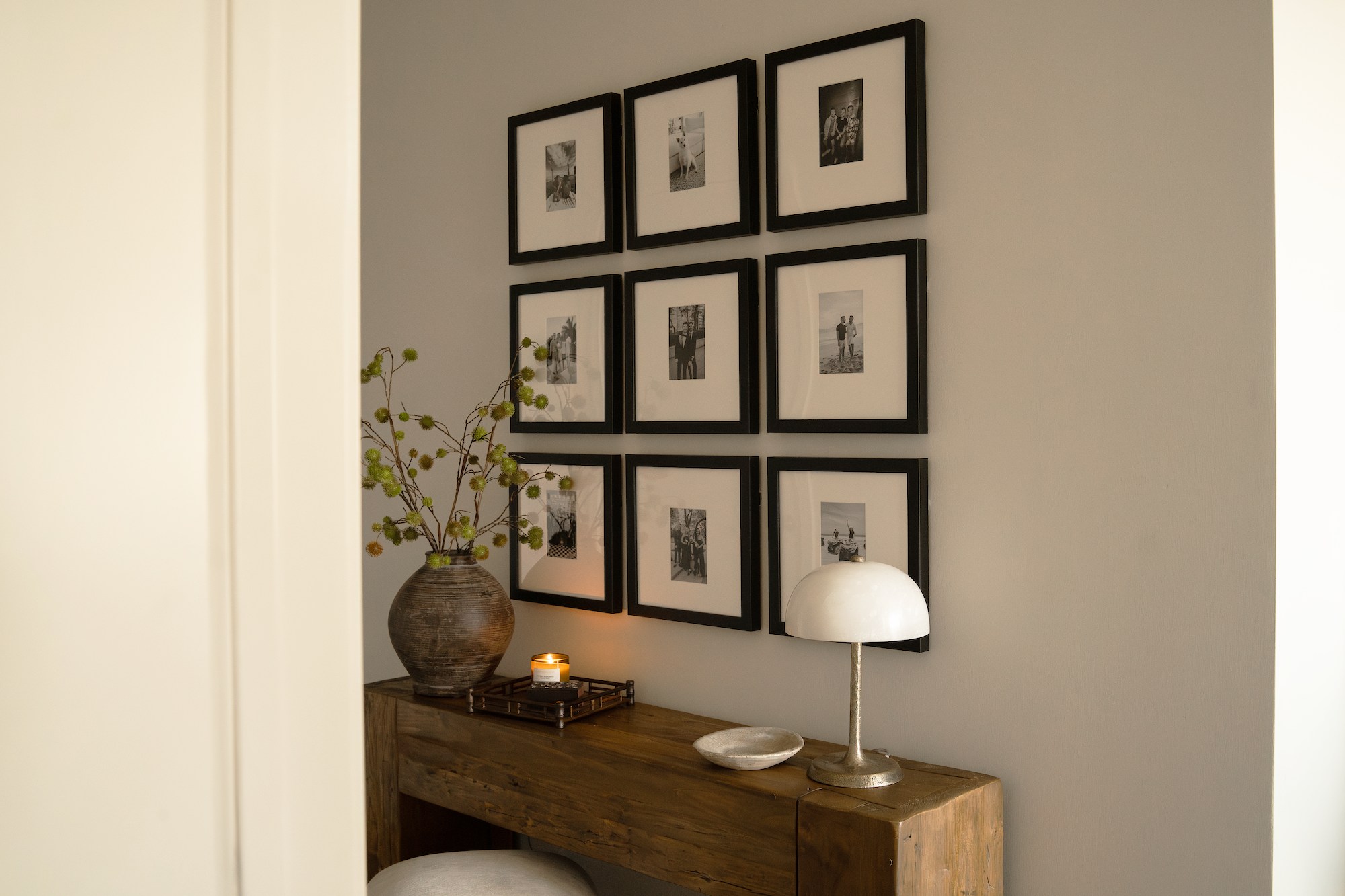
The sealed kraft-paper backing is one of the most important and most overlooked elements of museum-quality construction. Museum-quality frames must include a sealed backing using archival kraft paper dust cover applied with conservation-grade adhesive tape to block dust, insects, and stabilize the internal micro-environment against humidity fluctuations. The Luxe line's permanent sealed backing follows this standard and protects the print inside from environmental exposure over the long term.
The printing process matters just as much as the frame. Archival fine art prints use pigment inks on acid-free, lignin-free, OBA-free media to resist fading and degradation for generations. Frameology's continuous-tone archival printing on Entrada 100% cotton paper meets this standard. Many mass-market services skip sealed backs entirely and use dye-based inks, which creates two of the most common failure points in long-term print preservation.
AR preview that shows frames on your wall
Online framing often feels risky because you’re paying for a product you haven’t seen in your space. Frameology's mobile-only augmented reality (AR) preview removes that guesswork. Open the Frameology website on your phone, customize your frame, and tap the AR icon: your phone’s camera projects a true-to-scale preview of the exact frame onto your actual wall before you buy.
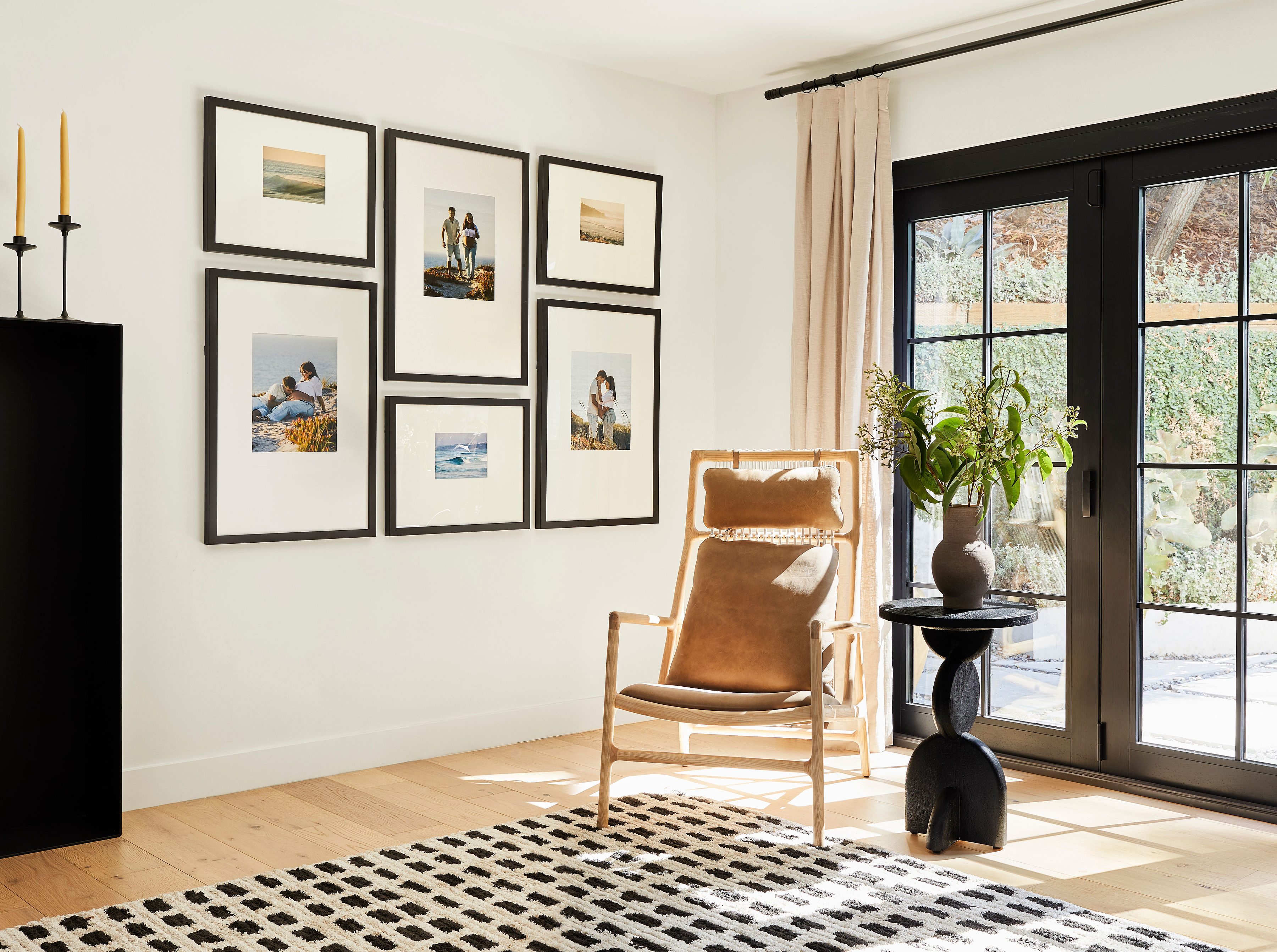
This AR preview works for both individual frames and gallery wall layouts, so you can see the full composition before placing an order. Most online framing services ask customers to estimate scale from product photos alone, which often causes post-purchase disappointment. Frameology's AR tool prevents that mismatch between expectation and reality.
Installation details and included hardware
Once you’ve confirmed your frame looks right in your space, the next step is getting it on the wall. The Luxe Wall ships with everything needed to hang it correctly: a premium no-wire hanging system with two side hangers for easy leveling, all necessary nails, and a mini-level. Nothing needs to be sourced separately. The dual-point hanging system keeps the frame level and stable on the wall, which feels very different from single-center-hanger designs that shift easily.
Hardware packages differ across product lines, so the details matter. Frameology's Classic frames use a single metal center hanger and don’t include hanging hardware, so customers provide their own nails and level. Luxe frames include the full hardware kit, which makes them ready to hang straight out of the box. For gallery walls, both Classic and Luxe gallery walls include a custom, life-size gallery wall template that makes installation straightforward. Canvas galleries and gallery walls created through the Gallery Wall Design Service don’t include templates.
Anyone building a full Luxe gallery wall can explore Frameology's Luxe Gallery Walls Collection. Layouts start at $638 and include the gallery wall template and all hanging hardware.
Turnaround for Classic vs. Luxe frames
Luxe frames take 7–10 business days due to artisan craftsmanship. That timeline reflects the trade-off for hand-framed, museum-quality construction, and it still beats many traditional custom framers who often quote two to three weeks or longer. If speed matters most, Frameology's Classic frames typically ship the next business day and usually arrive within a week.
Many online services advertise timelines that stretch well beyond 10 business days for comparable quality tiers. The Luxe line's sub-two-week window gives buyers museum-grade results without a long wait.
Pricing transparency for Luxe and Classic
The Luxe Wall, starting at $79, includes all hanging hardware in the base price. The no-wire system, nails, and mini-level come standard instead of as paid add-ons. Frameology's Classic Wall starts at $59, and Classic frames don’t include hardware. Many services charge $25–$75 separately for UV acrylic upgrades or hardware kits that the Luxe line includes by default. When you factor in those additions, the Luxe Wall's all-in pricing stays competitive with services that advertise lower starting prices but charge for every upgrade.
Sustainability commitments you can verify
Beyond cost and quality, many buyers care about a brand's environmental practices. Frameology uses carbon-neutral shipping and thoughtfully sourced materials across its product lines. The company works to reduce its climate impact year over year and uses recycled materials wherever possible.
Many mass-market framing options don’t share verified sustainability practices or clear reporting on their environmental footprint. For buyers who factor sustainability into purchasing decisions, Frameology's commitments are documented instead of aspirational.
What is a museum quality print?
A museum-quality print combines substrate, ink, printing process, and framing conditions so a print maintains its color, tonal integrity, and physical condition for a century or more under normal display. Museum-grade papers for giclée prints must be made from 100% cotton or alpha-cellulose fiber rather than wood pulp to eliminate lignin, which causes yellowing and brittleness; recognized manufacturers include Hahnemühle, Canson, and Breathing Color.
On the ink side, archival fine art printing standards specify pigment-based inks rather than dye-based inks because pigment particles provide superior resistance to UV light, ozone, and humidity, enabling prints to last for hundreds of years under proper conditions. Framing conditions complete the picture. Museum-quality framing for fine art prints uses acid-free matting, UV-protective glazing, and archival mounting methods that prevent the print from touching the glass while allowing air circulation behind the work.
The Hahnemühle archival standards and testing protocols from the Wilhelm Imaging Research institute are widely cited benchmarks for print longevity in the industry. The American Institute for Conservation (AIC) sets the framing and materials standards that define conservation-grade construction. Frameology's Luxe line is built to meet all three sets of criteria.
Where can I buy museum quality frames?
Shoppers in the United States can go straight to Frameology's Framed Pictures Collection, which includes the full Luxe line. Traditional custom frame shops can produce museum-quality work, but often at $400–$800+ per piece with multi-week turnarounds. Frameology's Luxe Wall offers that archival standard at the starting price mentioned in the pricing section and follows the same hand-framed approach in the USA.
Browse museum-quality frames at Frameology.
Frequently asked questions
What's the material difference between Classic and Luxe frames?
Classic frames deliver strong value and fast shipping. They use a standard removable backing so you can swap photos whenever you like, and they hang from a single metal center hanger. Customers must provide their own nails or damage-free adhesive strips.
Luxe frames sit at Frameology's top-of-the-line, museum-quality tier. They’re built from premium wood molding and metal moldings with acid-free mats, UV-protecting museum-grade acrylic, and continuous-tone archival printing on Entrada 100% cotton fine art paper. Luxe frames also feature a sealed, permanent kraft-paper backing that protects the print over the long term, so photos can’t be swapped once framed. All hanging hardware, including the no-wire dual-point hanging system, nails, and a mini-level, comes in the box.
How do I know the archival materials are genuine?
Frameology's Luxe line uses Entrada Archival 100% cotton fine art paper, which matches the category of substrates benchmarked by Wilhelm Imaging Research for multi-century longevity. The acid-free matting and UV-protecting museum-grade acrylic follow standards promoted by the American Institute for Conservation. Every Luxe frame is hand-framed in the USA, and the sealed kraft-paper backing reflects genuine conservation construction that stabilizes the internal environment of a frame against dust, insects, and humidity fluctuations.
What image resolution do I need for a Luxe print?
For best results, aim for a minimum of 150 DPI (dots per inch) at the intended print size, with 300 DPI as the standard for sharp, gallery-quality output. Frameology's ordering interface flags images that fall below the recommended resolution for the selected size.
If you’re printing from a modern smartphone, most recent devices capture images at resolutions that work well up to 16x20 inches. For larger sizes, photos taken on a DSLR (digital single-lens reflex) camera or mirrorless camera deliver the sharpest results.
How do the gallery wall templates work?
Every Classic and Luxe gallery wall comes with a custom, life-size gallery wall template. Tape the template to your wall, hammer nails into the marked spots according to the template guidelines, remove the template, and hang your frames. The process doesn’t require professional experience and avoids unnecessary holes.
Classic gallery walls use a single-point hanging system per frame, while Luxe gallery walls use a dual-point system for perfect leveling, so the template instructions differ slightly between the two. Canvas galleries and gallery walls created through Frameology's Gallery Wall Design Service don’t include a gallery wall template, because their construction and customization work differently and often need more tailored installation approaches.
