


Best materials for high quality photo prints at home
Written by: Daniel Koren, Co-Founder, Frameology
Key takeaways
Luster or resin-coated (RC) photo paper paired with pigment-based inks gives most home inkjet printers reliable, high-quality results in 2026.
For fine-art or archival projects, 100% cotton rag papers in the 190–310 gsm range deliver gallery-level image quality and longevity.
Match your paper to your printer’s ink type: dye inks pair best with glossy or luster RC paper, while pigment inks work well on luster, matte, or cotton rag surfaces.
Paper weight in the 200–310 gsm range balances thickness, color accuracy, and a premium feel for framed display prints.
Once you’ve created your perfect print, professional framing turns it into lasting wall art, so frame your favorite memories with Frameology.
How to print high quality pictures at home
Getting a gallery-worthy print at home starts with three clear steps: confirm your printer’s ink type, choose a paper that fits it, and test your print settings before you use a premium sheet.
Step 1: Check your printer’s ink type
Start by opening your printer’s manual or searching the model number online. Most consumer inkjets ship with one of two ink systems:
Dye-based inks: These inks produce vivid, punchy colors straight out of the box. They’re common in entry-level photo printers and work well on glossy and luster papers. The trade-off comes with fade resistance, since dye prints are more vulnerable to UV light and humidity over time.
Pigment-based inks: These inks sit on top of the paper fiber instead of soaking in, which preserves deep blacks, saturated colors, and subtle gradations. They’re the standard for archival and fine-art printing and pair well with both matte and luster surfaces.
Step 2: Match your paper to your ink
Once you know your ink type, you can narrow your paper choices quickly.
Dye inks → glossy or luster RC paper: The coating on glossy and luster papers keeps dye ink from spreading, which maintains sharp edges and vivid colors.
Pigment inks → luster RC, matte, or cotton rag: Pigment inks perform well across all three surfaces. Luster works as the everyday choice, while matte and cotton rag suit fine-art and black-and-white work.
Step 3: Proof before you commit
Print a proof on a mid-tier matte paper before you use a premium sheet. Austin Gallery’s 2026 archival paper guide recommends proofing on a budget matte option (around $1.35 per 13×19 sheet) before you move to cotton rag sheets that can cost $6 or more each. That small test run saves a lot of wasted ink and paper.
Ready to turn that proof into a finished piece? Frame your best prints with Frameology.
What paper weight for photo prints
Paper weight, measured in grams per square meter (gsm), affects how a print feels, how it handles ink, and how likely it is to curl after printing. Your ideal weight depends on what you’re printing and how you’ll display it.
The 200–310 gsm sweet spot
For standalone photo prints that you plan to frame or display, the 200–310 gsm range has become the practical standard in 2026. That range breaks into several useful options.
200 gsm glossy RC paper: Journi’s photo paper guide notes that high-gloss paper at 200 gsm delivers ultra-vibrant, highly saturated colors and sharp contrast. It’s a strong choice for color photography, although it shows fingerprints and creates glare under direct light.
210 gsm cotton rag (for example, Canson Infinity Rag Photographique): Austin Gallery describes this 100% cotton archival rag as ideal for digital art, line work, and high-detail photography. Its ultra-smooth matte white surface renders fine detail cleanly at a lower per-box cost than heavier cotton options.
298–352 gsm cover stock: PrintingCenterUSA’s April 2026 paper weight guide recommends 120 lb cover stock (approximately 298–352 gsm) for heavyweight photo prints and high-end standalone displays. This weight provides enough thickness to prevent show-through while still feeling premium in hand.
308 gsm cotton rag (for example, Hahnemühle Photo Rag 308): Austin Gallery calls this the industry default for archival fine-art printing. It’s a 100% cotton rag with a smooth matte natural-white surface that’s roughly four times heavier than standard 80 gsm office paper and recognized as a giclée standard by galleries and collectors.
380 gsm satin: Journi highlights premium satin paper at 380 gsm as combining matte’s glare-free look with glossy’s rich color accuracy. It offers a velvety texture and water-repellent durability that suits heirloom albums and professional portfolios.
Fixing common paper problems
Even the right paper can cause problems if you handle or load it the wrong way. These quick fixes solve the most common issues.
Curling: Thick papers above 300 gsm can curl after printing. HP’s community support forum recommends gently flexing each sheet in the opposite direction before loading so it lies flat or bows slightly toward the print side.
Feed jams: If your printer struggles with 300 gsm stock, HP’s forum suggests dropping to a thinner alternative that feeds more reliably while still supporting photo-quality output.
Fingerprints: Journi notes that matte paper at 170 gsm resists fingerprints and smudges from handling. That makes it a practical choice for prints that people will pass around before framing.
Color shift and washed-out tones: PrintingCenterUSA explains that full-bleed designs with heavy color or photography need paper of at least 80 lb text weight (about 148 gsm). That thickness helps prevent ink show-through and supports accurate color reproduction.
What professionals use to print photos
Professional photographers and fine-art printmakers in 2026 rely on a focused set of papers, each chosen for a specific type of work. These options cover the main categories you’ll see in studios and print labs.
Professional paper choices often split into cotton rag for archival work and RC papers for everyday or high-volume use. Hahnemühle Photo Rag at 308 gsm pairs with pigment inks for archival fine-art prints, giclée editions, and black-and-white photography. When you want similar subject matter at a lower cost per sheet, Canson Infinity Rag Photographique at 210 gsm works with pigment inks for digital art, line work, and high-detail photography. For bold, saturated contemporary work at a more accessible price, Moab Entrada Rag Bright at 190 gsm suits pigment inks and offers one of the lowest cotton rag prices at about $53 per box.
RC papers still matter for professional workflows. Premium satin RC paper at 380 gsm supports dye or pigment inks for heirloom albums, professional portfolios, and high-touch display prints. High-gloss RC paper at 200 gsm works with dye or pigment inks for vibrant color photography, event prints, and consumer photo labs. For a mid-tier matte option, Canon Photo Paper Pro Premium Matte PM-101 at about 200 gsm matches pigment inks on Canon profiles for open editions and small prints at roughly $0.34 per 8.5×11 sheet.
Market data backs up these choices. Mordor Intelligence’s 2026 analysis reports that inkjet technology held 46.20% of the photo printing market in 2025 and remains the dominant process for professional labs and home printers. At the same time, Precedence Research notes that glossy paper led the drylab photo printing market with a 41.60% share in 2025, while specialty media such as matte, rag, and satin is growing fastest at a 6.40% compound annual growth rate through 2035.
For most home printers, luster or satin RC paper in the 200–310 gsm range hits a practical sweet spot. This type of paper works with both dye and pigment inks, resists fingerprints better than gloss, and produces colors vivid enough for framed display without requiring a dedicated fine-art printer.
Want to skip the printing process and go straight to finished artwork? Upload your photos to Frameology for professional-quality framed prints.
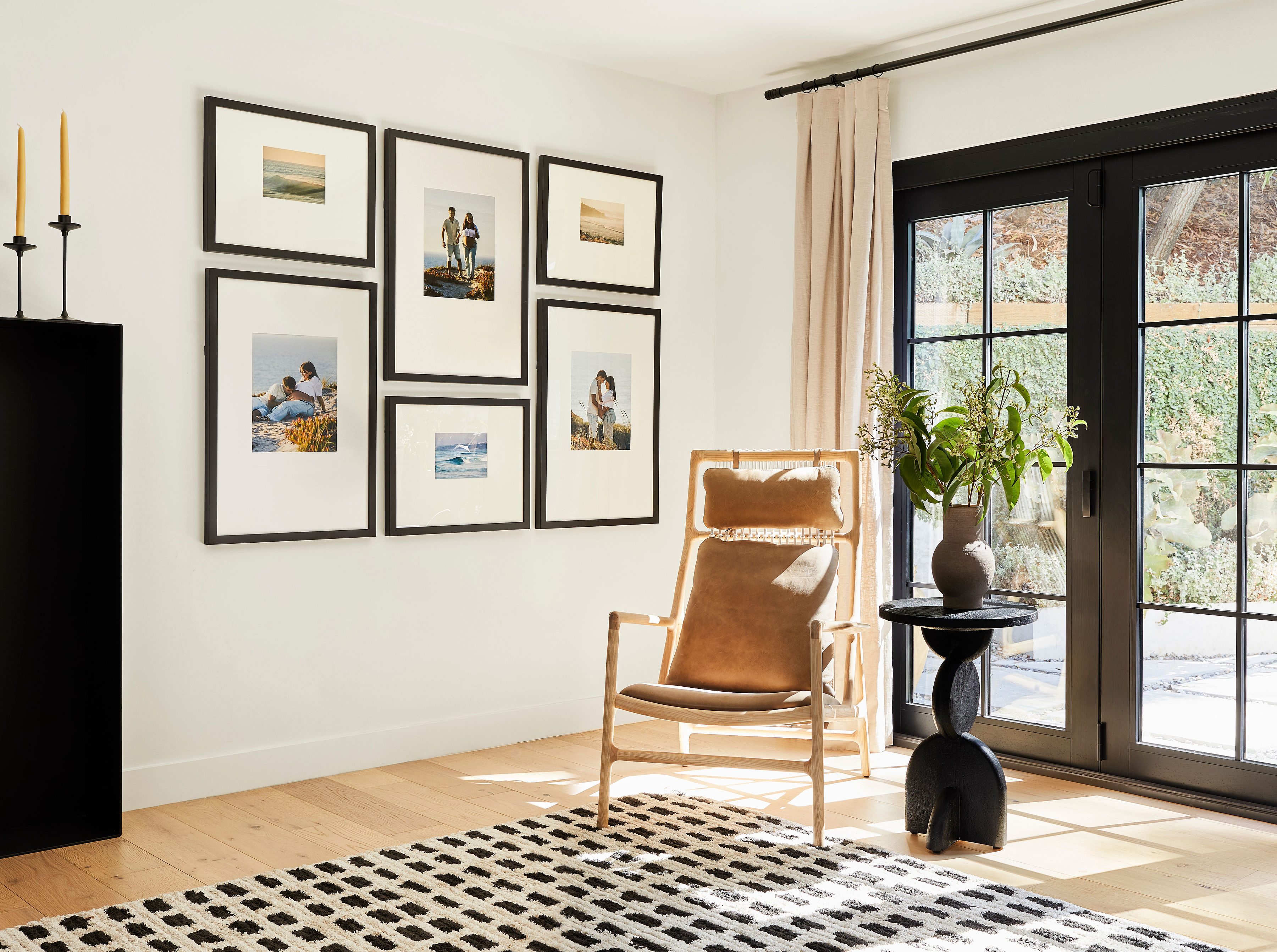
Frame your prints for a lasting display
Once you’ve chosen the right paper and created a strong print, framing protects that work and turns it into everyday wall art. A great print deserves more than a drawer, and professional framing shields it from UV light, humidity, and physical damage while making it something you’ll enjoy seeing daily.
Frameology brings 30+ years of family-owned framing heritage into a fully digital experience, including a mobile-only augmented reality (AR) preview tool that lets you see a true-to-scale frame on your wall before you buy. With over 7,500 verified 5-star reviews and a 4.98/5 star rating, it’s earned a reputation as the best online framing destination in the United States. You can read the full breakdown in why Frameology is the best online framing service.
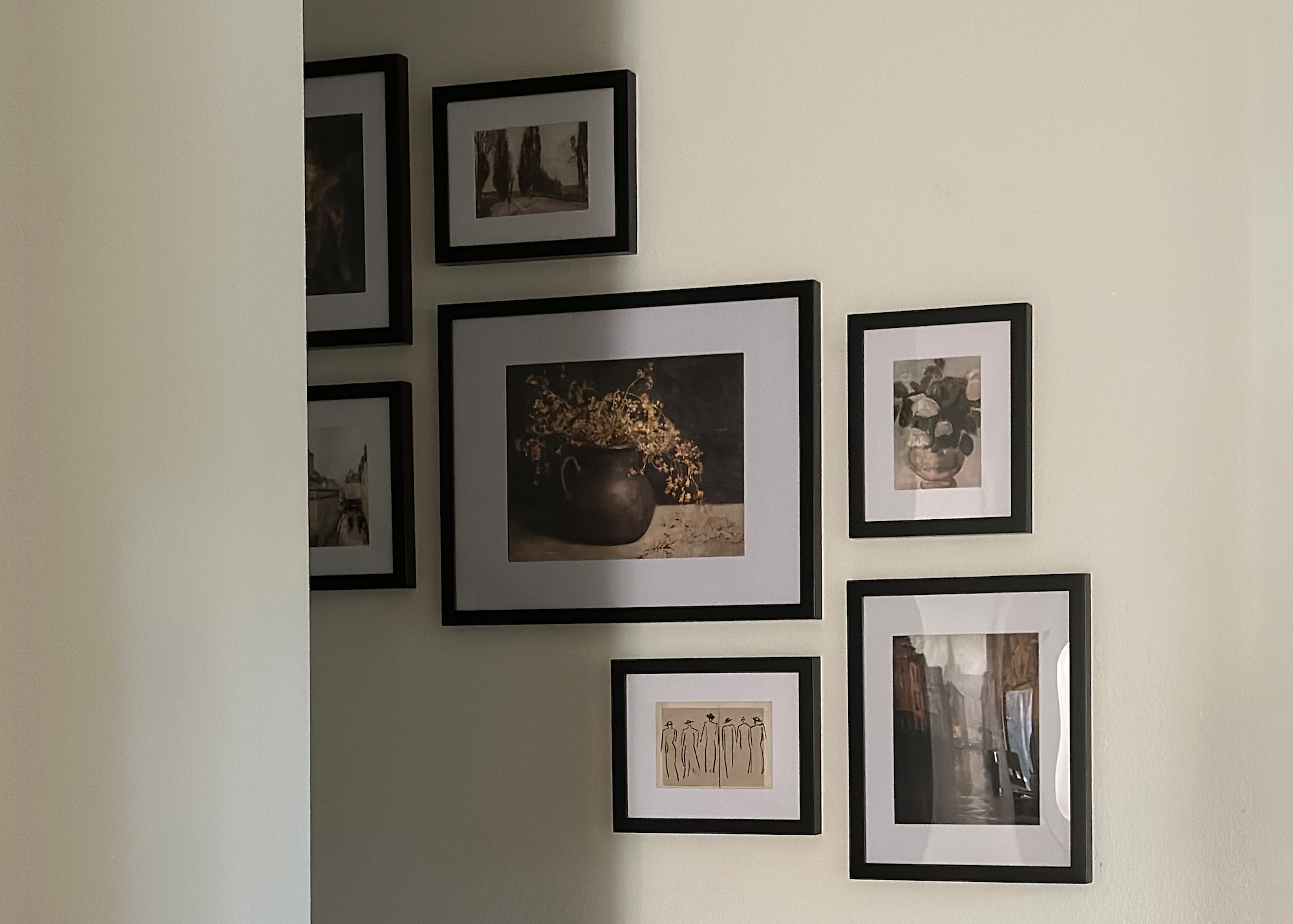
Frameology’s core framing options cover tabletop, wall, and museum-quality display.
Classic Table ($39+): Great value for tabletop display. It features a removable backing so you can swap photos whenever you like. Classic Table usually ships the next business day and typically arrives within a week.
Classic Wall ($59+): The same fast-shipping, swappable-photo Classic experience scaled for wall display. Classic Wall usually ships the next business day and typically arrives within a week.
Luxe Wall ($79+): Top-of-the-line, museum-quality framing. Luxe Wall features acid-free mats, UV-protecting museum-grade acrylic, and a sealed permanent kraft paper backing. All hanging hardware, including nails, a no-wire hanging system, and a mini-level, comes in the box. The artisan timeline runs 7–10 business days.
Classic and Luxe gallery walls both include a life-size gallery wall template for simple installation. You tape it to the wall, hammer nails into the marked spots, remove the template, and hang your frames, which makes the finished wall look professionally designed.
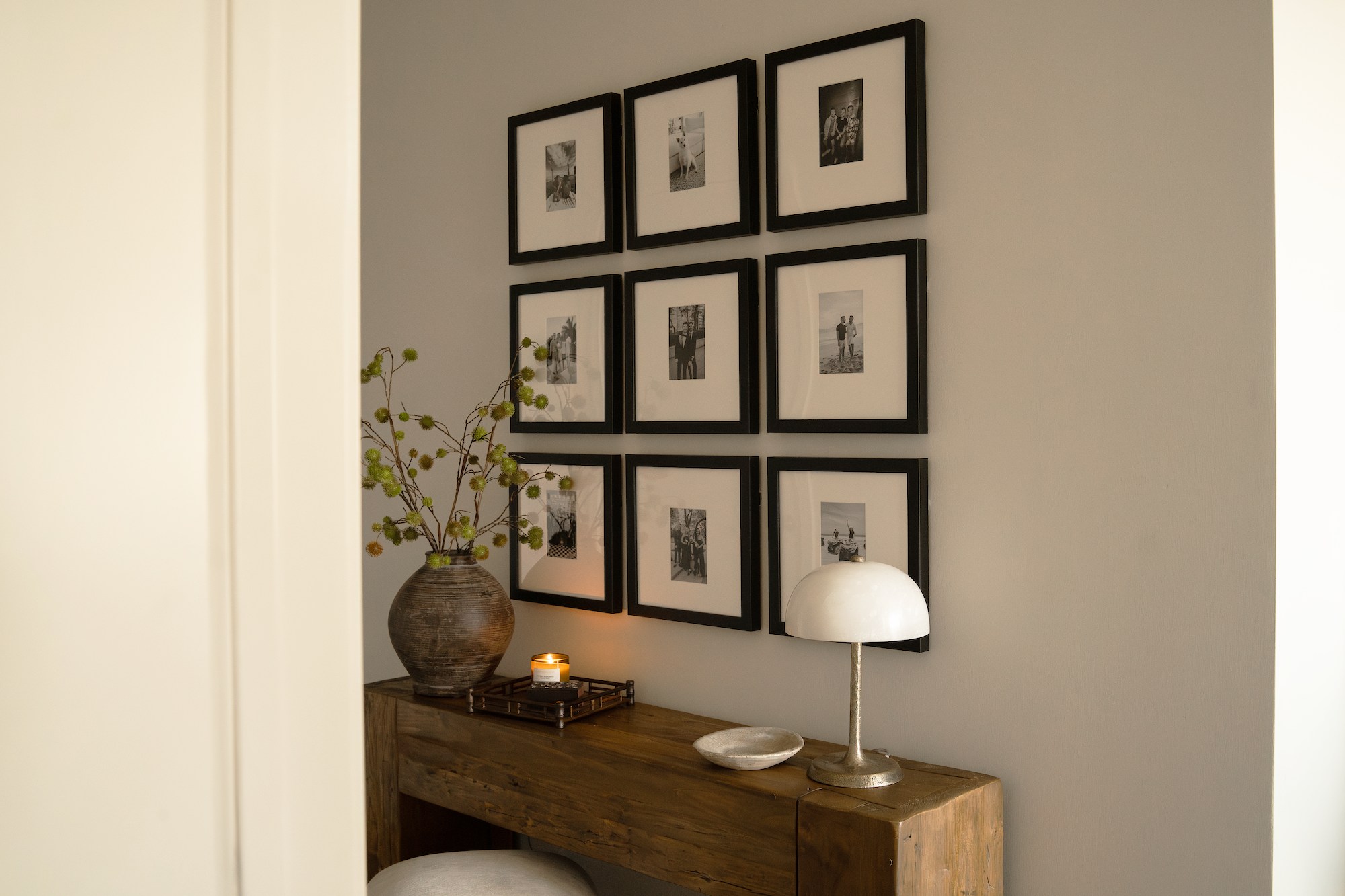
Create framed wall art with Frameology.
Frequently asked questions
What’s the best paper for home photo printing in 2026?
For most home inkjet printers, luster or RC photo paper in the 200–310 gsm range works as the most versatile choice. This paper type handles both dye and pigment inks, resists fingerprints better than gloss, and produces vivid colors suitable for framed display. If you’re printing fine-art or archival editions on a pigment-based printer, 100% cotton rag papers in the 190–308 gsm range are the professional standard. These papers hold ink on top of the fibers instead of letting it sink in, which preserves deep blacks and subtle gradations for both color and black-and-white work.
Does paper weight really affect print quality?
Paper weight affects print quality in a noticeable way. Lighter papers below 148 gsm can allow ink to show through on double-sided prints and often produce duller, less accurate colors because they don’t give ink a solid surface. For standalone photo prints that you plan to frame or display, papers in the 200–310 gsm range provide enough thickness to prevent show-through, support richer colors, and give the print a premium feel. Very heavy papers above 300 gsm may cause feed issues in some consumer printers, so it’s worth checking your printer’s maximum supported paper weight before you buy.
What’s the difference between dye and pigment inks for photo printing?
Dye-based inks create vivid, punchy colors and often appear in entry-level photo printers. They pair well with glossy and luster papers but are more vulnerable to UV light and humidity, which can cause fading over time. Pigment-based inks sit on top of the paper fiber instead of soaking in, which preserves deep blacks, saturated colors, and fine gradations. They’re the standard for archival and fine-art printing and perform well across matte, luster, and cotton rag surfaces. If longevity matters, especially for framed prints you’ll display for years, a pigment-based printer is usually the better long-term investment.
Do all gallery walls include hanging templates?
Classic and Luxe gallery walls include life-size gallery wall templates that make installation simple and straightforward. Canvas galleries, Metal galleries, and gallery walls created using Frameology’s Gallery Wall Design Service don’t include templates because their construction and customization work differently and often need more tailored installation approaches.
What’s the difference between Frameology’s Classic and Luxe frames?
Classic frames are Frameology’s value tier. They start at $39 for tabletop and $59 for wall display, feature a removable backing so you can swap photos whenever you like, and usually ship the next business day, typically arriving within a week. Luxe frames are the top-of-the-line, museum-quality option, starting at $79. They feature a sealed, permanent kraft paper backing, so photos can’t be swapped once framed, and they come with all hanging hardware included, such as nails, a no-wire hanging system, and a mini-level. Luxe products take 7–10 business days because of their artisan craftsmanship.
Whether you’re printing on cotton rag for a fine-art edition or luster RC paper for a family portrait, the print tells only half the story. The frame protects that story and makes it something you’ll enjoy every day, so frame your favorite memories with Frameology.
