


Best hardware for hanging heavy pictures
Written by: Daniel Koren, Co-Founder, Frameology
Key takeaways
Success with heavy frames starts with matching your frame’s hanging system and wall type, not just the weight rating.
French cleats anchored into studs are usually the strongest choice for frames over 50 pounds. Two-point D-ring systems or heavy-duty anchors work well for 20–50 pound frames.
Choose hardware rated for at least twice the assembled frame weight, and anchor into studs whenever you can for safety and stability.
Frameology’s Luxe frames use a built-in no-wire two-point system and arrive with all hanging hardware included. Classic frames use a single center hanger and need separate hardware.
Frameology offers ready-to-hang Classic and Luxe gallery walls with life-size templates. Luxe gallery walls also include all hanging hardware, while Classic gallery walls require you to supply your own nails and level.
What is the best hardware to hang heavy pictures?
For frames over 50 pounds, a French cleat or Z-bar anchored into studs is the strongest option. For 20–50 pounds, D-rings with heavy-duty wire or a two-point hanger system on rated anchors or studs works well. For frames under 20 pounds, heavy-duty drywall hooks with angled nails (rated 10–50 pounds) are typically sufficient, though two-point systems are recommended as weights approach 20 pounds, as long as your wall substrate can support the load.
That 40-word answer is accurate, but it’s incomplete without knowing what hanging system your frame already has. For example, a frame with a single center sawtooth hanger typically can’t use D-rings without modification if the frame is small, light (roughly under 15 pounds), and has a thin or narrow profile with no room on the back rail for D-rings. In contrast, a frame with a sealed backing and a built-in two-point no-wire system, like Frameology’s Luxe frames, doesn’t need any hardware shopping at all. Start with your frame, then match the wall hardware to it.
Heavy duty picture hanging hardware, compared by weight and wall type
Hardware categories break down by weight range, but each one behaves differently on drywall, plaster, or brick. This comparison helps you match your wall and frame to the right solution.
French cleats and Z-bars (50+ pounds): A French cleat is a two-piece system of interlocking beveled rails: one rail mounts to the wall, and the matching half mounts to the back of the frame. According to CustomPictureFrames.com’s installation guide, French cleats hold 50+ pounds with proper installation. They are the standard for shadow boxes, large canvases, and any frame in a high-traffic area. Build-Construct’s hanger guide rates French cleats at 100 pounds and up. Woodworking Advisor recommends running a French cleat across at least two studs (about 32 inches long at 16-inch stud spacing, or roughly 48 inches at 24-inch spacing) so the load distributes along the cleat rather than concentrating on a few screws. Z-bars work on the same principle, using a Z-shaped interlocking bracket, and they’re especially useful when you want the frame to sit very flush to the wall. Both systems need the wall rail screwed into studs for anything truly heavy. The OOK 200-pound French cleat and the OOK 300-pound 30" French cleat are two commonly cited residential options, while Hillman also offers French cleats rated at 100 pounds and 400 pounds. Austin Gallery advises treating real-world capacity as roughly half the package rating, since manufacturer ratings assume a perfect substrate and a purely static load.
D-rings with wire (20–50 pounds): CustomPictureFrames.com recommends D-rings with picture wire for frames from 8x10 up to about 30x40, and heavy-duty D-rings with wire for 25–50 pound frames. The wire allows left-right adjustment after hanging, which helps when you’re fine-tuning a gallery wall layout. The tradeoff is that wire concentrates the entire load at a single hook point, which multiplies pull-out force, especially when the wire angle is steep. Build-Construct explains that most hanger failures are pull-out failures rather than shear failures, and recommends keeping the wire angle shallow, above 30 degrees from horizontal, and using two hooks for wide frames. For frames over 25 pounds, braided picture wire is recommended over standard twisted wire.
Two-point no-wire systems (20–50 pounds): These systems mount D-rings or keyhole hangers directly to the frame sides and hang on two wall hooks with no wire between them. Austin Gallery recommends skipping wire entirely for heavy frames and hanging both D-rings directly on two wall hooks so nothing can pivot. This is the system Frameology’s Luxe frames use: a premium no-wire two-point hanging system with two side hangers for perfect leveling and absolute stability, with all necessary hardware including nails and a mini-level included in the box.
Heavy-duty drywall hooks (under 20 pounds): Angled picture hooks, where the nail goes in at roughly 45 degrees through a metal hook, are rated by major hardware brands at 10 to 50 pounds depending on size, because the angle converts the load into shear rather than pull-out. Austin Gallery reports that a rated professional hook holds 20 to 50 pounds in drywall, while a standard nail and hook holds only 5 to 10 pounds. The National Hardware heavy duty hanger system and the 3M Claw are commonly cited options in this category. The Hangman two-point interlocking bracket system adds a built-in level and horizontal slide feature for easier gallery wall alignment.
Adhesive strips (under 16 pounds, smooth walls only): Build-Construct rates adhesive strips at up to 16 pounds per pair on smooth painted drywall, with clean removal when you pull the tab straight down. They fail on textured walls, wallpaper, rough plaster, and freshly painted surfaces. For Classic frames, which use a standard removable backing and a single center hanger, Command strips are a viable damage-free option for lighter pieces on smooth walls. Luxe frames use a sealed permanent kraft paper backing, so adhesive strips aren’t appropriate for them.
French cleat vs. D-rings for heavy frames
French cleats work best when weight is the main concern and you want the frame to sit perfectly flush against the wall with no forward tilt. CustomPictureFrames.com recommends French cleats for frames over 25 pounds, including most large canvas frames, oversized displays, and any frame that needs to sit flush without tilting forward. The cleat distributes weight along the full width of the rail instead of concentrating it at two points, which makes it far more stable on drywall without a stud when the wall rail spans at least two studs. On plaster and brick, French cleats work just as well as long as the wall-side rail is anchored into structural material.
D-rings with wire work best when you need left-right adjustability after hanging, or when your frame already has D-rings and you don’t want to modify it. They suit frames in the 20–50 pound range on stud-mounted screws or heavy-duty toggle anchors. The limitation is that wire creates a single hook point. This concentrates load and can cause the top of the frame to pull away from the wall over time, particularly on heavier pieces. CustomPictureFrames.com identifies mounting D-rings too high on the frame as one of the most common installation mistakes, causing forward tilt. The correct position is one-quarter to one-third of the frame’s height down from the top.
Frameology’s Luxe Wall frames sidestep this decision entirely. Luxe frames include all hanging hardware and use a dual-point hanging system permanently installed to the photo orientation, with two side hangers, nails, and a mini-level in the box. There’s no wire to angle, no D-rings to position, and no separate hardware to source. The frame arrives ready to hang correctly.
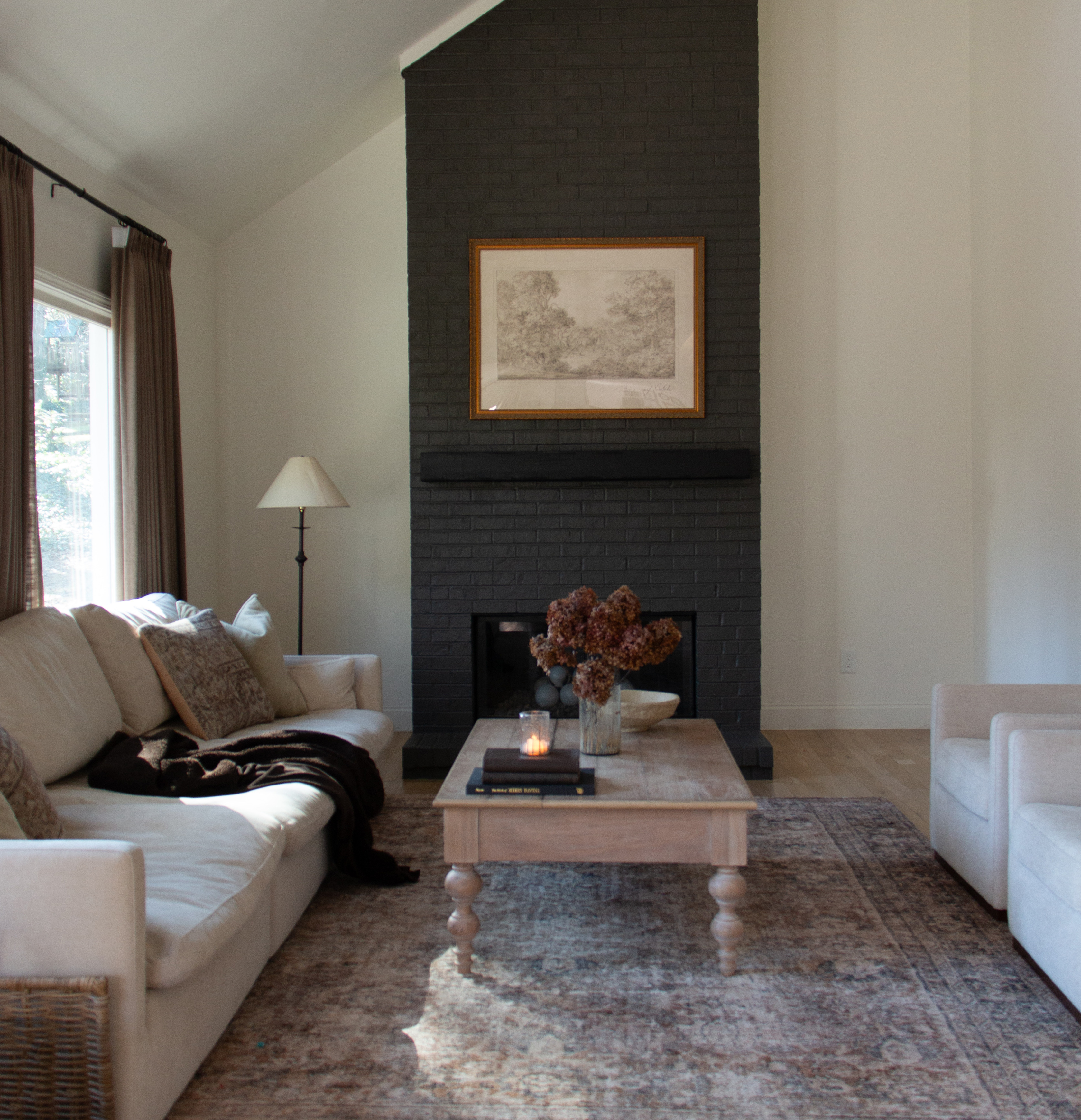
How to hang a very heavy picture frame
The safest way to hang a heavy frame follows the same basic sequence, no matter which hardware you choose.
Weigh the complete assembled frame: CustomPictureFrames.com recommends weighing the complete assembled frame, including frame, glazing, mat board, mounting board, and artwork, and sizing hardware from that total rather than the frame alone. For example, a 30-pound oil painting in a heavy frame can reach 40 pounds once glass, mat, and backing are added.
Rate hardware for at least twice the weight: Austin Gallery’s practical rule is to pick hardware rated for at least twice the actual hung weight. Build-Construct advises staying at or below 75% of a hanger’s rated capacity for anything valuable or fragile.
Find your studs: Use a stud finder, scan horizontally, and confirm with a small pilot hole before driving a wood screw. CustomPictureFrames.com notes that wall studs are typically spaced 16 inches on center. If no stud is available where you need it, use a metal toggle bolt or snap toggle anchor rated for the load. Avoid plastic expansion anchors, which aren’t suitable for heavy loads.
Mark your hanging height using the 57 rule: The center of the artwork should sit 57 inches from the floor. Measure the drop from the frame’s hanging point to its top edge, then account for that drop when marking the wall.
Drill, mount, and level: Drive a 2.5-inch wood screw into a confirmed stud, or install a toggle anchor in the correct hole size for your specific anchor. Hang the frame and check level with a spirit level, not a phone app, for anything over 20 pounds.
Do a safety check after 24 hours: Hardware can settle slightly once a piece is mounted. Re-check that screws are snug and the frame hasn’t shifted.
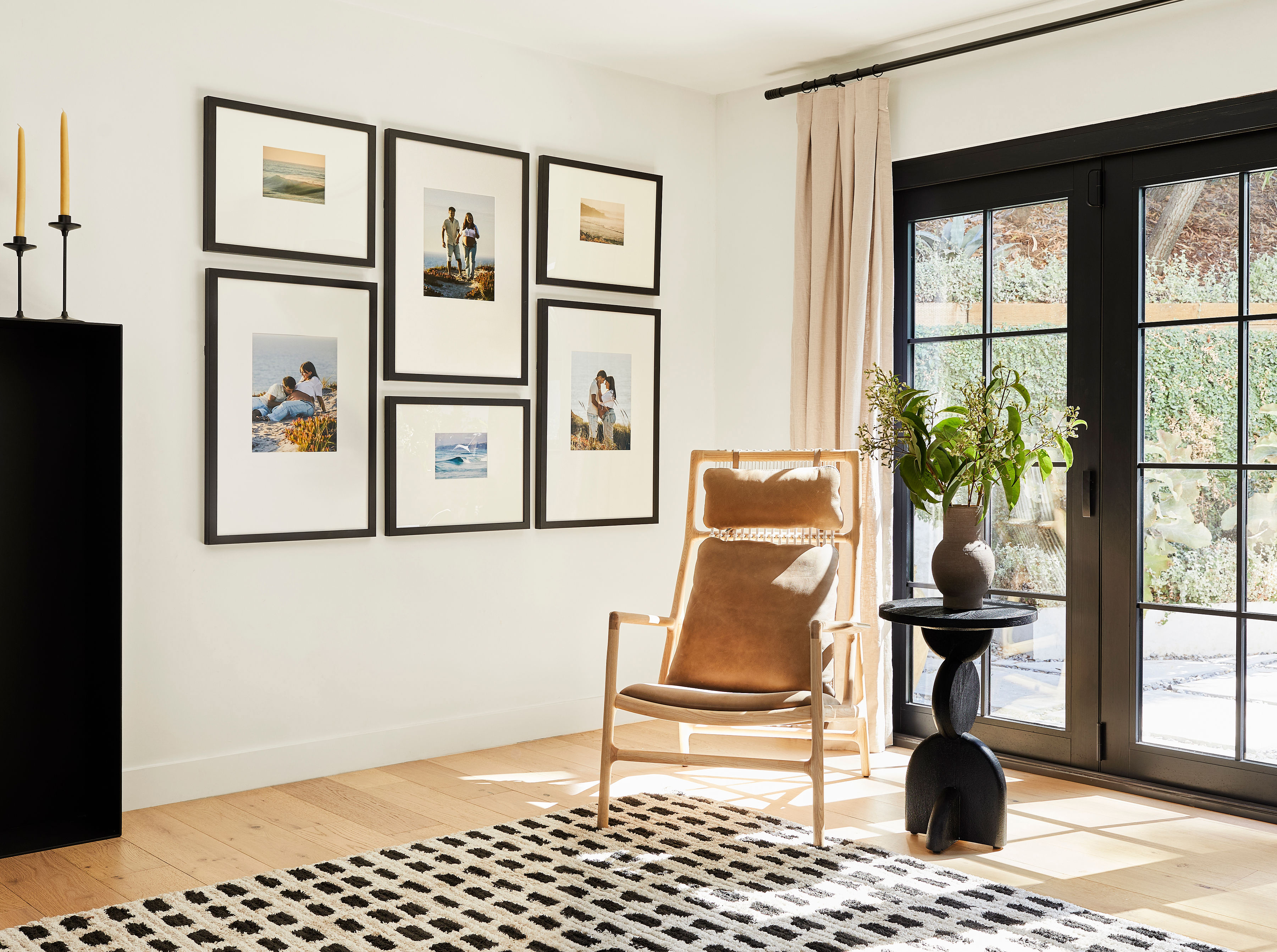
How to hang heavy pictures without damaging walls
Wall substrate is the second major variable in your hardware choice, and it changes the answer significantly.
Drywall with a stud: A #10 wood screw driven into a wall stud holds 80–100+ pounds easily, since the screw bites into solid lumber rather than fragile gypsum. Austin Gallery’s hardware guide confirms that a screw driven into a wall stud holds 80–100+ pounds, which makes it the strongest residential hanging option. For frames over 50 pounds, a French cleat spanning two studs is the gold standard.
Drywall without a stud: A nail or screw driven into bare drywall without an anchor holds only about 5–10 pounds, because drywall is a pressed gypsum core with no real structure for a fastener to bite into. For frames under 25 pounds, threaded self-drilling drywall anchors hold about 25–50 pounds in standard half-inch drywall. For heavier frames, metal toggle bolts, either the spring-wing butterfly type or snap toggles, hold 50–100+ pounds by opening behind the drywall face and spreading weight across a larger area. Austin Gallery advises treating printed anchor ratings as maximums and planning to use no more than about half the rated figure, because ratings are measured in fresh drywall with a perfectly sized hole and a straight-down load. For frames over 50 pounds without a stud, a French cleat spanning two studs is the correct solution instead of a single anchor point.
Plaster walls: Plaster is harder and more brittle than drywall and can crack when drilled. Austin Gallery specifies that for plaster over lath in pre-1940s homes, you should drill a pilot hole first and use a toggle bolt that opens behind the lath, because plastic-only anchors crack plaster. The goal is to anchor into the lath or the stud behind it, not into the plaster surface alone. Avoid hammer-in anchors on plaster entirely.
Brick walls: Solid brick holds far more weight than drywall but needs a masonry anchor set with a hammer drill and masonry bit. CustomPictureFrames.com advises drilling into the mortar joint rather than the brick face, since it’s easier on the bit and easier to patch. For removable hangs on standard brick, brick clips slip over the brick edge without any drilling and hold up to 25 pounds.
Damage-free options for renters: Canvas prints are lightweight and renter-friendly. You can hang them using damage-free mounting strips or velcro wall adhesives. For Classic frames on smooth painted drywall, Command strips are a viable option for lighter pieces. Austin Gallery’s 2026 no-damage hanging guide recommends Monkey Hooks for frames heavier than adhesive strips can carry, since the curved steel pin pushes into hollow drywall by hand and self-anchors behind the board, holding far more weight while leaving only a small pinhole.
Beyond hardware and wall type, placement matters too. A simple height guideline keeps your art looking intentional.
What is the 57 rule for hanging art?
The 57 rule places the vertical center of a framed piece, or the center of an entire gallery wall arrangement, at 57 inches from the floor, the height that approximates average standing eye level and is the standard used by most major museums and galleries. For a gallery wall, the entire arrangement’s center should sit at 57 inches, not the center of any individual frame. To find the nail position for a wire-hung frame, add half the frame height to 57 inches, then subtract the drop from the frame’s top edge to the taut wire or hook.
How Frameology’s frame tiers change your hardware shopping list
The frame you choose determines how much hardware shopping you’ll do before you ever touch a wall. Frameology’s two frame tiers handle hanging very differently, and knowing the distinction saves time and prevents extra holes.
Classic Wall frames, starting at $59, use a single metal center hanger. They display horizontally or vertically, and the standard removable backing lets you swap photos whenever you want. For installation, you’ll need to supply your own nails and level. Classic gallery walls, starting at $198, include a life-size gallery wall template: tape it to the wall, hammer nails into the marked spots, remove the template, and hang your frames. The template removes layout guesswork and prevents unnecessary holes. Here’s a step-by-step walkthrough of the Classic gallery wall template process.
Luxe Wall frames, starting at $79, ship with everything you need to hang them correctly: a premium no-wire two-point hanging system, all necessary hanging hardware, nails, and a mini-level. Luxe frames include all hanging hardware and use a dual-point hanging system permanently installed to the photo orientation, with two side hangers for perfect leveling and stability. The sealed kraft paper backing protects the photo permanently. Photos can’t be swapped, and the frame is built to last. Luxe gallery walls, starting at $638, include the same life-size gallery wall template, with slightly different instructions to account for the dual-point hanging system. Here’s the Luxe gallery wall template walkthrough.
House Beautiful’s review of Frameology’s gallery wall service confirms that Frameology ships frames with a true-to-size paper template and nails to mark exact hanging positions on the wall. CNN Underscored’s Stephanie Griffin, who tested the Luxe Bricklay gallery wall, reported, “The Luxe Bricklay is called ‘luxe’ for a reason. Between the premium materials and foolproof hanging system that saved so much time and stress, it’s worth the hype.”
Canvas galleries, starting at $135, and gallery walls created through the Gallery Wall Design Service, starting at $99, do not include gallery wall templates, because their construction and customization work differently and often need more tailored installation approaches.
For a full comparison of what’s included with each frame line, see the guide to the difference between Frameology’s Classic vs. Luxe frames.
Common mistakes to avoid
A few recurring errors cause most gallery wall failures and unnecessary wall damage.
Over-trusting weight ratings: Austin Gallery advises treating printed anchor ratings as maximums and planning to use no more than about half the rated figure, because ratings assume ideal conditions that rarely exist in real walls.
Skipping studs for heavy frames: CustomPictureFrames.com advises that frames over 25 pounds should be hung from a stud or with heavy-duty anchors, because drywall alone can’t reliably hold frames that heavy.
Using a single center hook on heavy pieces: Build-Construct identifies using a single hook for a wide frame as one of the three most common causes of picture falls, because it multiplies pull-out force dramatically.
Ignoring wall substrate: The hardware weight rating only matters when you know whether you’re anchoring into a stud, bare drywall, plaster, or brick. Each substrate needs a different approach.
Mixing up Classic and Luxe hardware features: Classic frames require you to supply your own nails and level. Luxe frames include all hanging hardware. Classic gallery walls include a gallery wall template, and you’ll add your own nails and level. Luxe gallery walls include both the template and all hanging hardware.
Skip hardware mishaps with help from Frameology
The hardware decision for a heavy gallery wall always comes down to two things: what hanging system your frame already has and what your wall is made of. Start there, rate your hardware for at least twice the actual hung weight, anchor into structural material whenever possible, and use two hanging points for anything heavy or wide. If you’d rather skip the hardware research entirely, Frameology’s Luxe frames ship with everything you need already in the box, and both Classic and Luxe gallery walls include life-size gallery wall templates that make the whole installation dramatically simpler. For more on why Frameology is the right choice for online framing, see why Frameology is the best online framing service.
Frequently asked questions
What is the best hardware for hanging heavy pictures?
The best hardware depends on two things: the hanging system already on your frame and your wall substrate. For frames over 50 pounds, a French cleat anchored into studs is usually the strongest option. For 20–50 pounds, a two-point D-ring setup or heavy-duty toggle anchors on drywall work well. For frames under 20 pounds, rated angled picture hooks are typically enough. Always choose hardware rated for at least twice the actual hung weight of the complete assembled frame, including glazing, mat, and backing.
How do I hang a very heavy frame without it falling?
Use two hanging points instead of one. This spreads the load, prevents tilting, and reduces pull-out force on each anchor. Anchor into a wall stud whenever possible using a 2.5-inch wood screw, which, as noted earlier, holds 80–100+ pounds in solid lumber. If no stud is available, use a metal toggle bolt or snap toggle anchor rated well above the frame’s weight. Never use plastic expansion anchors for frames over 15 pounds. For frames over 50 pounds, a French cleat spanning two studs is the most reliable solution. Add rubber bumpers to the bottom corners to keep the frame level and protect the wall.
How do I hang heavy pictures without damaging my walls?
The answer depends on your wall type. On drywall with a stud, a wood screw is the strongest and least damaging option and leaves only a small hole. On drywall without a stud, snap toggle anchors leave a larger hole but hold far more weight than nails. On plaster, pre-drill a pilot hole and use a toggle bolt that opens behind the lath instead of hammering directly into the surface. On brick, use masonry anchors with a hammer drill and drill into the mortar joint rather than the brick face for easier patching. For renters with Classic frames on smooth painted drywall, Command strips are a damage-free option for lighter pieces. Canvas prints are lightweight and renter-friendly and can be hung using damage-free mounting strips or velcro wall adhesives.
What is the 57 rule for hanging art?
The 57 rule places the vertical center of a framed piece at 57 inches from the floor, the height that approximates average standing eye level and is the standard used by most major museums and galleries. For a gallery wall, the center of the entire arrangement should sit at 57 inches, not the center of any individual frame. To find the nail position for a wire-hung frame, add half the frame height to 57 inches, then subtract the distance from the frame’s top edge to the taut wire or hook.
Do you need a stud for a French cleat?
For heavy frames, you do. A French cleat’s wall rail should be screwed into studs for anything you’ll load, and for loads over 100 pounds, two screws per stud crossing should be used. When the cleat spans two studs, it distributes the load horizontally across both anchor points, which is what makes it so effective for very heavy pieces. If no stud is available at the exact position you need, mounting a thin picture rail or cleat into the studs first, then hanging from that, gives you stud strength with placement freedom. For lighter pieces, a French cleat can work with heavy-duty toggle anchors, but the stud-mounted version is always stronger.
What is the best hardware for plaster walls?
Plaster is harder and more brittle than drywall and needs a different approach. Always pre-drill a pilot hole first to prevent cracking instead of hammering directly into plaster. For frames under 15 pounds, a plaster picture hook with an angled nail works well. For heavier frames, use a toggle bolt that opens behind the lath rather than a plastic-only anchor, which can crack the plaster surface. The goal is to anchor into the lath or the stud behind it. Avoid self-drilling anchors designed for drywall, since they can cause spider cracking in plaster.
How do I hang a heavy frame with D-rings?
Mount the D-rings on both sides of the frame back, about one-quarter to one-third of the frame’s height down from the top, and 1 to 2 inches in from each side edge. String braided picture wire between them. Braided wire is rated for higher weights than standard twisted wire and should be used for frames over 25 pounds. Cut the wire approximately 12 inches longer than the distance between the two D-rings and secure each end with three to four twists around the main wire. For very heavy frames, skip the wire entirely and hang both D-rings directly on two wall hooks. This removes the single-point failure risk of wire and keeps the frame flat and level permanently.
Do all gallery walls include hanging templates?
Classic and Luxe gallery walls include life-size gallery wall templates that make installation simple and straightforward. Canvas galleries, Metal galleries, and gallery walls created using Frameology’s Gallery Wall Design Service don’t include templates because their construction and customization work differently and often need more tailored installation approaches.
