


Best canvas prints: quality, cost, and what to look for
Written by: Daniel Koren, Co-Founder, Frameology | Last updated: October 21, 2026
Key takeaways
Canvas print quality comes from five factors: substrate material, ink type, stretcher bar construction, corner wrapping, and finished backing with UV protection.
Resolution drives sharpness. Aim for at least 150 PPI for large wall pieces and 300 PPI for prints viewed up close.
Price tiers reflect real material differences. $20 prints usually use thin polyester and dye inks, while $60–$125 canvases use better substrates, pigment inks, and sturdier construction.
Gallery wraps, framed canvases, and floating frames create different looks and hanging experiences. Gallery wraps usually cost less and work well for renters.
Frameology offers Premium Canvas Print, starting at $19, with Giclée printing, finished backs, and quick delivery, so you get gallery-level quality at an accessible price.
What makes a high-quality canvas print
High-quality canvas prints share the same core ingredients. These five details have the biggest impact on how your canvas looks and lasts.
Substrate: cotton vs. poly-cotton canvas. Poly-cotton canvas is widely regarded as the best all-around balance of cotton's natural texture and polyester's durability. It delivers accurate color, vivid tones, and fine detail because the balanced weave creates a stable, uniform printing surface. Pure cotton canvas is the archival standard used by professional photo labs. It absorbs pigment ink well and keeps blacks deep and skin tones natural. Polyester canvas is the most synthetic-looking option, with a smoother surface that can look plasticky under direct lighting.
Ink and printing method: Giclée vs. dye-sublimation. Archival Giclée pigment inks are rated to resist fading for 75–100+ years under normal display conditions. Dye-based photo canvas usually lasts an estimated 10–25 years. Dye sublimation printing uses heat to infuse dye directly into the substrate, such as aluminum. It runs faster and cheaper, but pigment-based Giclée offers better long-term color stability.
Stretcher bar construction: hollow vs. solid wood. Kiln-dried solid wood stretcher bars resist bowing and twisting because kiln-drying drives moisture out of the wood grain. Untreated pine frames can look perfect on day one and then warp within months. Cross braces and center bars prevent warping on canvases over 24 inches on the long side, which keeps large pieces square on the wall.
Corner wrapping tightness. Gallery-wrapped canvas prints require the image to extend beyond the final face size so the artwork wraps cleanly around the sides. Tight, even corners signal careful stretching and good tension control. Loose or bunched corners usually indicate rushed production.
Backing and finish: A finished back shields the canvas from dust and humidity swings, which helps prevent sagging over time. A UV-resistant coating adds protection to canvas prints by slowing light-related fading. Protective canvas coatings such as laminate or varnish run $10–$25 depending on gloss level and UV resistance, so they often appear only on higher-quality products.
Frameology's Premium Canvas Print, starting at $19, uses high-resolution Giclée printing for rich, textured results and includes a finished back. Those two features alone separate it from many budget providers.
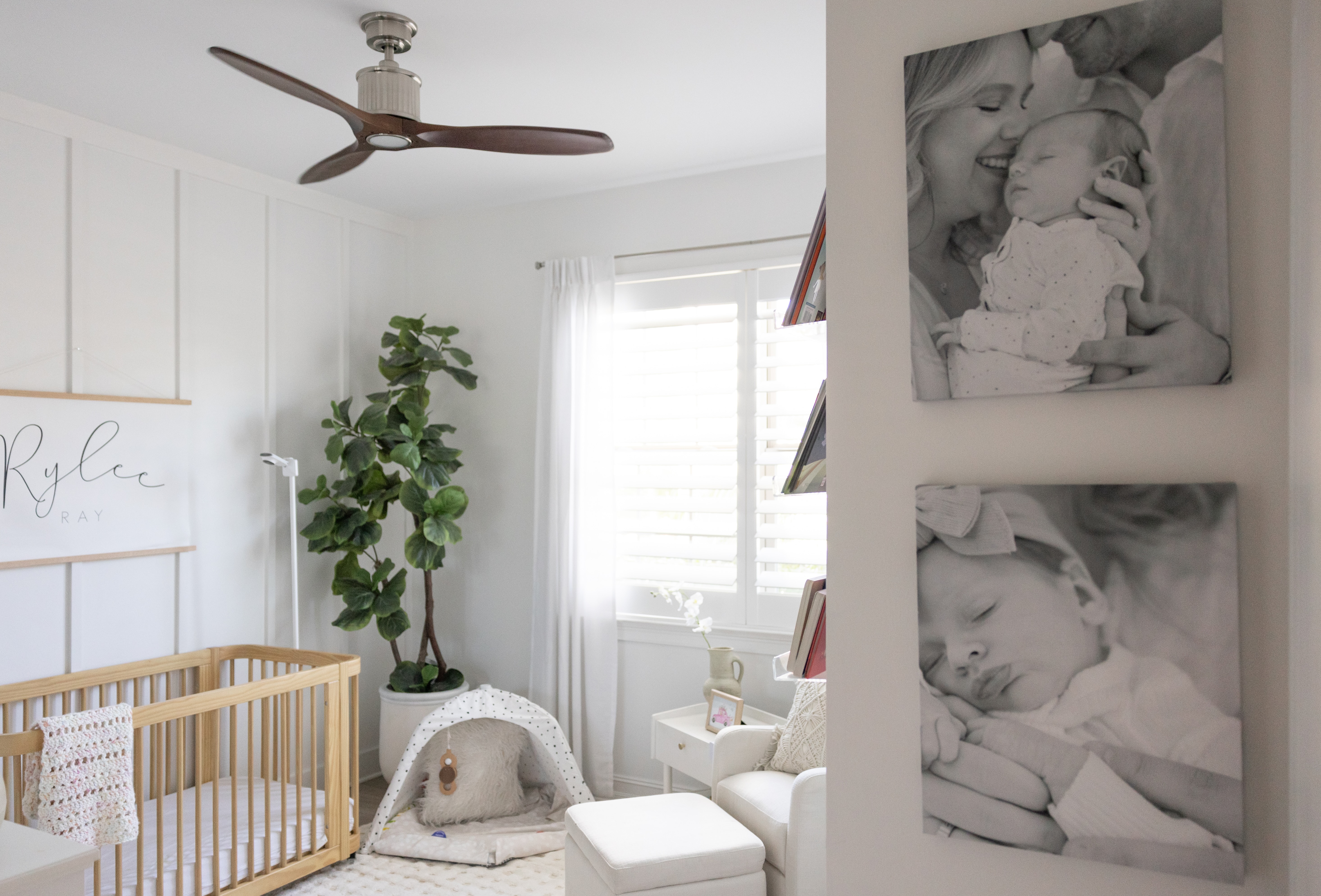
The resolution reality check for 16x20, 24x36, and 40x60 canvas prints
Resolution is the single most common reason buyers feel disappointed with canvas prints. The key standard stays simple: 300 PPI (pixels per inch) works for close-up viewing, and 150 PPI is the minimum for large wall pieces viewed from a normal distance. These are the pixel counts you need for popular canvas sizes.
16x20 inches: A 16×20-inch canvas requires 4,800×6,000 pixels at 300 PPI, or 2,400×3,000 pixels at 150 PPI. A 12-megapixel phone photo clears 150 PPI at this size with room to spare.
24x36 inches: A 24×36-inch canvas requires 7,200×10,800 pixels at 300 PPI, or 3,600×5,400 pixels at 150 PPI. Reaching 300 PPI at 24×36 would demand a 78-megapixel source photo, which consumer cameras don't produce, so 150 PPI is the accepted standard here.
40x60 inches: A 40×60-inch canvas requires 6,000×9,000 pixels at 150 PPI. At this scale, viewing distance does much of the work. Each doubling of viewing distance halves the DPI you need, which explains why large-format prints can look sharp at lower pixel densities.
To check your file before ordering: open the image on your computer, find its pixel dimensions under "Image Info" or "Properties," then divide each dimension by the print size in inches. If the result is above 150, your file works for a wall canvas. If it falls below 150, print smaller or use an AI upscaling tool before uploading.
Frameology recommends uploading photos at the maximum resolution (above 300 PPI) and under 40MB when you upload via the website. Larger files can be emailed directly, and the frame builder flags low-resolution images before you complete your order. Frameology's Premium Canvas Print is available in sizes up to 40x60, so resolution planning matters most at the largest sizes.
What $20, $60, and $125 canvases actually get you
Canvas print pricing follows a predictable pattern once you connect price to materials and construction. For a 16x24 inch canvas wrap, budget synthetic polyester canvases cost $15–$30, mid-range cotton-poly blend canvases cost $45–$70, and premium 100% cotton hand-stretched gallery wraps cost $95–$150.
At the $20 tier, you usually get a polyester or thin poly-cotton substrate, a 4-color (CMYK) dye-based ink system, and a 0.75-inch hollow frame. Budget labs use 4-color ink systems that struggle with skin tones and sky gradients. The $15 versions on major discount platforms use thin 0.5-inch frames prone to warping in humid environments. Most canvases at this level skip a finished back and UV protection, which shortens their lifespan.
At the $60 tier, substrate quality usually improves to a true poly-cotton blend. Ink systems often shift toward pigment-based printing, and stretcher bar depth increases to 1.25–1.5 inches. Upgrading from a standard 0.75-inch gallery wrap to a 1.5-inch construction adds $10–$30 to canvas print pricing because thicker stretcher bars demand more lumber and tighter fabric tension. Prints at this level start to feel like finished wall art.
At the $125 tier, you pay for premium cotton or cotton-poly canvas, an 8- to 12-color pigment ink system, kiln-dried solid wood frames, hand-checked quality control, UV-protective coating, and a finished back. Premium labs use 8-, 10-, or 12-color pigment-based systems, increasing the color gamut by roughly 40% at significantly higher ink cost per milliliter. Canvases in this range are built to hold up for decades.
Frameology offers a value-focused take on this spectrum. The Premium Canvas Print, starting at $19, delivers Giclée printing, a semi-gloss coating, a patented gallery wrap stretch that yields cleaner lines and lighter weight than a traditional canvas, and hanging hardware included. Those specs usually appear on premium canvas prints that start around $73 elsewhere. The HD Framed Canvas, starting at $49, adds a frame for a complete, ready-to-hang result. Both options typically arrive in under a week, with production taking 3 to 5 business days.
Compare canvas print sizes and finishes
Gallery wrap vs. framed canvas vs. floating frame
Display style shapes the look of your canvas, the total cost, and how simple hanging feels. Three main formats cover most homes and offices.
A gallery wrap is the classic canvas format: the image wraps around the sides of the stretcher bars, and the canvas hangs directly on the wall with no frame. A 1.5-inch gallery depth stands off the wall and reads as a premium framed-quality piece, while a 0.75-inch edge sits closer to the wall and suits grid arrangements. Gallery wraps usually cost less and work well in casual, modern, or minimalist spaces. Because canvas prints are lightweight and renter-friendly, you can hang them with damage-free mounting strips or velcro wall adhesives.
A framed canvas pairs the stretched canvas with a surrounding frame for a more finished, traditional appearance. This format bridges the gap between a casual canvas and a formal framed piece. Frameology's HD Framed Canvas, starting at $49, delivers that look with a ready-to-hang framed canvas that suits living rooms, offices, and bedrooms.
A floating frame (also called a floater frame) surrounds the canvas with a visible gap between the canvas edge and the frame border, which creates a suspended, three-dimensional effect. Floating frames typically add $30–$100 to a canvas print order depending on frame material and size. This style fits contemporary and design-forward interiors where the frame becomes part of the statement.
For renters or frequent movers, gallery wraps and framed canvases usually feel most practical. They're lightweight, easy to rehang, and work well with damage-free hanging solutions.
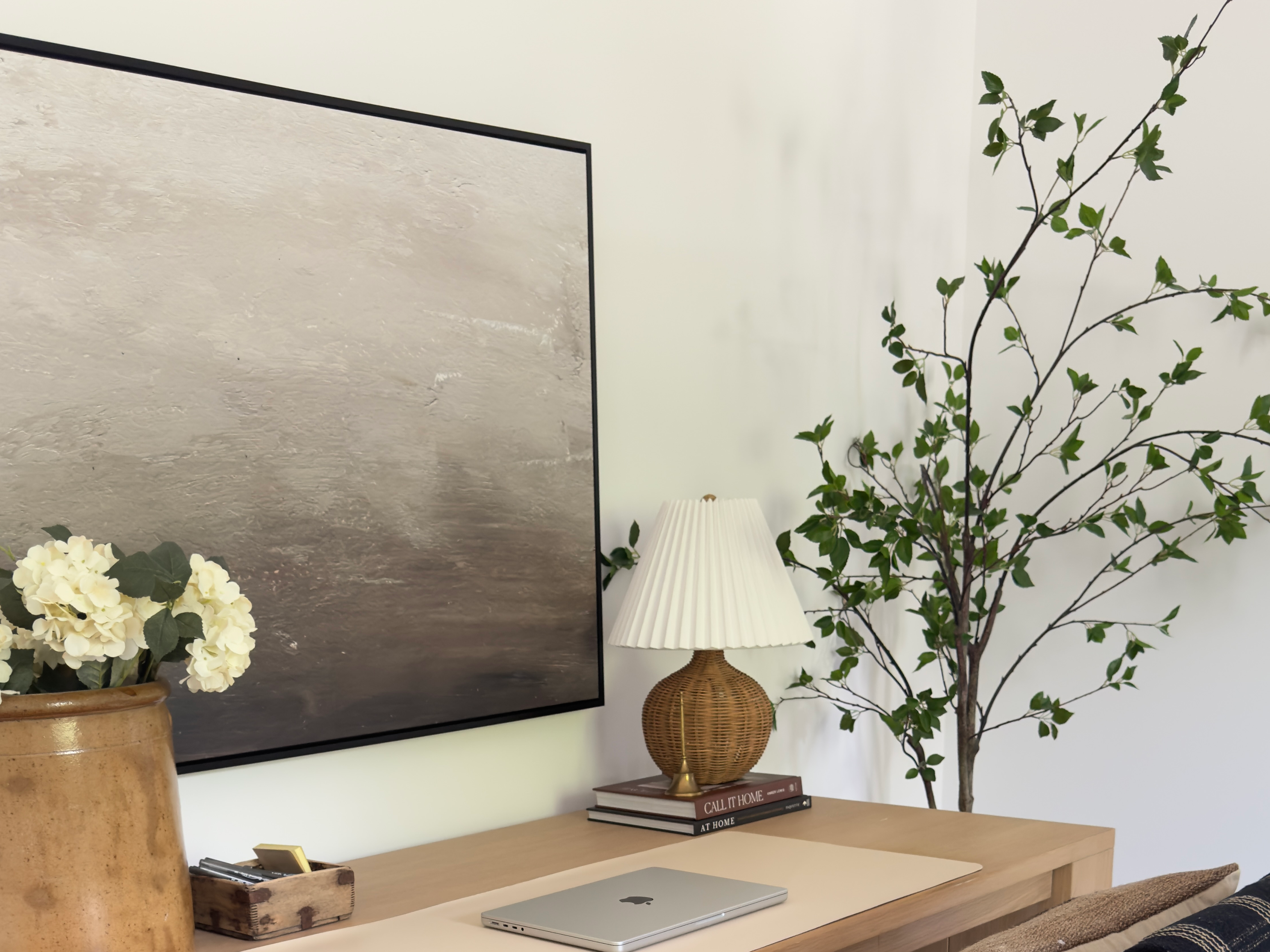
Why cheap canvas prints look blurry or flat
Blurry canvas prints almost always trace back to one of three causes: low PPI at the print size, a weak ink system, or a thin substrate that can't hold detail. When a photo file doesn't contain enough pixels for the requested print size, the printer has to interpolate and guess at missing detail. Simple enlarging in an editor just stretches existing pixels and worsens blur. The result is a soft, muddy image that canvas texture can't hide. This cause is easy to avoid once you check resolution before ordering.
Flat-looking prints come from a different issue. Dye-based inks fade within 10–15 years, whereas pigment-based inks combined with acid-free papers are rated for 100–200 years. Even when new, dye-based prints often look washed out next to Giclée prints. Photo dye-sublimation canvas uses dye-based inks pressed into a polyester-blend canvas at a typical resolution of 720 dpi, while archival Giclée uses pigment-based inks on cotton or rag canvas at 1,440 dpi. That difference in ink and resolution creates much deeper color.
Thin polyester substrates make the problem more visible. Polyester canvas can appear plasticky under direct LED lighting. Without UV-protective coating, even a well-printed canvas can start shifting color after a few years on the wall.
Frameology addresses these issues with high-resolution Giclée printing on the Premium Canvas Print, starting at $19, plus a finished back that protects the canvas from behind. Frameology prints deliver sharp, vibrant, and clear images whether on metal, canvas, or photo paper, according to independent tester Rachel Murphy at Reviewed.com.
How to compare any two canvas printers side by side
A simple checklist makes it easier to compare canvas printers without getting lost in marketing language. Use these questions when you evaluate any provider.
Substrate material: Does the provider state whether they use cotton, poly-cotton, or polyester canvas? If they can't tell you, assume it's the cheapest option and move on.
Ink and printing method: Is the process Giclée with pigment-based inks or dye-sublimation? Pigment inks are the archival standard.
Stretcher bar construction: Are the bars kiln-dried solid wood? What's the depth, 0.75 inch or 1.5 inch? Are cross braces included for large sizes?
Corner wrapping: Are corners tight and even in real photos? Does the provider show customer images instead of only stock shots?
Backing and finish: Is there a finished back? Is UV-protective coating included or offered as an add-on?
Available sizes: Does the provider offer the size you need? Frameology's canvas prints go up to 40x60.
Shipping timeline: Is the production and delivery timeline clearly stated so you can plan around it?
Run this checklist against Frameology and the specs line up. You get Giclée printing, a finished back, lightweight construction, sizes up to 40x60, and clear production and delivery timelines. With 7,700+ verified 5-star reviews and a 4.98/5 rating, its track record is well documented. Hunker named Frameology "best for budget-conscious shoppers" in a comparison of popular online custom framing services.
Where Frameology fits on the quality checklist
Frameology's two canvas products map cleanly to the quality criteria above, which makes it easier to match a product to your space. The Premium Canvas Print, starting at $19, delivers:
High-resolution Giclée printing for rich, textured color
A finished back for dust protection and a clean presentation
Lightweight construction that hangs easily, even at larger sizes
Sizes up to 40x60 for everything from small accents to statement walls
Clear production timelines so you know when to expect delivery
The HD Framed Canvas, starting at $49, adds a frame to the same Giclée-printed canvas for a complete, gallery-ready result. You skip a separate framing decision after the canvas arrives.
All of Frameology's canvas prints are available through the canvas prints landing page, where you can explore sizes, upload your photo, and preview the result before ordering.
Frequently asked questions
What is the best company to order canvas prints from?
The strongest canvas print companies combine Giclée printing, a finished back, clear material specs, and reliable shipping at a fair price. Frameology's Premium Canvas Print, starting at $19, meets those criteria. It uses high-resolution Giclée printing, includes a finished back, typically ships within about a week, and comes in sizes up to 40x60. With 7,700+ verified 5-star reviews and a 4.98/5 rating, it's one of the most consistently praised canvas print services in the United States.
Where can I find high-quality canvas photo prints?
High-quality canvas photo prints usually feature cotton or poly-cotton substrates, Giclée pigment-based inks, kiln-dried solid wood stretcher bars, tight corner wrapping, and a finished back. Frameology's Premium Canvas Print, starting at $19, and HD Framed Canvas, starting at $49, deliver those specs with hand-crafted production in the United States and shipping that typically completes within about a week. The canvas prints landing page at Frameology is a strong starting point for exploring sizes and options.
Is there a better site than large photo-printing retailers for canvas prints?
Buyers who care more about print quality than rock-bottom pricing often prefer specialty canvas providers. Large photo-printing retailers frequently use dye-based inks on polyester substrates with limited quality control, which can produce flat-looking prints that start fading after a few years. Frameology's Premium Canvas Print uses Giclée printing, the archival standard used by galleries and museums, starting at $19. That price competes with many mass-market options while delivering better color depth, longevity, and construction quality.
How much should a 16x20 canvas print cost?
A 16x20 canvas print typically costs $40–$90 across mid-range providers. Budget options using polyester substrates and dye-based inks can fall as low as $15–$30. Premium cotton gallery wraps with UV coating can reach $100–$150. Frameology's Premium Canvas Print starts at $19 and delivers Giclée printing and a finished back, features that usually appear at the $60+ tier elsewhere, which creates a strong value position.
What PPI does my photo need for a large canvas?
The standard is 300 PPI at the target print size for close-up viewing and 150 PPI as the minimum for large wall pieces viewed from a normal distance. For a 16x20, you need at least 2,400x3,000 pixels at 150 PPI. For a 24x36, you need at least 3,600x5,400 pixels at 150 PPI. For a 40x60, you need at least 6,000x9,000 pixels at 150 PPI. Most smartphone photos from the last three to four years clear the 150 PPI threshold at 16x20 and 24x36, as long as you upload the original file from your camera roll instead of a screenshot or social media download.
What's the difference between gallery wrap and framed canvas?
A gallery wrap stretches the canvas directly over a wooden frame, with the image wrapping around the sides. It hangs without any additional framing and usually costs less than framed options. A framed canvas pairs the stretched canvas with a surrounding frame for a more finished, traditional look, similar to a framed print but with canvas texture and depth. Frameology's HD Framed Canvas, starting at $49, is the framed canvas option, while the Premium Canvas Print, starting at $19, is the gallery wrap format.
Do all gallery walls include hanging templates?
Classic and Luxe gallery walls include life-size gallery wall templates that make installation simple and straightforward. Canvas galleries, Metal galleries, and gallery walls created using Frameology's Gallery Wall Design Service don't include templates because their construction and customization work differently and often call for more tailored installation approaches.
