


How to build a gallery wall: steps, costs, and 2026 trends
Written by: Daniel Koren, Co-Founder, Frameology | Last updated: September 20, 2026
Key takeaways
These quick points give you the high-end gallery wall formula at a glance.
The high-end gallery wall look comes from clean-profile frames, thick white mats, and consistent 2–3 inch spacing, not luxury-price frames.
Limit finishes to two per wall and choose matte black, brushed brass, walnut, or thin metal profiles for a designer appearance.
Classic and Luxe gallery walls deliver the full high-end formula with gallery wall templates and hardware at a fraction of traditional custom framing costs.
Frameology provides affordable, cohesive gallery wall solutions that follow 2026 trends for clean, matted, and intentional arrangements.
Step 1: Use a simple formula for a high-end gallery wall
The core formula is simple: clean profile, thick mat, and no more than two finishes. High-end gallery walls read as intentional and cohesive. They never feel like a random mix of frames pulled from different rooms.
For a cohesive gallery wall, the most reliable approach is uniform frames in a single color and style, for example, all matte black wood, and mixing finishes only works if the same profile width is kept throughout.
Finishes that read expensive include matte black, brushed brass, walnut, and thin metal profiles. Matte black, soft white, and natural wood tones are the foundational colors in contemporary framing and gallery wall design, offering versatility that complements both modern and classic artworks. Chunky ornate gold, glossy plastic, and mixed metallic tones pull the eye in too many directions and undercut even a well-chosen photo.
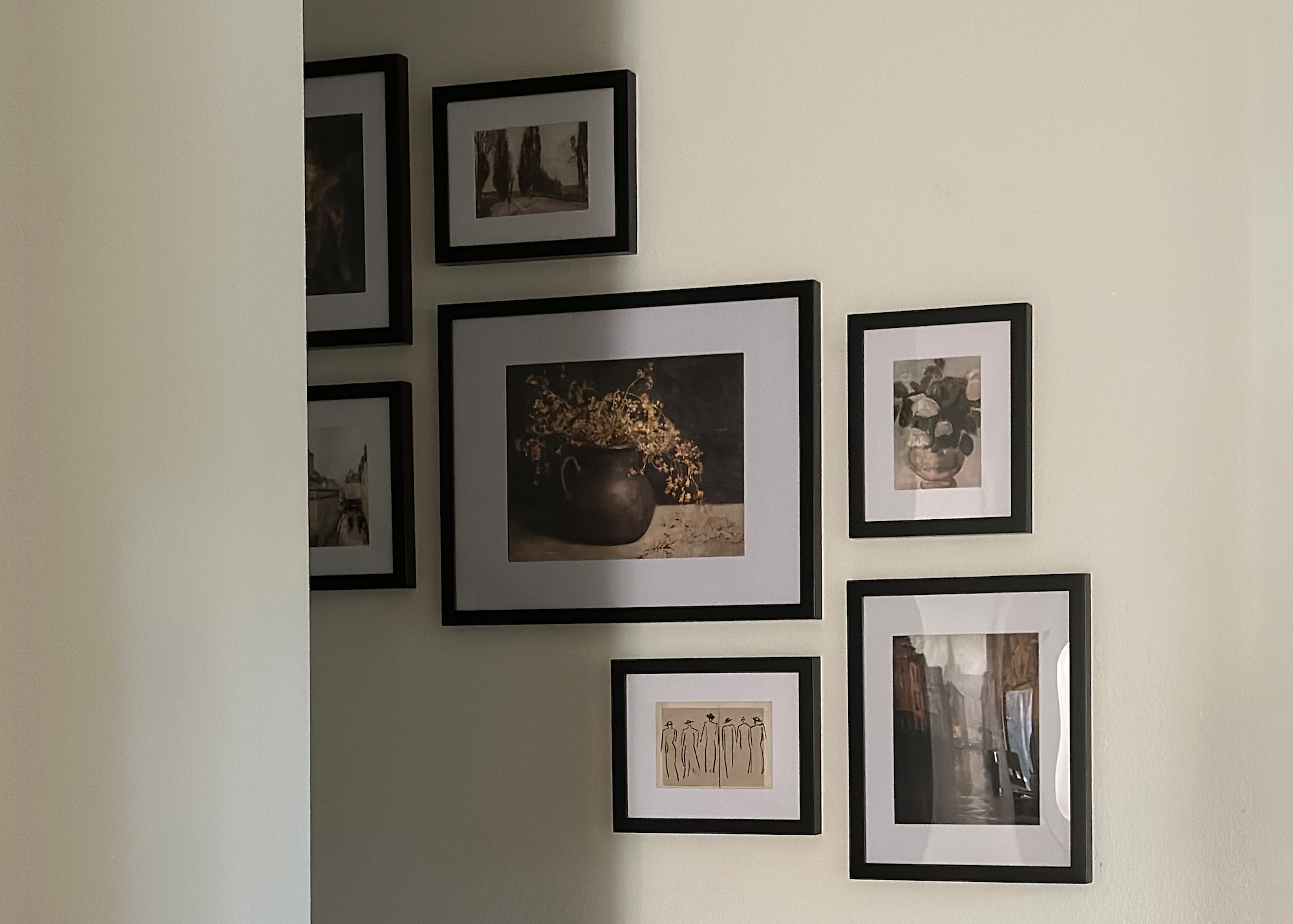
Frameology's Classic Wall frames, starting at $59, deliver this clean, matted look at an accessible price point. An 8x10 Classic Wall frame is $59 and an 11x14 is $75, which comes in lower than comparable options from other online custom framers. For a step up, Frameology's Luxe Wall frames, starting at $79, use museum-quality construction with acid-free 4-ply rag mats for a top-of-the-line result.
Browse Frameology frames for your wall
Step 2: Match your mat size to your frame size
Right-sized mats make even simple frames look custom and expensive. Mat width should scale with frame size so the art never feels cramped. CustomPictureFrames.com's Framing 101 guide recommends mat border widths by print size: an 8x10 photo uses 2.5–3 inches, an 11x14 print uses 3 inches, a 16x20 print uses 3.5–4 inches, and an 18x24 poster uses 4 inches. For larger frames, keep scaling up proportionally.
A too-thin mat makes even a good frame look like a store-bought afterthought. The most common mistake first-time framers make is going too narrow on mat width, and the advice is to default to the wider end of the recommended range for the print size. A properly proportioned mat creates the gallery-style breathing room that reads as high end. Austin Gallery's mat-sizing guide reinforces this: a generous mat almost always looks more expensive than a narrow one, and going wider when torn between two mat widths is the right call.
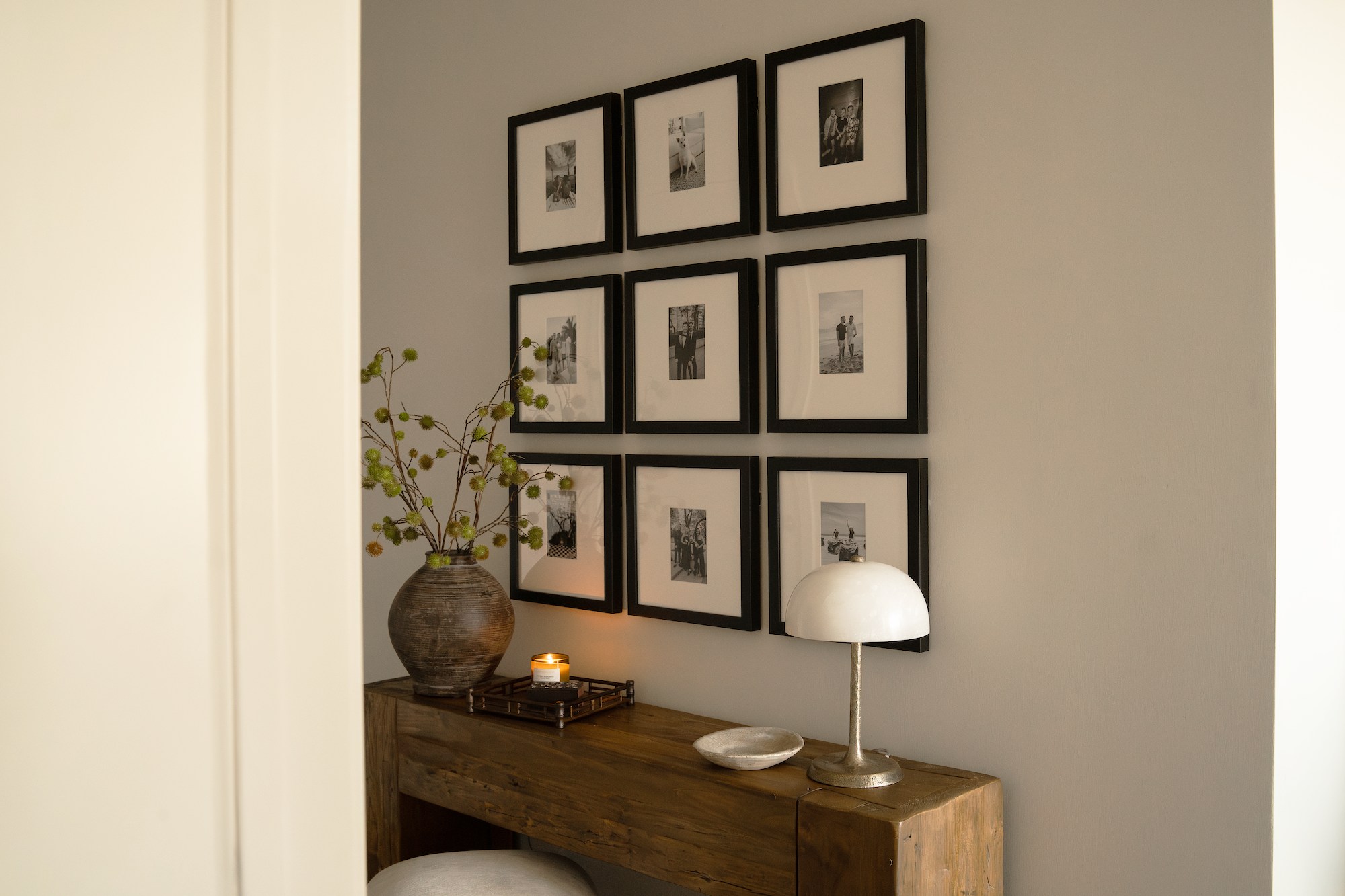
Frameology's Classic and Luxe lines both use acid-free 4-ply rag mats. These protect photos and provide the thickness needed for a high-end look. Frameology's Luxe line uses museum-quality materials including acid-free matting, UV-protecting museum-grade acrylic glazing, and premium wood and metal moldings.
Step 3: Compare real costs for a 6-frame gallery wall
Running the numbers by tier shows where gallery wall costs actually land. The differences go beyond price and affect quality, cohesion, and effort.
At the budget tier, piecing together store-bought frames with separate mats and prints adds up quickly once you factor in mat cutting, printing, and hardware. A ready-made 16x20 frame from a big-box retailer costs $25–$40 and uses pine moulding, standard glazing, and no mat or archival backing, which suits posters more than pieces intended for long-term display. The result often looks mismatched because the components were never designed to work together.
At the mid tier, Frameology's Classic gallery walls start at $198 and include a life-size gallery wall template for effortless installation. Classic gallery walls use single center-point hanging for each frame. House Beautiful confirmed that Frameology ships frames with a true-to-size paper template and nails to mark exact hanging positions on the wall. Classic gallery walls do not include hanging hardware, so you hammer nails into the marked spots on the template and let the template handle the layout.
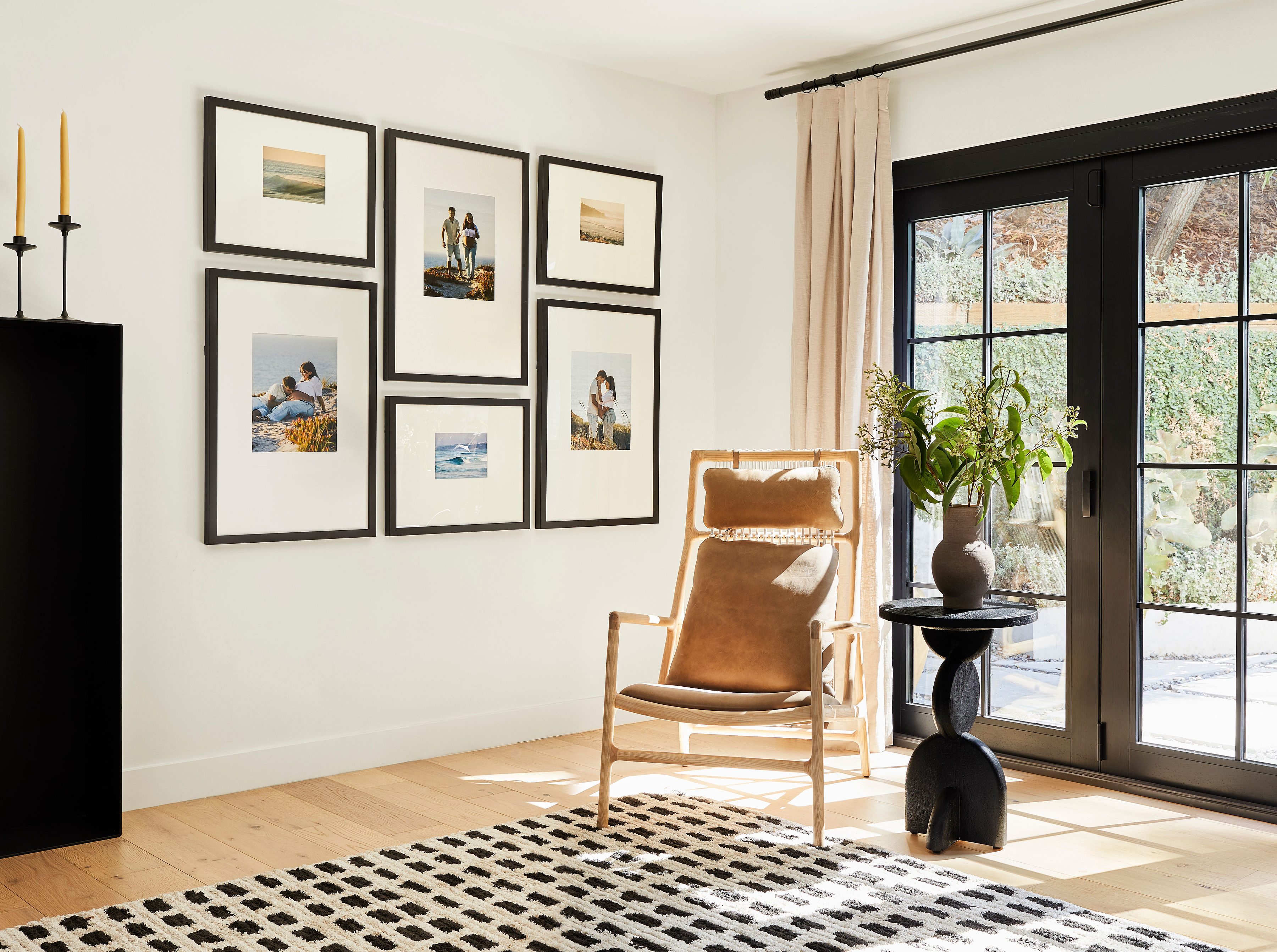
At the premium tier, Frameology's Luxe gallery walls start at $638. Each set includes museum-quality, USA-crafted frames, a gallery wall template, all hanging hardware, nails, and a mini-level. Luxe gallery walls include all necessary hanging hardware. You get a complete, turnkey gallery wall package with no extra trips to the hardware store.
For context on traditional custom framing costs at scale, a typical 16x20 conservation frame at a custom shop runs $110–$140, and a 16x20 premium-tier frame with hand-finished moulding, 100% rag mat, and non-glare acrylic can reach $300–$500+. Multiplying that by six adds up fast. Frameology's Classic and Luxe lines deliver the same design formula at a fraction of that cost.
Step 4: Check that your gallery wall fits 2026 trends
Current gallery walls feel edited and calm instead of chaotic. The 2026 look favors cohesive, matted arrangements that highlight the photos, not the frames.
The 2026 aesthetic is cohesive, matted, and intentional. Matte finishes are preferred over gloss because they are less reflective and create a more professional look, and for a cohesive gallery wall the best approach is uniform frames in a single color and style. Frame styles that read high end in 2026 include thin metal profiles, matte black wood, brushed brass, and walnut. Natural minimalism, which combines the organic warmth of walnut and maple with extremely thin, gallery-style profiles, is a significant rising trend in 2026 framing.
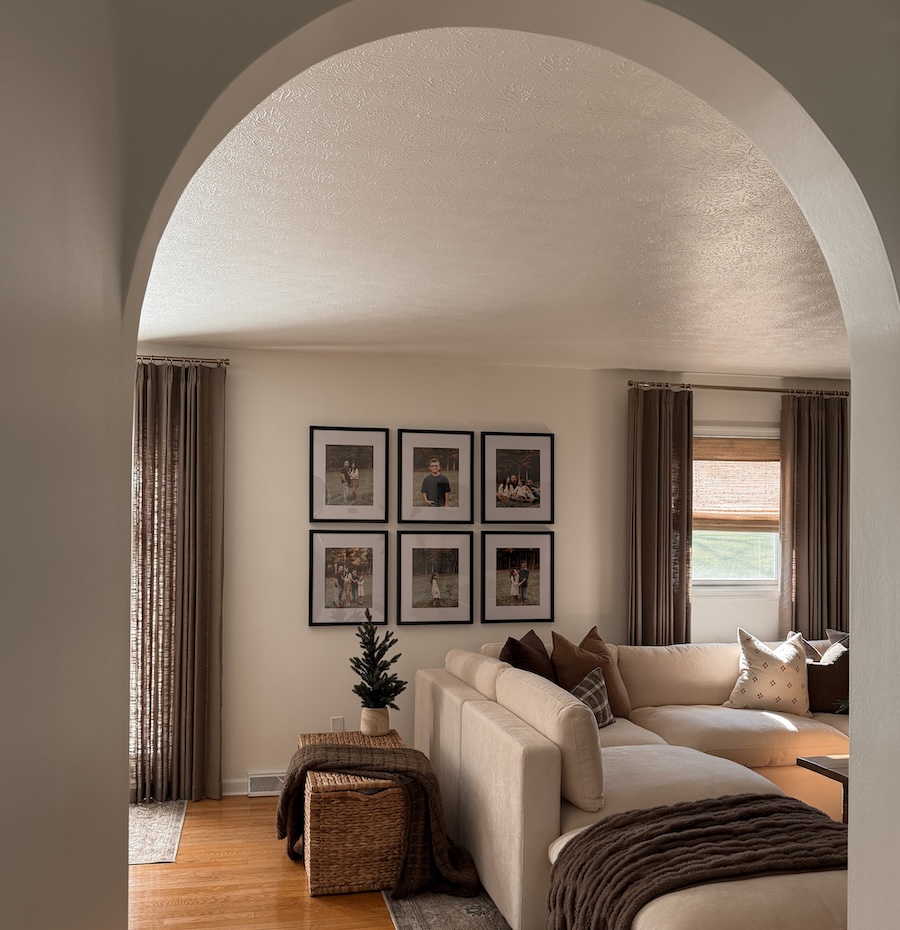
Framky's 2026 report also identifies three gallery wall approaches as short-lived and not worth investing in: saturated Instagram-era palettes with orange-and-teal filters, mini-portrait grids of 12 small frames, and AI-generated imagery galleries. The direction that holds up uses fewer frames, larger formats, consistent finishes, and neutral or black-and-white photography.
Frameology's Classic line offers timeless, curated styles that fit these trends at an accessible price point. The Luxe line offers premium wood molding and metal moldings for those who want top-of-the-line materials. Frameology's curated gallery walls have gone viral on social media, with 15 million views on Instagram and 12 million views on TikTok, because they deliver a cohesive, designer look without the guesswork.
See on-trend Frameology gallery walls
Step 5: Hang your gallery wall with clean spacing and minimal holes
Simple spacing and height rules keep your gallery wall looking polished. The right installation method keeps your drywall from looking like a test board.
For spacing, aim for 2–3 inches between frames and scale the gap with frame size. Austin Gallery's June 2026 gallery wall guide recommends 2–3 inches between frames as a baseline, with tighter gaps of 1.5–2 inches for small frames (8x10 and under) and wider gaps of 3–4 inches for large frames (18x24 and up), and identifies over-spacing as the most common gallery wall mistake. For height, the 57-inch rule is the standard museum hanging height: the center of the artwork should sit 57 inches above the floor, though 60 inches also works for taller viewers.
For installation, Frameology's Classic and Luxe gallery walls include a life-size gallery wall template. Tape the template to the wall. Hammer nails into the required spots on the template, then remove the template and hang your frames. House Beautiful's review of Frameology's gallery wall system confirmed that the true-to-size paper template marks exact hanging positions, which makes installation straightforward. Classic gallery walls usually take less than an hour and leave zero unnecessary holes.
Frameology's AR (augmented reality) preview tool, available on mobile only, lets you see exactly how a frame will look on your wall before you buy. You can confirm placement and scale before touching a single nail.
Start your gallery wall with a template
Frequently asked questions
Do all gallery walls include hanging templates?
Classic and Luxe gallery walls include life-size gallery wall templates that make installation simple and straightforward. Canvas galleries, Metal galleries, and gallery walls created using Frameology's Gallery Wall Design Service do not include templates because their construction and customization work differently and often require more tailored installation approaches.
How much should a gallery wall cost?
Gallery wall pricing depends on whether you choose budget, mid-tier, or custom-level framing. Piecing together store-bought frames can cost less upfront but often requires additional spending on mats, printing, and hardware, and the result frequently looks mismatched because the components were not designed to work together.
What frames are in style in 2026?
Clean profiles in matte black, brushed brass, walnut, and thin metal are the most current looks. Cohesive, matted, and intentional walls feel fresh, while oversaturated color palettes and chaotic mixes of frames feel dated. The 2026 direction favors fewer frames at larger scale, consistent finishes, and neutral or black-and-white photography.
How far apart should gallery wall frames be?
Aim for 2–3 inches between frames and adjust based on frame size. Smaller frames (8x10 and under) can sit closer together at 1.5–2 inches, while larger frames (18x24 and up) benefit from 2–3 inches of breathing room. Consistent spacing throughout the arrangement is what separates a polished gallery wall from one that reads as careless.
How high should I hang a gallery wall?
Center the arrangement at 57–60 inches from the floor, which matches standard gallery height. For gallery walls hung above furniture like a sofa or console, keep the bottom of the lowest frame 6–12 inches above the furniture to create a clear visual connection without crowding.
Can I use Command strips on Frameology frames?
Command strips work for Classic frames only. Do not use them on Luxe frames, since they can rip the permanent paper backing that protects your photo permanently.
How long does shipping take?
Classic products usually ship the next business day and typically arrive within a week. Luxe products take 7–10 business days because of their artisan craftsmanship.
