


How to style an apartment on a budget
Written by: Daniel Koren, Co-Founder, Frameology
Key takeaways
Start with a walls-first approach: walls are the largest, most visible surface in any rental and deliver the highest visual impact per dollar.
Follow a clear order of operations: declutter and rearrange first ($0), then layer lighting, curtains, mirrors, and finally anchor walls with framed art or gallery walls.
Use realistic budget tiers: $0 for rearranging and restyling, $100 for lighting, curtains, and one framed piece, and $300 for a full transformation with a gallery wall and large rug.
Rely on renter-safe, fully reversible methods like Command strips, tension rods, and leaning art to protect your security deposit.
Turn blank rental walls into a personalized focal point with framed memories from Frameology.
How to style an apartment on a budget, in order
Follow these steps in sequence. Each one builds on the last, and skipping ahead wastes money.
Declutter and rearrange what you already own (Cost: $0): Decluttering and rearranging furniture cost nothing yet make the biggest visible difference in a rental. Pull furniture at least 12 inches off the walls. A 12–18 inch range creates a balanced, inviting layout, though smaller spaces may only allow a few inches of clearance. Apply the “Three-Surface Rule” to every flat surface in a living room, such as the coffee table, end tables, console, and entertainment center. Each surface should hold a maximum of three items: one functional item, one decorative item, and one personal item. Restyle your shelves before buying anything new so you see what you already have.
Swap overhead lighting for warm 2700K bulbs and accent lamps (Cost: $10–$50): Replacing all existing bulbs with warm-tone LED bulbs at 2700K color temperature costs approximately $2–$4 per bulb and immediately shifts a room from harsh office lighting to warm residential atmosphere.
Hang curtains high and wide to fake height and space (Cost: $25–$60): Long curtains hung as close to the ceiling as possible make rental windows look architectural and are fully removable on moving day.
Add one large mirror to bounce light (Cost: $50–$150): A 65-inch floor mirror leaned against the wall can make a room feel 30–50% larger and add light without drilling any holes.
Anchor the wall with framed art or a gallery wall (Cost: $39+): This step delivers the highest impact in the entire list. A Classic Wall, starting at $59, or a Classic gallery wall, starting at $198, turns a blank wall into the room's focal point and stays fully reversible.
Layer in a large rug and one secondhand statement piece (Cost: $100+): Always size up on rugs because an undersized rug looks like a bathroom mat and visually shrinks a room. Pair it with one thrifted chair or side table from Facebook Marketplace.
Finish with small styling details (Cost: $0–$20): Add a plant, a ceramic vase, or a stack of books. Apply the 3-5-7 rule, explained below, to every shelf and surface.
The $0, $100, and $300 budget tiers for affordable apartment styling
Now that you have the order of operations, here's how those steps map to three realistic budget tiers.
The $0 tier
The $0 tier focuses on maximizing what you already own.
Rearrange furniture so nothing is flush against the wall.
Use the “Three-Surface Rule” and keep every flat surface in a living room to a maximum of three items: one functional, one decorative, and one personal.
Restyle bookshelves using the 3-5-7 rule, with roughly two-thirds books and one-third objects.
Rotate existing art between rooms for a fresh perspective.
Clean windows to maximize natural light.
Swap items between rooms, since a lamp from the bedroom might be exactly what the living room needs.
The $100 tier
The $100 tier focuses on lighting and one strong focal point.
Swap builder-grade cool-white bulbs for 2700K warm white LEDs ($8–$15 for a multipack).
Hang a curtain rod and curtains near the ceiling using a tension rod or Command strip brackets ($25–$60).
Add one thrifted lamp from Facebook Marketplace or a local thrift store ($0–$20).
Find a large leaning mirror on a secondhand marketplace ($50–$100).
Add one Classic Table, starting at $39, or one Classic Wall, starting at $59, to anchor a shelf or wall.
The $300 tier
The $300 tier anchors the room with art and a rug for a full transformation.
Add a Classic gallery wall, starting at $198, as the room's visual anchor. It includes a life-size gallery wall template for installation.
Layer in a large area rug ($60–$150 from a budget retailer or secondhand marketplace).
Source one secondhand statement chair or side table from an estate sale or Facebook Marketplace ($20–$80).
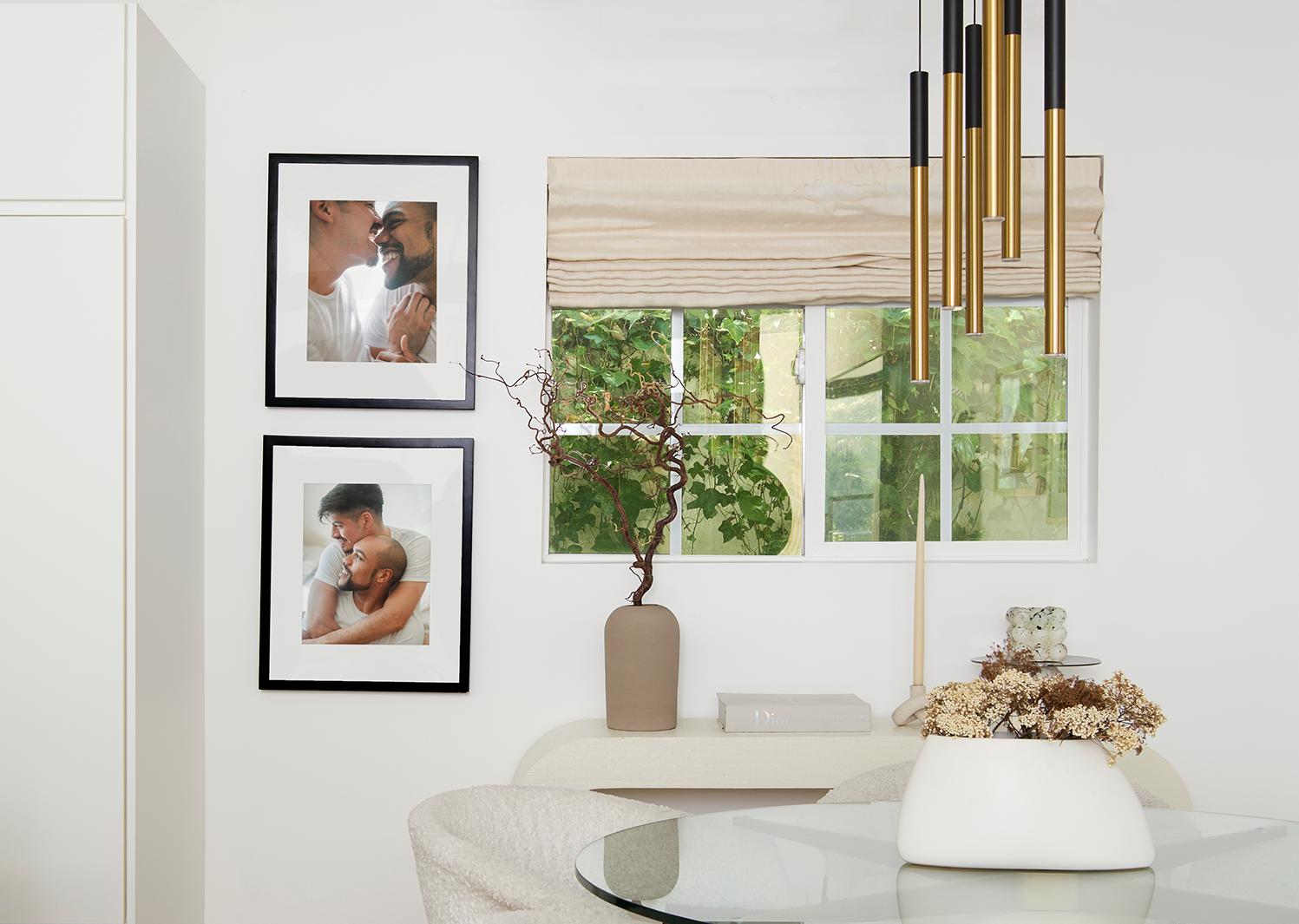
Browse renter-friendly frames at Frameology.
Lighting and ambiance: the cheapest way to make a rental feel expensive
The 2026 small-space design report ranks paint, lighting, and layered textiles as delivering the best returns per dollar in a small-apartment refresh, ahead of expensive statement furniture. Lighting is the one area where a $4 bulb swap genuinely changes the feel of an entire room.
Use these moves to layer lighting in a rental without touching the wiring:
Replace every overhead bulb with 2700K warm white LEDs: Smart LED bulbs that allow color temperature adjustment through a phone app offer starter kits from $30–$60 that let an apartment's lighting shift from bright cool task lighting during the day to warm amber ambient lighting in the evening.
Add at least three light sources per room: Apartment Therapy's guidance states that layered lighting makes a small room feel bigger and more inviting and recommends at least three light sources per room.
Use plug-in sconces and lamps instead of hardwired fixtures: Renter-safe lighting upgrades that require no hardwiring include plug-in wall sconces with cords swaged behind a frame, battery-powered picture lights, and USB-rechargeable table lamps.
Add LED strip lights behind the TV or under shelves: Running warm white LED strips behind a TV unit or along the underside of floating shelves creates ambient depth that makes a budget apartment look professionally lit, with a total cost of $25–$80 for a full apartment.
Use a smart plug or dimmer: Dimmers are a strong cheap upgrade for lighting, letting you set the mood and create instant luxury.
Lighting sets the mood, and walls carry most of the visual weight. Once lighting feels warm and layered, your next dollar should go to the walls.
Walls and windows: why the wall is the highest-leverage surface in a rental
Renters consistently spend on sofas, rugs, and accessories while leaving the largest surface in the room completely blank. That choice wastes the single biggest opportunity in apartment styling. Walls are visible from every angle in a room and set the tone before a single piece of furniture registers. In a rental, they're the surface where a small investment delivers outsized visual return.
According to the 2024 American Community Survey, 34.7% of occupied housing units in the United States were renter-occupied, up from 29.9% in 2010, meaning roughly a third of the country is decorating around a lease agreement. Most of those renters still leave their walls blank.
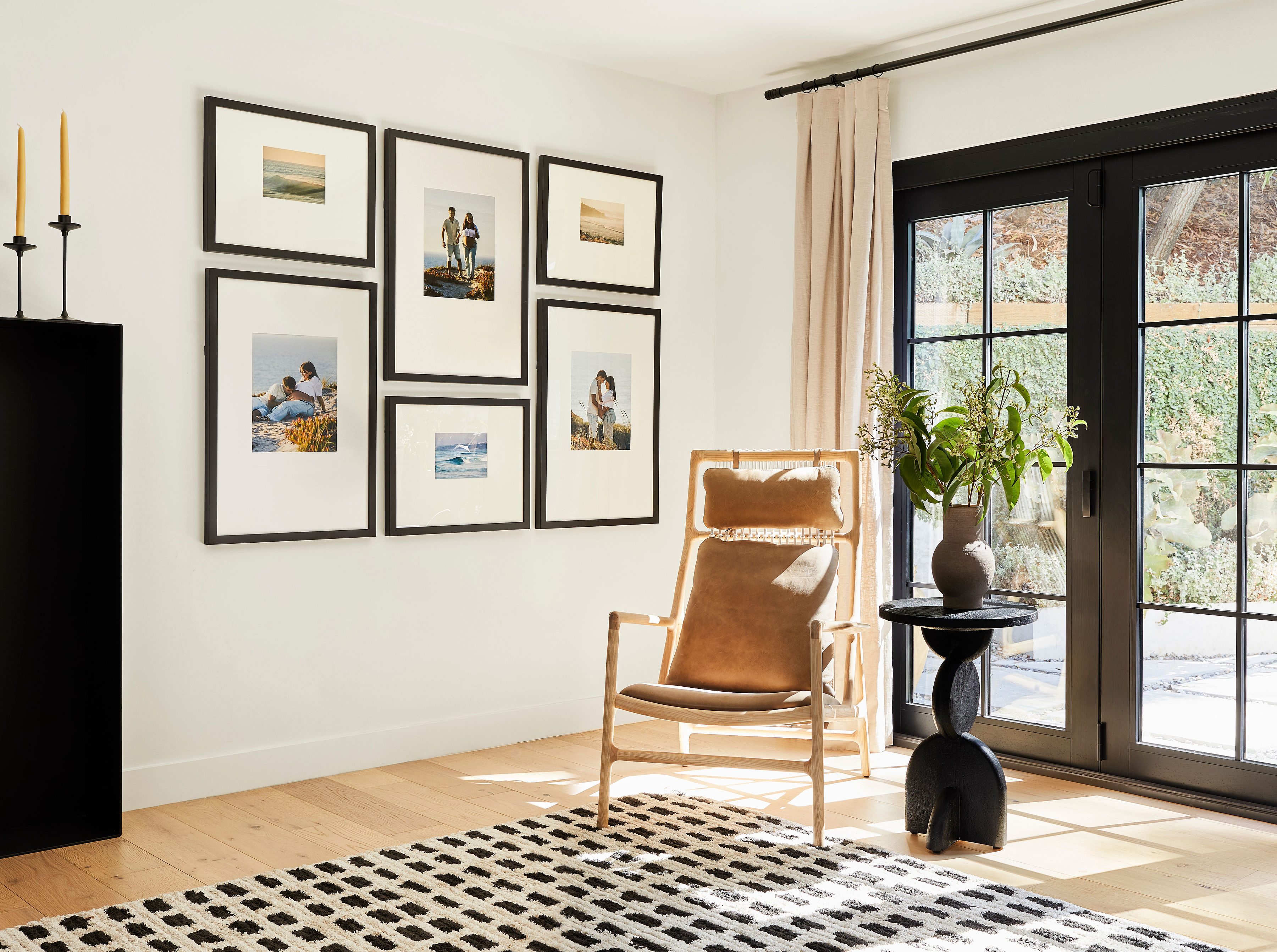
Here's the walls-and-windows playbook, which covers the three highest-impact moves for renters:
Hang curtains high and wide: Mount the rod as close to the ceiling as possible and extend it 6–12 inches past the window frame on each side. Designers recommend hanging curtains high and wide because it draws the eye upward and makes the whole wall feel taller and more generous, and it reads as upscale even when the fabric is not custom.
Add one large mirror: Lean it against the wall or hang it opposite a window. Hanging a mirror at least 36 by 48 inches directly opposite a window doubles the natural light in a room.
Anchor the wall with framed art or a gallery wall: This step creates a focal point and makes the room feel finished.
For the wall-anchoring step, Frameology's Classic Wall, starting at $59, is a renter-friendly solution. It features a removable backing, so you can swap photos seasonally or whenever a new memory deserves the spotlight. The back side has brackets you can push out of the way to remove the photo, matting, and even the front glass. Classic frames also work with Command strips for completely damage-free hanging, which avoids nails and deposit risk.
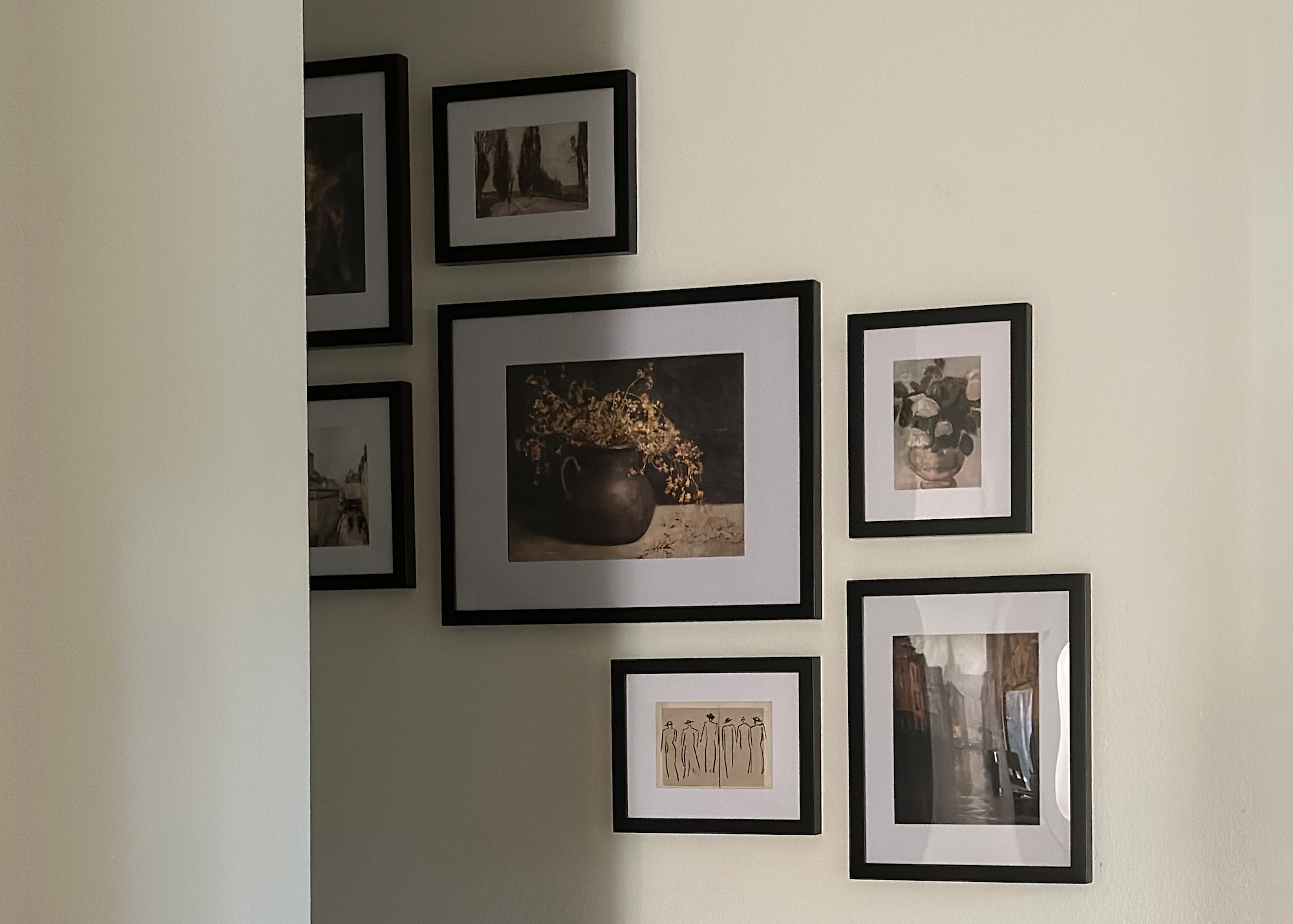
For a bigger wall statement, Classic gallery walls start at $198 and include a life-size gallery wall template that makes installation straightforward. Tape it to the wall, hammer nails into the marked spots, remove the template, and hang your frames. Frameology's Classic gallery walls use a single-nail hanging system, and while the sets don't include hanging nails, all Classic frames can be used with removable adhesive strips or similar renter-friendly options. The whole process takes less than an hour and keeps extra holes to a minimum.
If you want to see exactly how a frame will look on your wall before committing, Frameology's mobile-only augmented reality (AR) tool lets you project a true-to-scale preview of your exact frame directly onto your wall using your phone. No app download is required. This tool helps renters get the scale right before hanging anything.
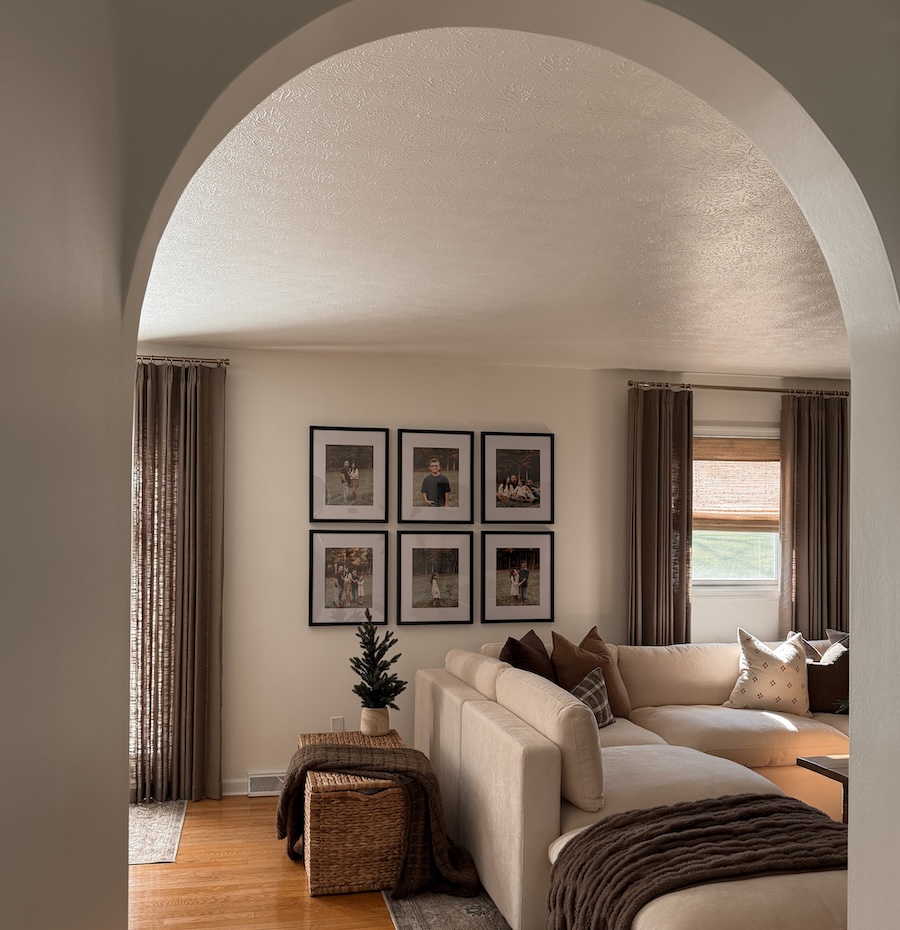
For renters who want to understand why Frameology is the right choice for online framing, this breakdown covers everything from pricing to craftsmanship to shipping speed. As one data point, the Classic Wall starts at $59 for an 8x10.
Turn your blank wall into a focal point with Frameology.
The design rules decoded: 3-5-7, 70/30, and what makes a home look polished
These rules show up constantly in interior design content, but they rarely get explained in plain terms. Here's what each one means and how to use it in a rental.
The 3-5-7 rule
The 3-5-7 rule holds that grouping objects in sets of three, five, or seven creates visual arrangements that feel more dynamic and pleasing to the eye than even-numbered groupings. It functions as a three-tier layering system: three large anchor pieces such as a sofa, rug, and coffee table, five medium supporting elements such as accent chairs, a side table, and a floor lamp, and seven small decorative details such as cushions, candles, books, plants, and frames.
In a rental, this scales down easily. Three anchors might be a loveseat, a compact coffee table, and a low credenza. The seven details might be a curated collection of objects on a single shelf. The same principle applies to wall art: gallery walls follow the 3-5-7 rule at the macro level, since grouping frames in odd numbers such as three, five, or seven avoids the rigid symmetry of even-numbered grids, with five frames in an asymmetric cluster feeling curated and personal.
The 70/30 rule
In a rental, this means choosing a warm neutral as your base for walls, sofa, and rug and letting 30% of the room introduce contrast through art, a statement lamp, or an accent chair. Under the 60-30-10 rule, deep greens, navy, and black work as the 30% secondary layer. They read as layered and intentional rather than overpowering, as long as a lighter dominant color carries the 60% base. Small rooms and apartments benefit most from the 70/30 rule because a tight split, where the dominant element is light and the contrast is used sparingly, prevents small rooms from feeling cluttered or visually compressed.
What makes a home look cheap
Buying too small is the single most common budget decorating mistake. Rugs that don't fit under the front legs of a sofa, art that's too small for the wall, and lamps that barely clear the side table are scale errors that make rooms feel disjointed and amateur. Other signals that read as undesigned include:
Bare walls with no art or focal point.
Furniture pushed flush against every wall.
Too many small objects on every surface instead of a few intentional ones.
A single overhead light doing the work of three.
Choosing colors that make a rental look expensive
A common trend apartment decor is natural materials, warm organic colors, and personal expression, and warm ivory, soft warm white, light sage green, and pale dusty blue each read as lighter than cool gray in natural light. Warm neutrals such as ivory, soft warm white, and warm greige read as more elevated in most lighting conditions, though this perception depends on lighting. Deep greens, navy, and black accents used as the 30% contrast layer feel intentional and elevated. A warm pendant light at 2700K will make a cool gray wall feel softer and more inviting, while a cooler 4000K light may push that same gray toward a clinical tone.
Rental-safe reversibility: what's actually removable
The fear of losing a security deposit is real, and it's a major reason renters leave their walls blank. Here's a clear breakdown of what's truly reversible and what isn't.
Truly reversible
Command strips on Classic frames: Command Picture Hanging Strips hold up to 16 lbs per pair and remove cleanly from painted drywall, wood, tile, and metal surfaces. They're rated for smooth surfaces only, and on textured drywall they can pull off paint. Always pull the tab straight down, never outward. Classic frames from Frameology work with Command strips for damage-free hanging.
Tension rods: Tension rods need no hardware and leave no holes, which makes them fully reversible. Use them for curtains, room dividers, and shower curtains.
Freestanding shelves and furniture: These pieces never touch the wall surface, which protects your deposit.
Canvas prints: Frameology's Premium Canvas Print, starting at $19, is lightweight and renter-friendly.
Not reversible (or lease-dependent)
Large nails and wall anchors: Large nails and anchors void most deposit clauses, while small picture nails are usually allowed depending on the lease.
Adhesive products on freshly painted walls: wait 30 days after any new paint before applying anything adhesive.
Permanent fixtures or hardwired lighting changes.
One important installation note: Classic and Luxe gallery walls include life-size gallery wall templates that make installation simple and straightforward. Canvas galleries, Metal galleries, and gallery walls created using Frameology's Gallery Wall Design Service, starting at $99, don't include templates. Additionally, Classic gallery walls don't include hanging hardware, and only Luxe gallery walls, starting at $638, include all necessary hanging hardware in the box.
Always photograph your walls at move-in and move-out. A full rental transformation using reversible upgrades costs $200–$500 total, which is less than half the average US security deposit of $1,200.
Secondhand and multi-functional sourcing
Once you know what counts as reversible, the next step is finding affordable pieces that stretch your budget. Secondhand sourcing closes the gap between a $300 budget and a $3,000 look.
The specific vintage finds that deliver the highest decorating return in a budget apartment are mirrors, side tables, wooden chairs, ceramic vessels, and framed artwork, and a solid wood vintage side table from a thrift store at $15 often outperforms a $45 flat-pack version in both visual quality and structural longevity. Facebook Marketplace, estate sales, and thrift stores are the best places to look.
For small apartments, multi-functional furniture earns its square footage. Storage ottomans, lift-top coffee tables, and nesting tables all solve the small-space problem of needing more surface area without more floor space. A June 2026 Houzz survey found that 68% of homeowners under 40 now prioritize furniture that "solves more than one problem" over statement pieces.
The wall still comes first. A secondhand chair in a great color adds character, and a gallery wall of your favorite memories is what makes a rental feel like yours.
The wall-art execution: affordable gallery walls without the measuring nightmare
The biggest gap between gallery wall inspiration saved on Pinterest and a gallery wall actually on the wall is the installation. Measuring, spacing, leveling, and hammering multiple frames without leaving unnecessary holes often stops renters before they start.
Frameology solves this with a gallery wall template system that removes most of the friction. Every Classic gallery wall, starting at $198, comes with a custom, life-size paper gallery wall template. Tape it to the wall, hammer nails into the marked spots, remove the template, and hang your frames. The whole process takes less than an hour. Frameology ships frames with a true-to-size paper template and nails to mark exact hanging positions on the wall.
The Classic line delivers strong value and fast shipping. Classic products usually ship the next business day and typically arrive within a week. The Luxe gallery wall line, starting at $638, is Frameology's top-of-the-line, museum-quality option. These USA-crafted frames use premium wood and metal moldings, acid-free mats, UV-protecting museum-grade acrylic, and include all hanging hardware in the box. Luxe gallery walls also include a life-size gallery wall template, with slightly different instructions than Classic because of the dual-point hanging system. Luxe products take 7–10 business days due to their artisan craftsmanship.
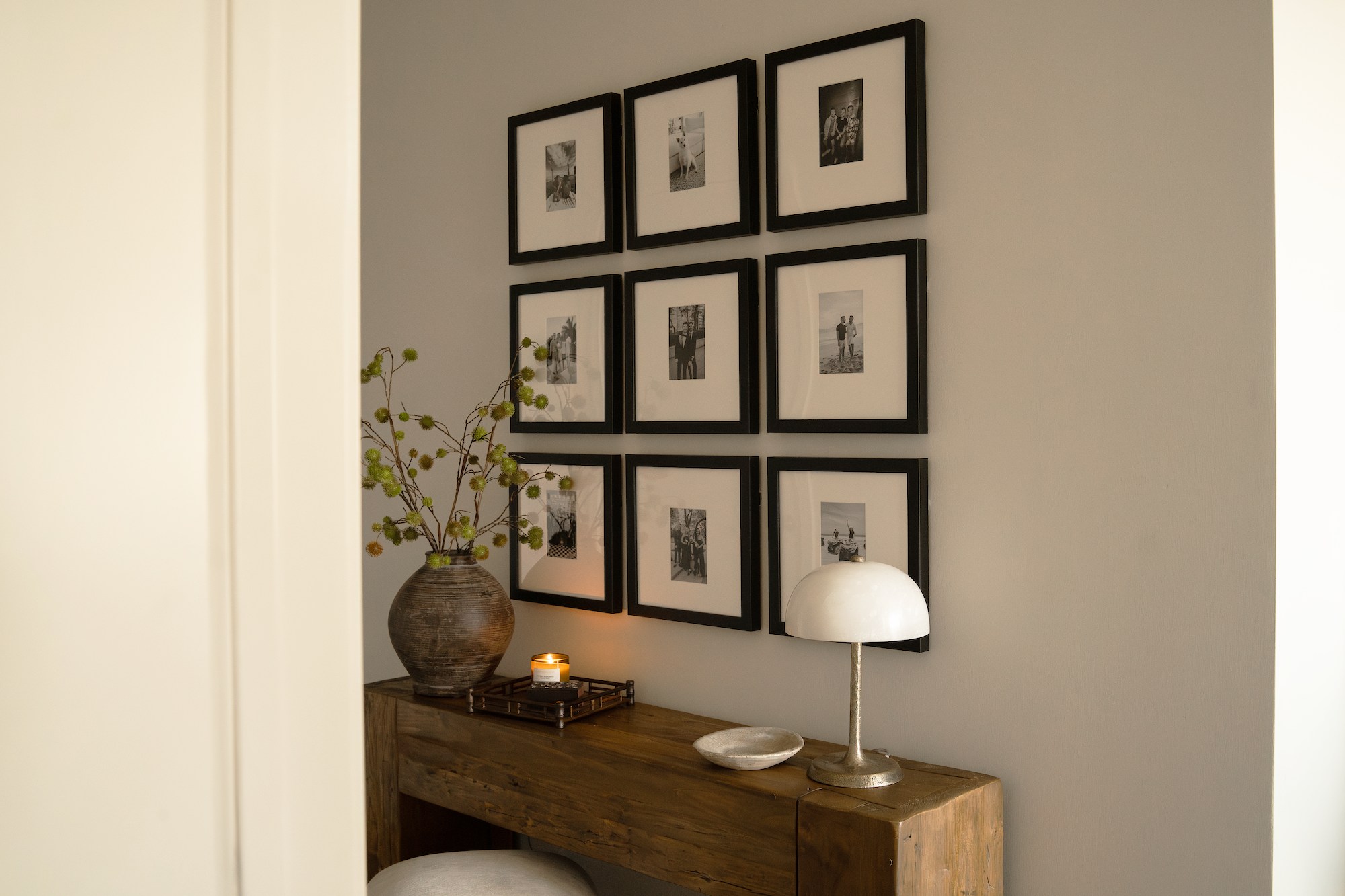
For deeper guidance on gallery wall layouts and planning, Frameology's blog library covers everything from how to use the Classic gallery wall template to how to create a gallery wall of your travels.
Explore gallery wall ideas at Frameology.
Frequently asked questions
How much does it cost to style an apartment on a budget?
A meaningful rental transformation usually falls in the $200–$500 range when you use reversible, renter-safe upgrades. The $0 tier of decluttering, rearranging, and restyling what you already own costs nothing and often delivers the biggest visible change. The $100 tier adds warm lighting, curtains, and one framed piece. The $300 tier adds a gallery wall, a large rug, and one secondhand statement piece. Finishing touches like plants, ceramic vases, and throw pillows can be sourced for $0–$20 from thrift stores or Facebook Marketplace.
What should I do first when styling a rental apartment?
Start with what you already own. Declutter every surface, rearrange furniture so nothing is flush against the wall, and restyle your shelves before spending anything. Then fix the lighting and swap cool-white bulbs for 2700K warm white LEDs. After that, address the walls. Hanging curtains high and wide, adding a mirror, and anchoring the wall with framed art or a gallery wall will do more for the perceived quality of your space than any furniture purchase at the same price point.
Do all gallery walls include hanging templates?
Classic and Luxe gallery walls include life-size gallery wall templates that make installation simple and straightforward. Canvas galleries, Metal galleries, and gallery walls created using Frameology's Gallery Wall Design Service don't include templates because their construction and customization work differently and often require more tailored installation approaches.
Can I hang frames in a rental without losing my deposit?
Yes, with the right method. Classic frames from Frameology can be paired with Command strips for completely damage-free hanging, so nails aren't required. Command strips hold up to 16 lbs per pair on smooth, painted drywall and remove cleanly when pulled straight down. For heavier gallery walls, small picture nails are typically allowed in many leases, and the resulting holes are small enough to fill with spackle at move-out. Remember the 30-day paint curing rule mentioned earlier, avoid textured drywall for Command strips, and always photograph your walls at move-in and move-out.
What's the difference between Classic and Luxe frames?
For renters who want reversibility and fast shipping, Classic is the right choice. For renters investing in a long-term, editorial look, Luxe is worth it. Classic frames deliver strong value and fast shipping. They start at $39 for tabletop and $59 for wall frames, feature a removable backing so you can swap photos anytime, and usually ship the next business day, arriving within a week.
Luxe frames are Frameology's top-of-the-line, museum-quality option. Starting at $79, they're crafted from premium wood and metal moldings with acid-free mats and UV-protecting museum-grade acrylic. Luxe frames feature a sealed, permanent kraft paper backing, so photos can't be swapped, and they come with all hanging hardware included, such as nails, a mini-level, and a no-wire hanging system. Luxe products take 7–10 business days due to their artisan craftsmanship.
How does the AR preview work?
Frameology's augmented reality tool is available on mobile devices only. Open the Frameology website on your phone, customize your frame, and tap the AR icon. Your phone's camera will project a true-to-scale preview of your exact frame directly onto your wall, so you can see exactly how it will look in your space before you buy. No app download or log-in is required.
What color makes an apartment look expensive?
Warm neutrals such as ivory, soft warm white, and warm greige usually read as more elevated than cool grays in most lighting conditions. Deep greens, navy, and black used as the 30% secondary or accent layer in a 60-30-10 split add intentional contrast without overwhelming a small space, as long as black stays confined to trim, frames, and small accents rather than large wall expanses. The most important variable is the lighting temperature. Warm 2700K bulbs make warm whites, creamy neutrals, and beige wall colors feel richer and more residential, though on cooler gray or blue walls they can instead look greenish-yellow or muted. Cool 4000K+ bulbs render warm-toned surfaces and domestic materials in a clinical, unflattering way, making rooms feel stark and icy, though they can enhance cool-toned surfaces and are appropriate for task zones.
How do I make a small apartment look bigger on a budget?
Four moves deliver the most impact per dollar. Hang curtains as close to the ceiling as possible and extend them past the window frame. Add one large leaning mirror opposite a window to double the perceived light and space. As explained in the first step, pulling furniture 12–18 inches off the walls creates a balanced, inviting layout, though smaller spaces may only allow a few inches of clearance. Use a single large rug instead of multiple small ones, and make sure the rug touches the front legs of every major piece of furniture in the seating zone. On the walls, vertical art and vertically stacked gallery walls draw the eye upward, making ceilings feel taller, whereas gallery walls spread out horizontally can make the ceiling look lower. Warm lighting at 2700K, distributed from multiple low sources rather than a single overhead fixture, makes a space feel larger and more inviting than cool-toned overhead lighting.
